Baked Cinnamon Apples
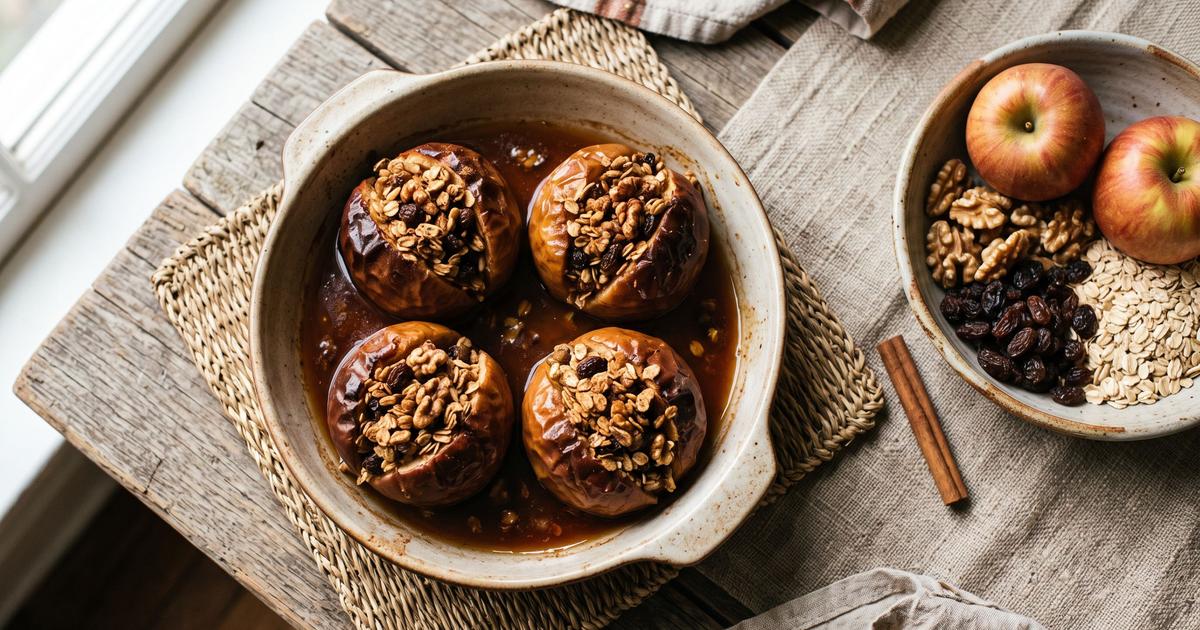
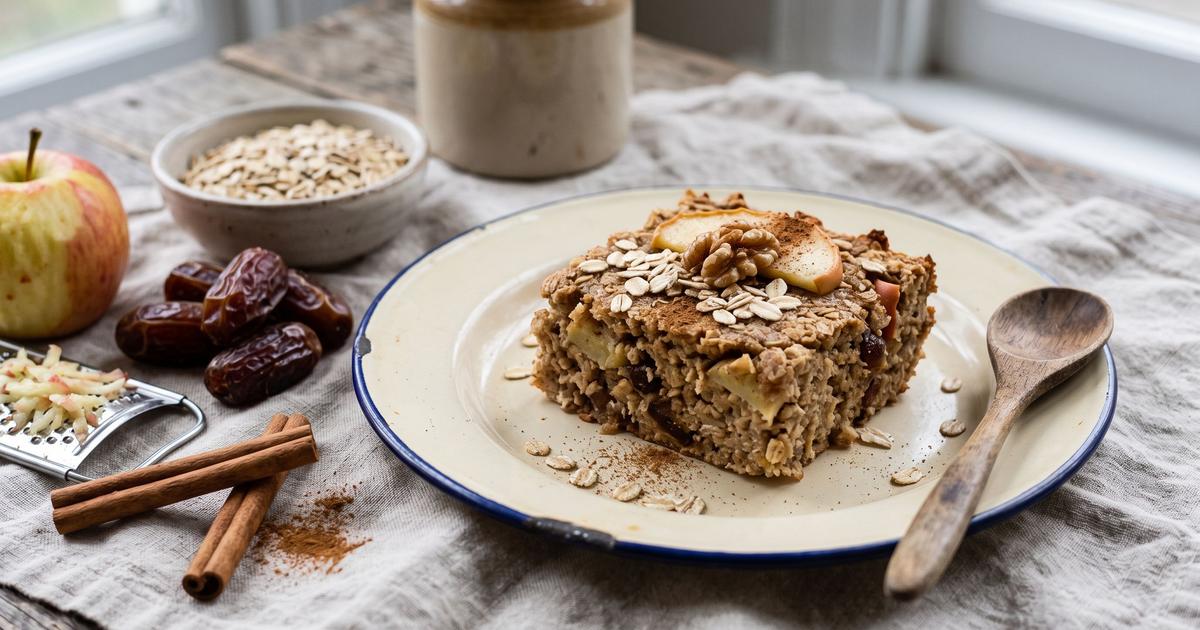
A baked apple is one of the oldest desserts there is, and it needs nothing but heat to become sweet. As the apple bakes, water evaporates and its natural sugars concentrate, so the fruit tastes far sweeter cooked than raw, no sugar required. The filling turns it into a full dessert: oats and walnuts for body and richness, raisins for bursts of concentrated sweetness, cinnamon for warmth. Choose a firm apple that holds its shape in the oven rather than one that collapses to sauce, though even a collapsed one tastes wonderful spooned over morning oats. The syrup that pools in the pan is the best part; do not leave it behind.
Ingredients
- 4 wholes Apples, cored, a firm baking variety
- 1/2 cup Rolled oats
- 1/3 cup Walnuts, chopped
- 1/3 cup Raisins
- 1 1/2 tsp cassia cinnamon
- 1 tbsp Ground flaxseed
Method
- Heat the oven to 375 F (190 C). Core the apples from the top, leaving the bottom intact so they hold their filling, and widen the cavity into a well with a spoon. Save the scraps and chop them into the filling.
- Toss the oats, walnuts, raisins, cinnamon, flaxseed, and chopped apple scraps together. Pack this into the apple wells, mounding it over the top.
- Stand the apples in a baking dish and pour half a cup of water into the bottom. The water turns to steam and keeps the apples from drying out while their sugars concentrate; as they bake, they release juice that mingles with it into a light syrup.
- Bake for 35 to 40 minutes, until the apples are slouching and completely tender when pierced and the filling is toasted on top. Baking is the whole sweetener here: the oven drives off water and concentrates the fruit sugar, so a plain apple bakes down to something that tastes like the inside of a pie.
- Spoon the pan syrup over the apples to serve. They are good warm, and just as good cold from the fridge the next day.
Nutrition
Estimated per serving: 200 calories, 4 g protein, 6 g fiber, 5 mg sodium. Computed from USDA FoodData Central reference values for the main ingredients. This is an approximation, not a laboratory measurement. How these are computed.
Cost per serving is estimated from US national-average retail prices for cheap staple forms, using BLS dried-bean prices and USDA produce prices. Prices vary by store and season, so treat it as a guide, not a receipt. How this is computed.