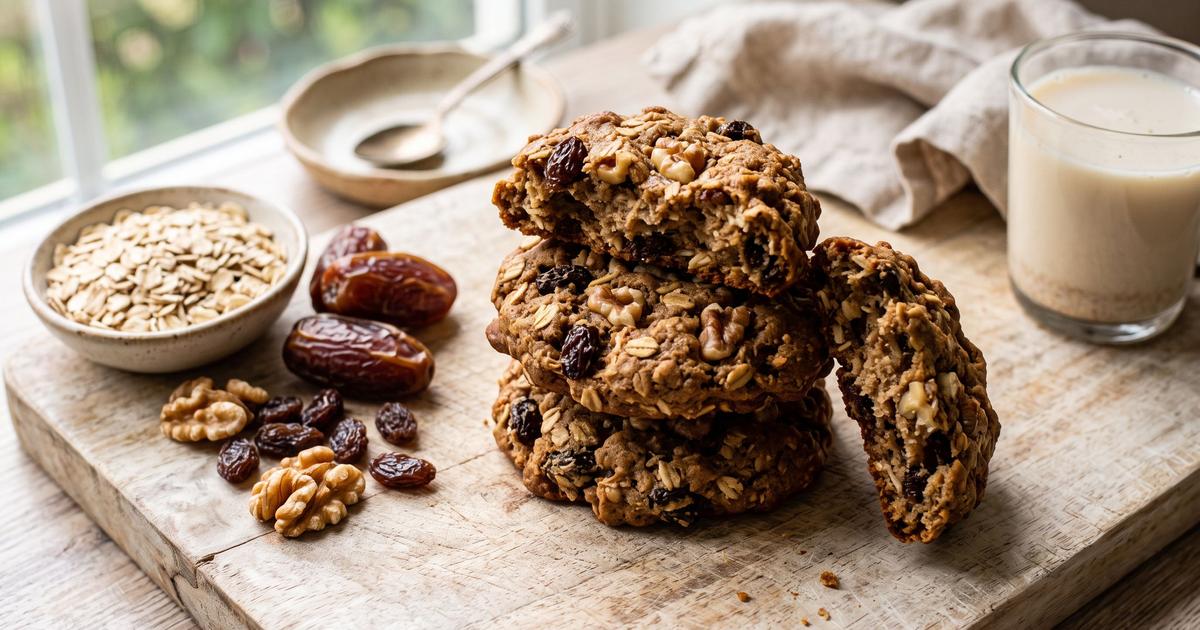
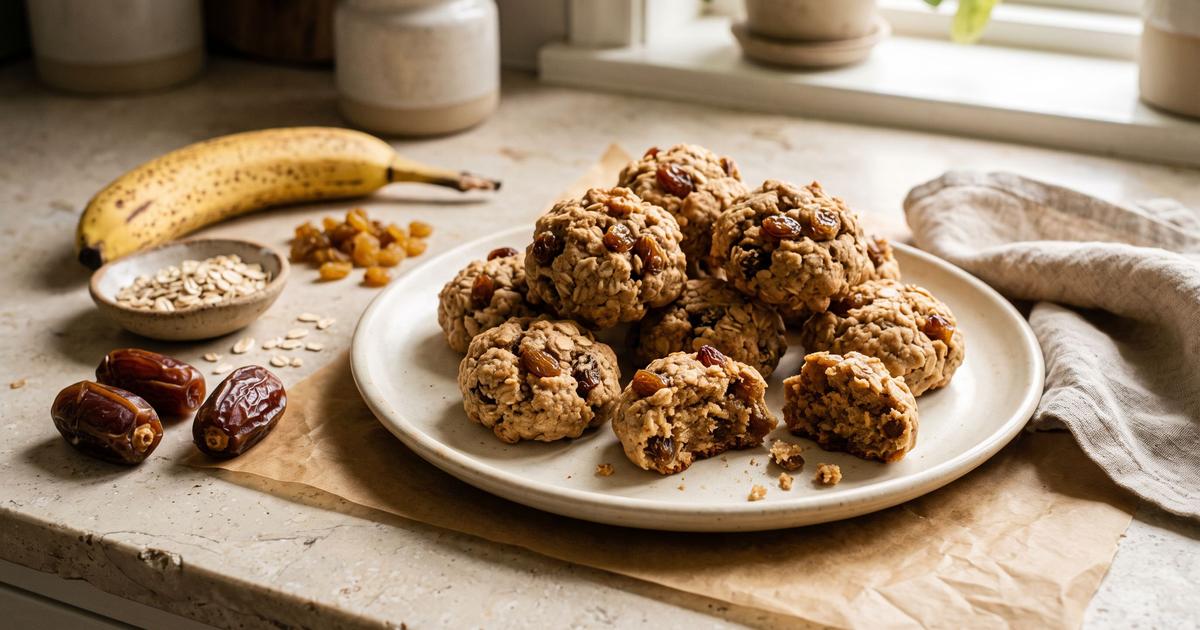
Overnight Peanut Butter Oatmeal Cookies
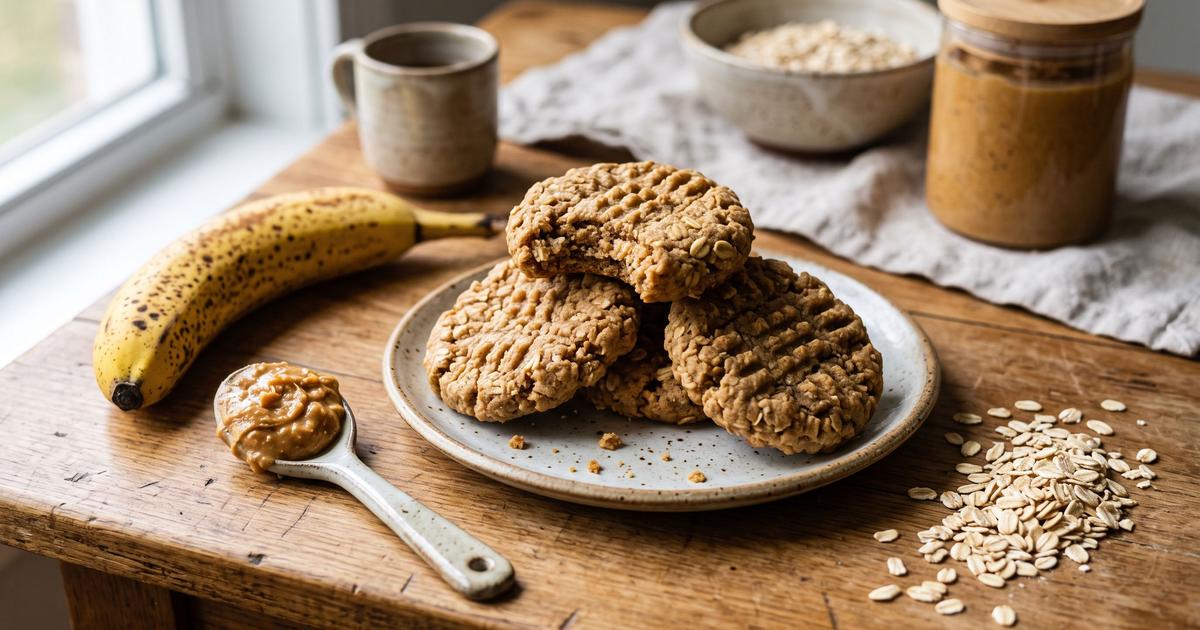
This is the simpler, plan-ahead sibling of the oat and almond cookie: five ingredients, one bowl, and no baking skill required. Peanut butter carries the fat and most of the protein, ripe bananas do the sweetening along with the raisins, and rolled oats are the whole grain that holds it all together. The overnight soak is what makes it work without an egg or flour. Left to sit, the oats drink up the banana and peanut butter, swell, and set into a dough that scoops clean and bakes into a soft, chewy cookie. Use peanut butter that is just peanuts: the kind with added oil, sugar, or salt breaks three of the rules this recipe is built to keep. Sodium stays near zero with an unsalted jar; a salted one adds roughly 100 mg a serving.
Ingredients
- 2 cups Rolled oats
- 2 Bananas, very ripe, mashed
- 1/2 cup unsweetened peanut butter, unsalted, just peanuts
- 1/3 cup Raisins
- 1/2 tsp cassia cinnamon
Method
- The night before: mash the bananas in a bowl until smooth, then stir in the peanut butter until no streaks remain. Cold, stiff peanut butter folds in more easily at room temperature.
- Add the oats, raisins, and cinnamon and stir until every oat is coated. The mix looks thick and a little dry, which is right; the oats have not drunk anything yet.
- Press a lid or wrap onto the surface and refrigerate overnight, or at least 6 hours. This is the whole trick: the oats soften and swell in the banana and peanut butter, the dough firms up, and by morning it holds together with no egg and no flour.
- In the morning, heat the oven to 350°F (175°C) and line a sheet with parchment. Give the chilled dough a stir; it is thick and scoopable now.
- Scoop 12 mounds, about 2 tbsp each, and press each one flat. They barely spread, so shape them the way you want them to look.
- Bake 14 to 16 minutes, until the edges set and the bottoms brown. Let them cool on the sheet for 5 minutes to firm up before you move them.
Nutrition
Estimated per serving: 305 calories, 11 g protein, 6 g fiber, 5 mg sodium. Computed from USDA FoodData Central reference values for the main ingredients. This is an approximation, not a laboratory measurement. How these are computed.
Cost per serving is estimated from US national-average retail prices for cheap staple forms, using BLS dried-bean prices and USDA produce prices. Prices vary by store and season, so treat it as a guide, not a receipt. How this is computed.