Chupe de Quinua, Peruvian Quinoa Chowder
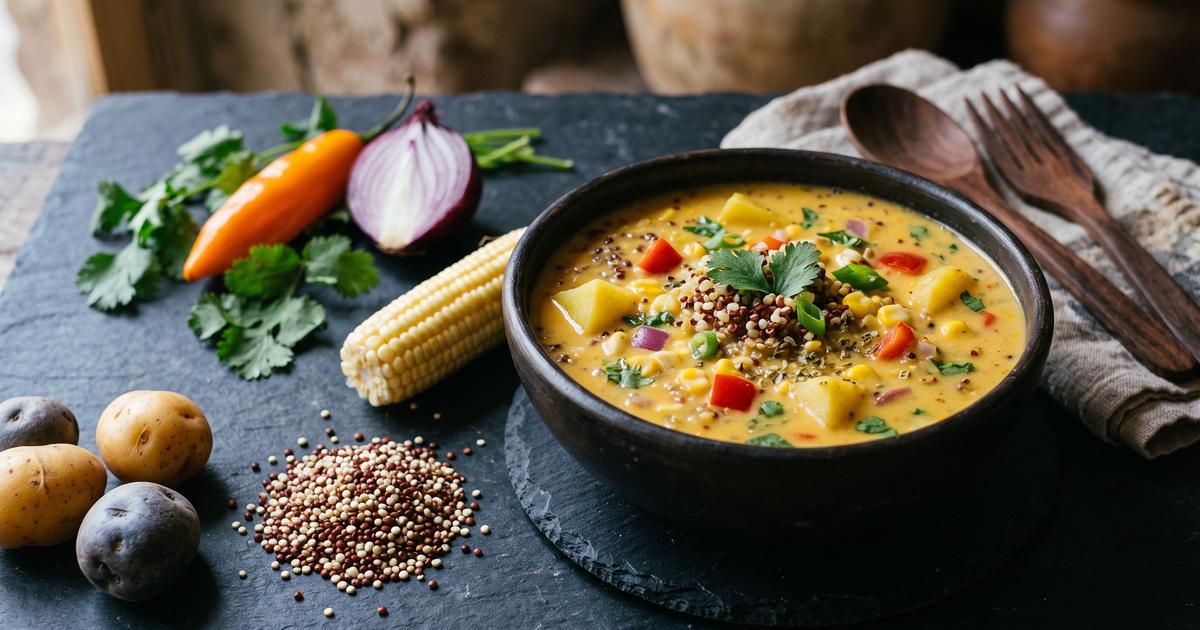
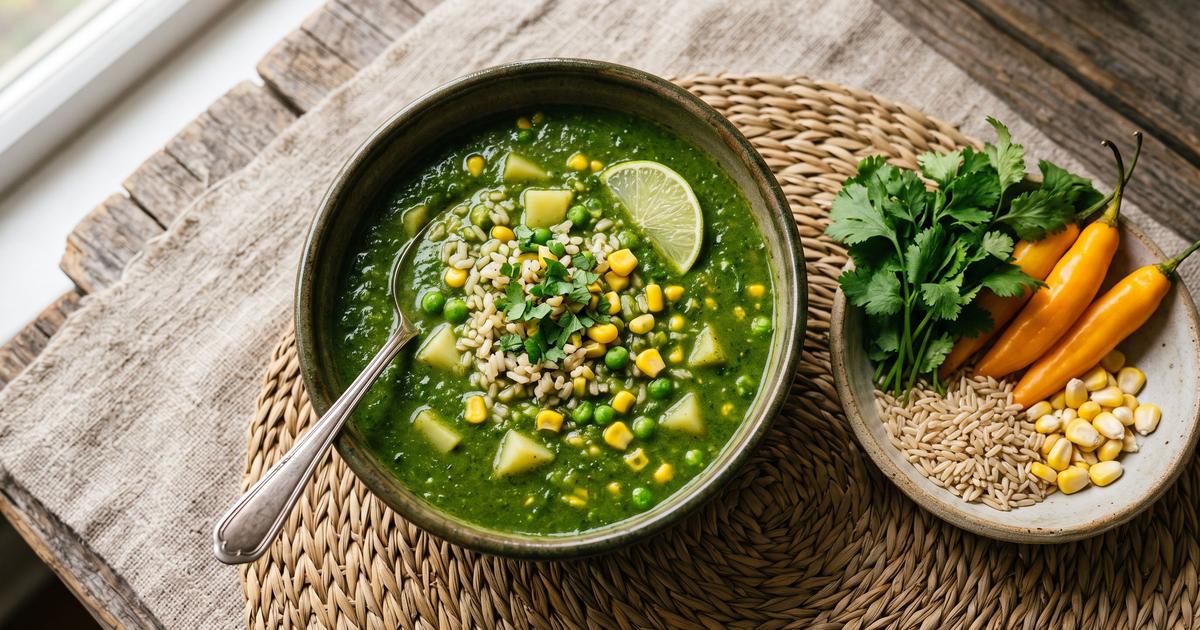
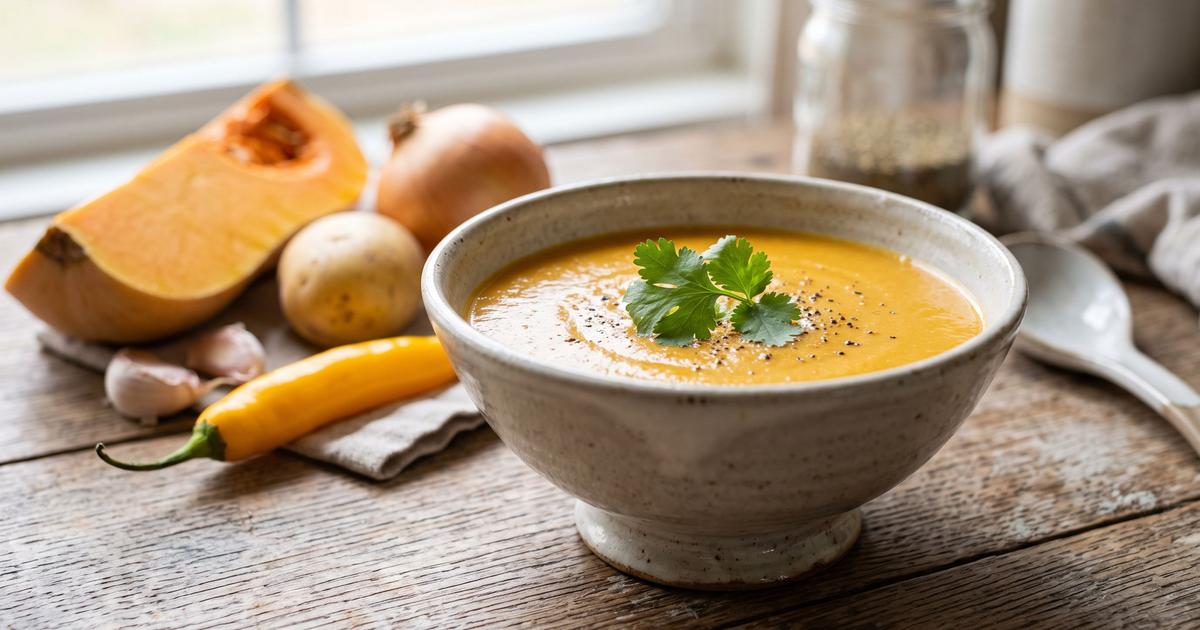
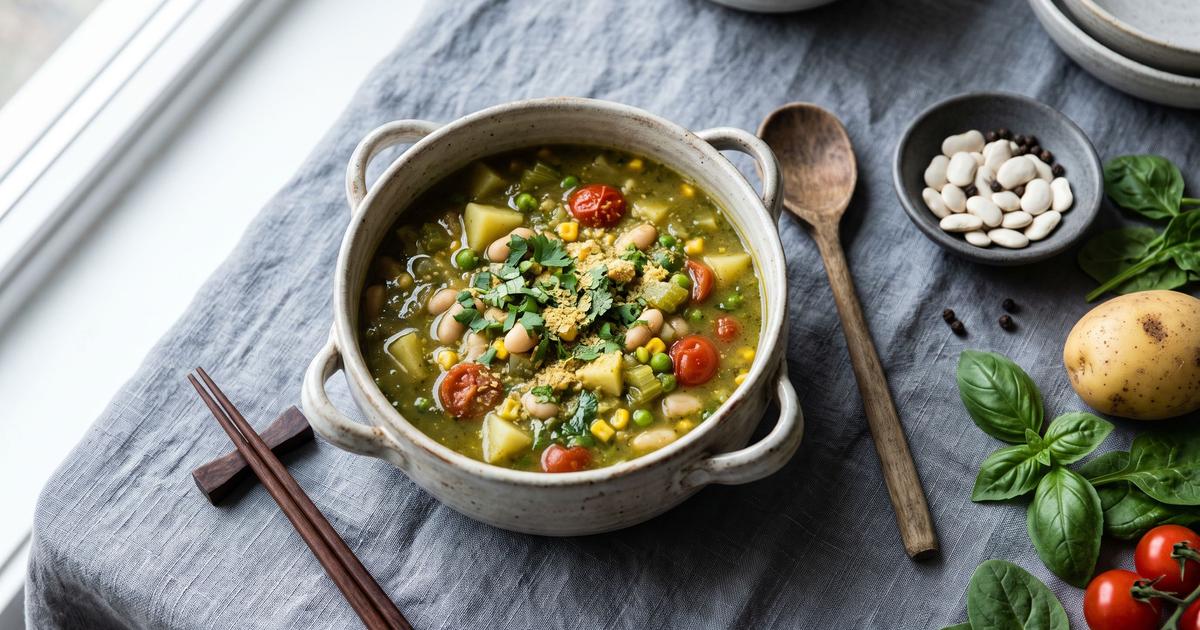
A chupe is a Peruvian chowder, and in the highlands it is built on quinoa as much as on potatoes. This one keeps that Andean logic: quinoa for body and a complete protein, potato for heft, corn for sweetness, and aji amarillo for the fruity yellow heat that colors the whole pot. The creamy finish a Peruvian cook gets from evaporated milk comes here from a cup of soy milk stirred in off the heat, so it stays smooth and does not split. The one step not to rush is cooking the aji paste with the onions before the liquid goes in, which trades its raw edge for depth. The quinoa thickens the broth as it cooks, so there is no need for cream or flour, or for salt.
Ingredients
- 1/2 cup Quinoa, rinsed
- 2 Potatoes, peeled and diced
- 1 cup Frozen corn
- 1/2 cup Frozen peas
- 1 1/2 tbsp Aji amarillo paste
- 1 Yellow onion, diced
- 3 cloves Garlic, minced
- 1/2 tsp Cumin seed, toasted and ground
- 1/2 tsp Dried oregano
- 1 tsp no-salt vegetable bouillon
- 1 cup Unsweetened soy milk
- 1/4 cup Cilantro, chopped, to finish
Method
- Sweat the onion and garlic in a splash of water in a pot until soft and translucent, about 6 minutes.
- Add the aji amarillo paste and cumin and cook, stirring, for 2 minutes. Cooking the paste rather than dropping it in raw is the difference between a deep, mellow broth and a sharp, grassy one.
- Pour in 4 cups (950 ml) water, the bouillon, oregano, potatoes, and rinsed quinoa. Simmer 15 minutes, until the potatoes are nearly tender and the quinoa has uncurled its little tails.
- Add the corn and peas and simmer 5 minutes more. The quinoa thickens the broth on its own as its starch releases, so no flour or cream is needed for body.
- Take the pot off the boil and stir in the soy milk. Adding it off the heat keeps it from splitting and gives the chowder its pale, creamy finish. Warm through but do not let it boil again.
- Finish with the cilantro and taste. The aji and the sweet corn carry it without salt.
Nutrition
Estimated per serving: 250 calories, 11 g protein, 8 g fiber, 70 mg sodium. Computed from USDA FoodData Central reference values for the main ingredients. This is an approximation, not a laboratory measurement. How these are computed.
Cost per serving is estimated from US national-average retail prices for cheap staple forms, using BLS dried-bean prices and USDA produce prices. Prices vary by store and season, so treat it as a guide, not a receipt. How this is computed.