Aguadito de Verduras, Peruvian Cilantro Vegetable Soup
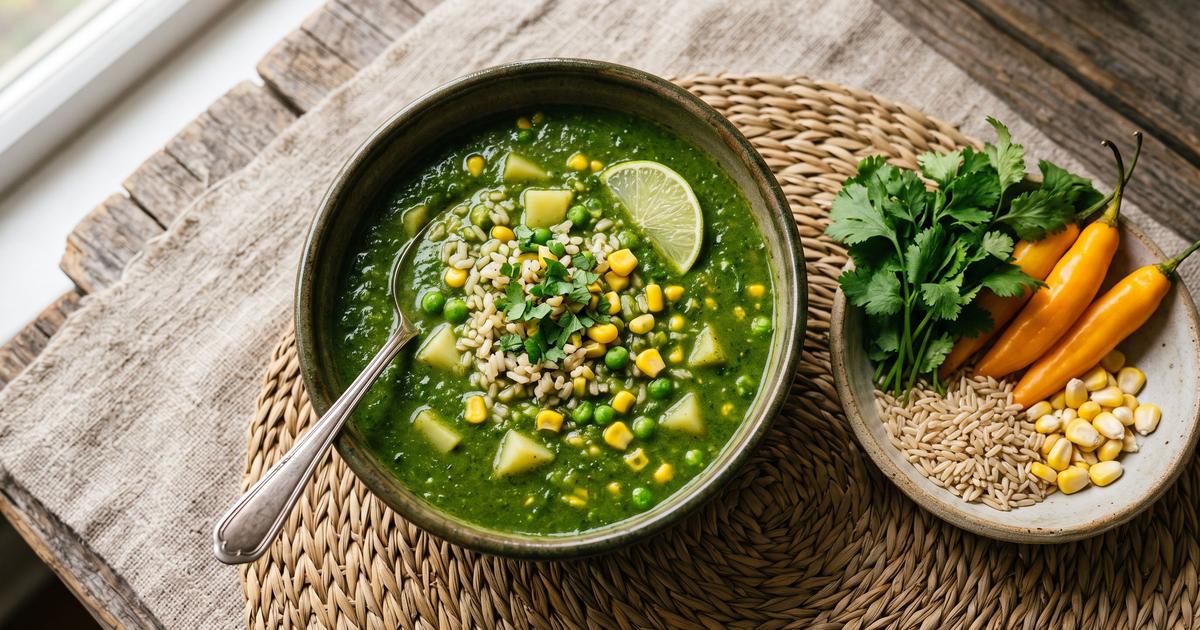
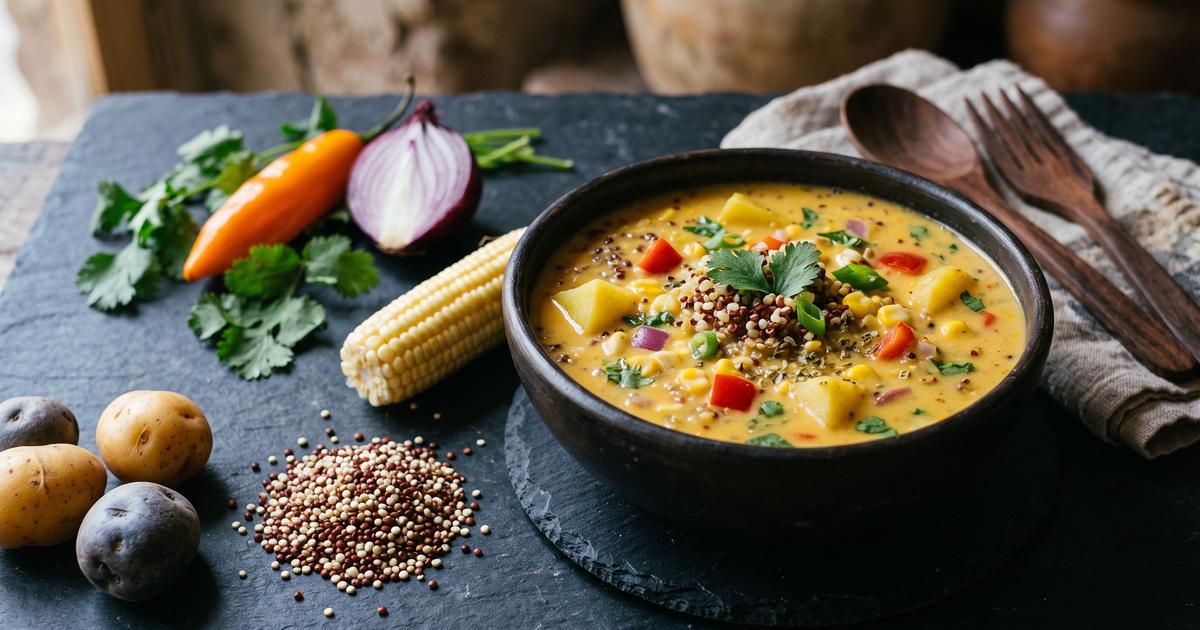
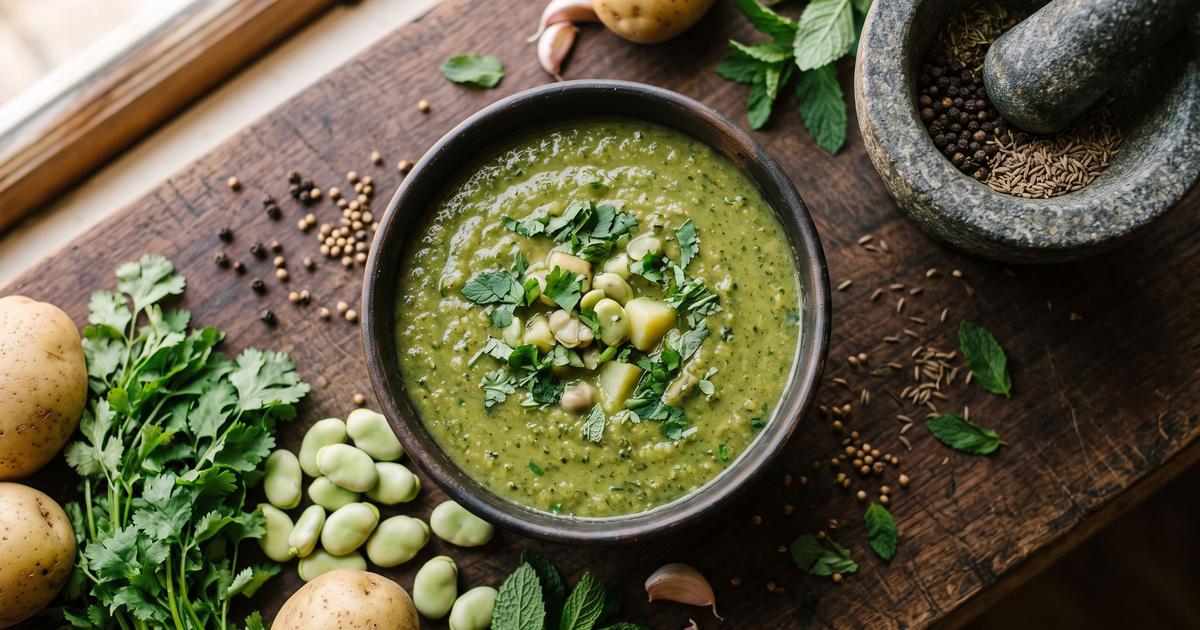
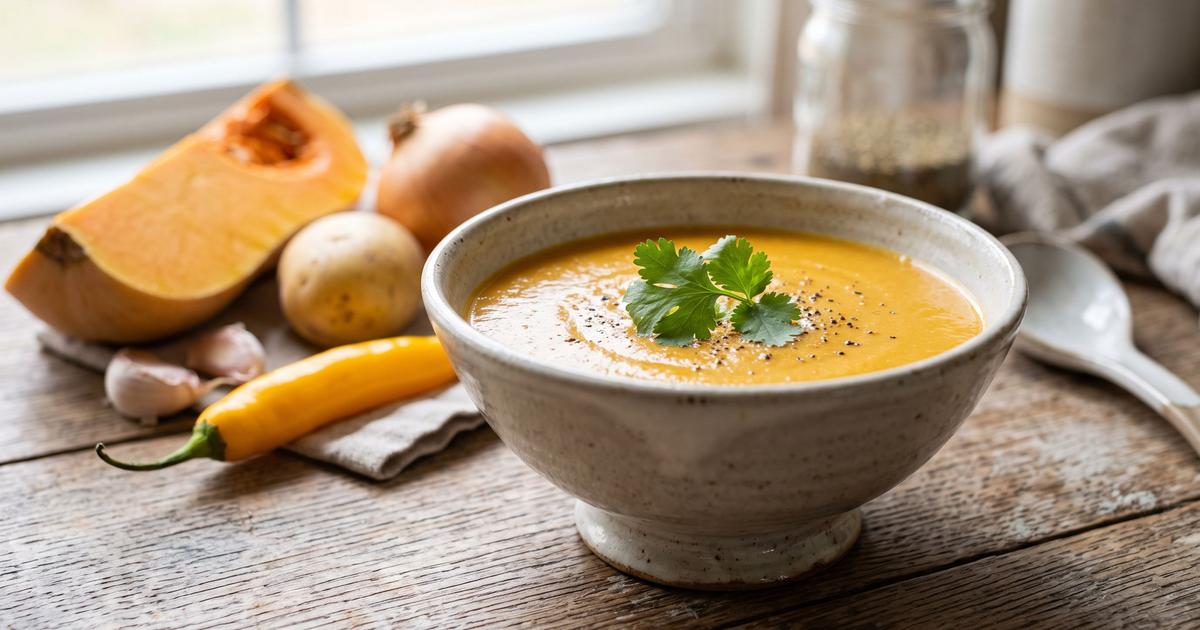
Aguadito is Peru's green restorative, the soup reached for after a long night or a cold, usually built around chicken but just as good made entirely of vegetables. What sets it apart from any other brothy rice soup is the flood of cilantro blended in near the end, which turns the whole pot a vivid green and gives it a herbal depth you cannot get any other way. Aji amarillo, the fruity yellow chile at the center of Peruvian cooking, warms it without much burn. Brown rice stands in for the usual white and gives the soup more body and chew. Everything is softened in water rather than oil, and the cilantro and lime do the seasoning, so there is no salt in the pot. Add the herb puree at the finish to keep it bright.
Ingredients
- 2 cups Cilantro, packed
- 1 tbsp Aji amarillo paste
- 1 Yellow onion, diced
- 3 cloves Garlic, minced
- 1 tsp Cumin seed, ground
- 1/2 cup long grain brown rice
- 2 Potatoes, diced
- 1 Carrot, diced
- 1 Bell pepper, red, diced
- 3/4 cup Frozen peas
- 3/4 cup Frozen corn
- 1 tsp no-salt vegetable bouillon
- 1 tbsp Lime juice
Method
- Blend the cilantro with 1 cup (240 ml) water into a bright green puree. This is what makes an aguadito an aguadito: the whole herb, stems and all, gives the soup its color and its grassy backbone.
- Sweat the onion, garlic, and bell pepper in 3 tablespoons (45 ml) water until soft, then stir in the aji amarillo and cumin and cook 2 minutes. Warming the paste blooms its fruity, floral heat rather than leaving it raw.
- Add the rice, potato, carrot, bouillon, and 5 cups (1.2 L) water. Simmer 25 minutes, until the brown rice is tender and the potato is soft enough to thicken the broth slightly.
- Stir in the peas, corn, and the cilantro puree and simmer just 5 minutes more. The puree goes in late on purpose: boiled long, cilantro turns drab olive and loses its lift.
- Finish with lime off the heat. The acid and the aji together carry all the seasoning, so the soup needs no salt.
Nutrition
Estimated per serving: 190 calories, 6 g protein, 6 g fiber, 50 mg sodium. Computed from USDA FoodData Central reference values for the main ingredients. This is an approximation, not a laboratory measurement. How these are computed.
Cost per serving is estimated from US national-average retail prices for cheap staple forms, using BLS dried-bean prices and USDA produce prices. Prices vary by store and season, so treat it as a guide, not a receipt. How this is computed.