Crema de Zapallo, Peruvian Squash Soup
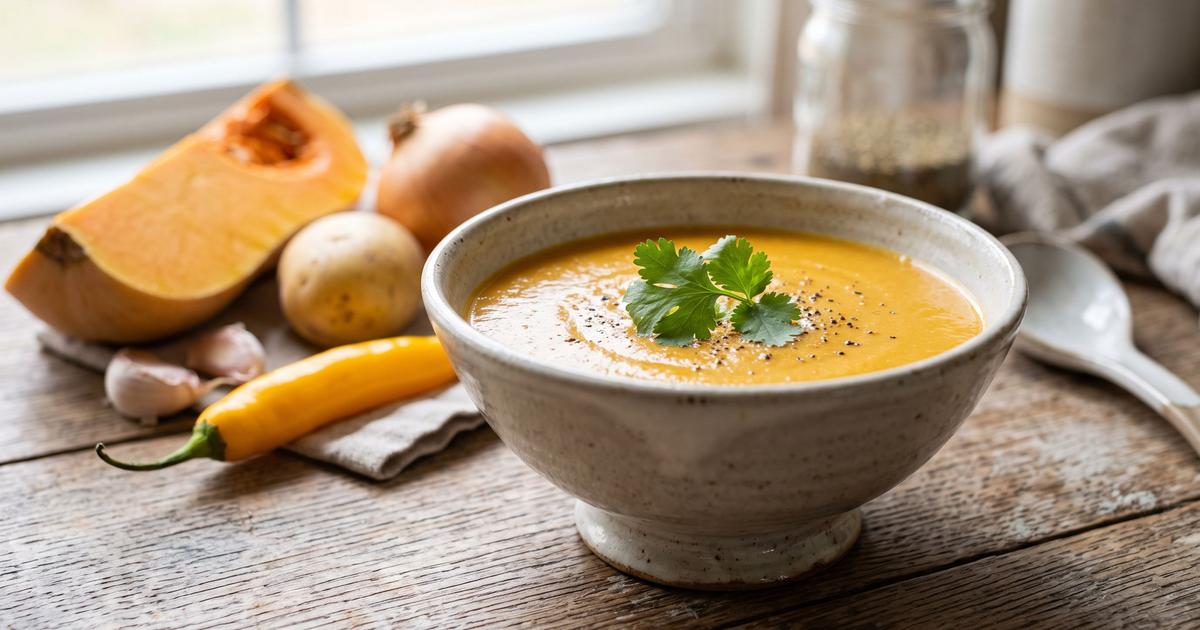
Zapallo is the big, dense winter squash of the Andes, and a crema de zapallo is the comforting blended soup made from it. Butternut stands in cleanly here. Two things keep it from needing cream or salt. Diced potato simmered into the pot and blended in gives a thick, velvety body from starch alone. And aji amarillo, the fruity yellow chile paste at the center of Peruvian cooking, gives warmth, color, and a gentle heat that a plain squash soup lacks. A little unsweetened soy milk rounds it out, lime sharpens it, and toasted pumpkin seeds on top add the crunch. It is light, cheap, and comes together in under an hour.
Ingredients
- 1 1/2 lb Butternut squash, peeled and cubed, about 4 cups
- 2 Potatoes, peeled and diced
- 1 Yellow onion, diced
- 3 cloves Garlic, minced
- 1 1/2 tbsp Aji amarillo paste
- 1/2 tsp Cumin seed, toasted and ground
- 1 tsp no-salt vegetable bouillon
- 1/2 cup Unsweetened soy milk
- 1 tbsp Lime juice
- 2 tbsp Pumpkin seeds, toasted, to finish
Method
- Sweat the onion and garlic in the pot with a splash of water until soft, about 6 minutes. Stir in the aji amarillo paste and cumin and cook for a minute. Cooking the chile paste briefly rounds off its raw edge and blooms its fruit and color, so it flavors the whole soup rather than sitting on top.
- Add the squash, potato, and no-salt bouillon, then pour in enough water to just cover, about 3 cups (700 ml). Bring to a boil and simmer for 20 to 25 minutes, until everything is fork-soft.
- Blend the soup smooth, in batches if needed, and return it to the pot. The potato is what makes it creamy: its starch gives body the way cream would, with no fat.
- Stir in the soy milk and warm it through gently without boiling. Boiling can make the soy milk look curdled, though it stays perfectly good to eat. Adjust the thickness with a little more water.
- Take it off the heat and add the lime juice, which sharpens the sweetness of the squash and stands in for salt.
- Serve topped with toasted pumpkin seeds for crunch.
Nutrition
Estimated per serving: 160 calories, 6 g protein, 6 g fiber, 40 mg sodium. Computed from USDA FoodData Central reference values for the main ingredients. This is an approximation, not a laboratory measurement. How these are computed.
Cost per serving is estimated from US national-average retail prices for cheap staple forms, using BLS dried-bean prices and USDA produce prices. Prices vary by store and season, so treat it as a guide, not a receipt. How this is computed.