Chili-Lime Pepitas
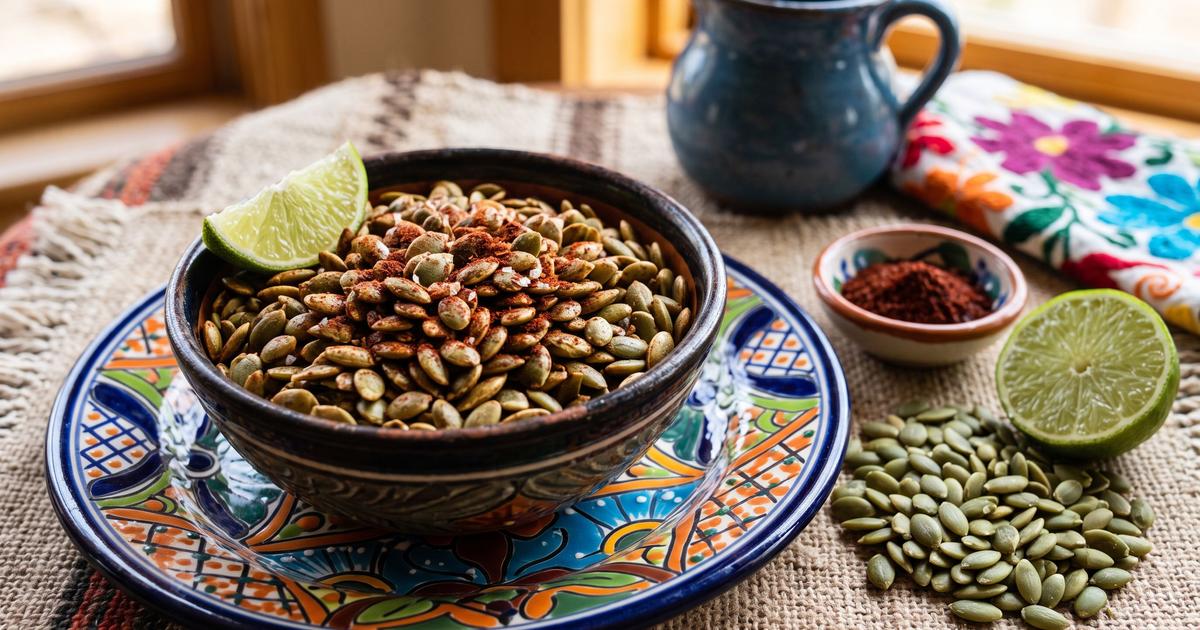
Pepitas toast beautifully with nothing but a hot dry pan. As they heat, the water in each seed turns to steam and puffs it, the same physics as popcorn, so they crisp on their own without a drop of oil. The lime is doing double duty: its acid stands in for salt, and the burst of steam when it hits the hot seeds is what makes the chili stick. Grate the garlic fine so it melts into the coating instead of sitting in raw chunks. Watch them closely near the end, because the line between nutty and scorched is about thirty seconds wide.
Ingredients
- 1 cup Pumpkin seeds, raw, hulled
- 3/4 tsp pure chile powder
- 1/2 tsp Smoked paprika
- 1 tbsp Lime juice, fresh
- 1 clove Garlic, grated fine
Method
- Put the pumpkin seeds in a dry skillet over medium heat, no oil. Toast them, stirring almost constantly, for 4 to 6 minutes. They will start to pop and swell like tiny popcorn and turn from flat green to plump and golden. The popping is your timer: when most of them have puffed and smell toasty, pull the pan off the heat.
- Stirring matters here. Pumpkin seeds go from toasted to burnt in under a minute, and their oils turn bitter the moment they scorch, so keep them moving and trust your nose over the clock.
- Off the heat, add the grated garlic to the hot seeds and stir for 15 seconds. The pan's residual heat cooks the raw edge off the garlic without a separate step, leaving it mellow and savory.
- Add the pure chili powder and smoked paprika and toss to coat, then squeeze in the lime juice. It will hiss and steam; that steam is what makes the chili cling to the seeds without any oil. Toss until the seeds are evenly dusted and glossy from the lime.
- Spread them out to cool, which crisps them further. Taste and add more chili or lime as you like. Store in an open jar so they stay crunchy.
Nutrition
Estimated per serving: 170 calories, 9 g protein, 3 g fiber, 10 mg sodium. Computed from USDA FoodData Central reference values for the main ingredients. This is an approximation, not a laboratory measurement. How these are computed.
Cost per serving is estimated from US national-average retail prices for cheap staple forms, using BLS dried-bean prices and USDA produce prices. Prices vary by store and season, so treat it as a guide, not a receipt. How this is computed.