Chia Berry Pudding
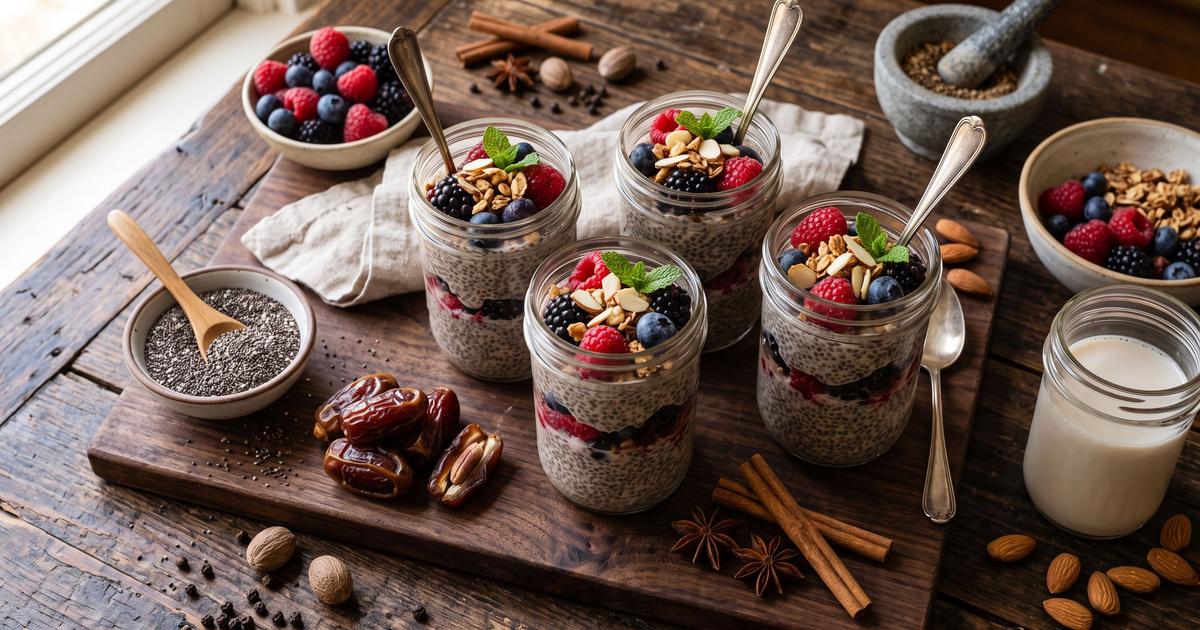
Chia seeds are the whole trick here: soaked in liquid they swell to about ten times their size and set it into a gel, turning plain plant milk into a spoonable pudding with no cooking and no thickener. Two tablespoons a serving bring a serious amount of fiber and a dose of plant omega-3s. The sweetness comes entirely from dates blended into the milk, which dissolve into a smooth caramel sweetness rather than sitting in the bowl as chunks. Make it in one jar on Sunday night and portion it out, or build it in four small jars for grab-and-go. The berries can be any frozen fruit you have; thaw them so their juice bleeds into the pudding.
Ingredients
- 1/2 cup Chia seeds
- 2 cups Unsweetened almond milk
- 4 wholes Medjool dates, pitted
- 1/2 tsp Ceylon cinnamon
- 2 cups Frozen mixed berries, thawed
Method
- Blend the plant milk with the pitted dates and cinnamon until completely smooth, about 30 seconds. Blending the dates into the milk is what sweetens the whole pudding evenly, so you get caramel-like sweetness with no added sugar and no gritty bits.
- Pour the sweetened milk over the chia seeds in a bowl or jar and whisk hard for a few seconds. Wait 5 minutes, then whisk again. That second whisk breaks up the clumps that always form on the first mix and is the difference between smooth pudding and a lump at the bottom.
- Cover and refrigerate overnight, or at least 4 hours. The chia seeds drink up the liquid and swell into a soft, tapioca-like set.
- Stir the thawed berries with their juices and layer them through the pudding, or spoon them over the top. The berry juice streaks the pudding pink and adds tartness against the sweet base.
- Keeps in the fridge for up to 5 days. If it sets firmer than you like, stir in a splash of plant milk before serving.
Nutrition
Estimated per serving: 190 calories, 6 g protein, 12 g fiber, 30 mg sodium. Computed from USDA FoodData Central reference values for the main ingredients. This is an approximation, not a laboratory measurement. How these are computed.
Cost per serving is estimated from US national-average retail prices for cheap staple forms, using BLS dried-bean prices and USDA produce prices. Prices vary by store and season, so treat it as a guide, not a receipt. How this is computed.