Cervelle de Canut, Lyonnais Herb Dip
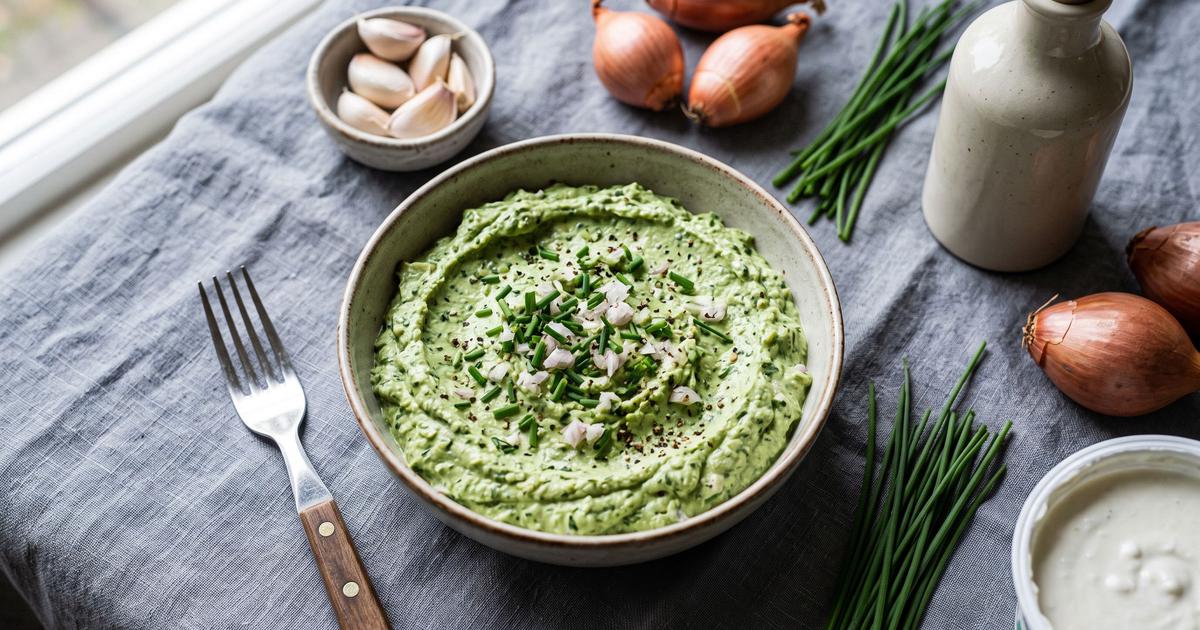
Cervelle de canut comes from Lyon, where it was the cheap lunch of the silk weavers, the canuts, whose trade gave the dip its grisly nickname. It is nothing more than fresh cheese whipped up with a fistful of herbs, shallot, garlic, and a splash of vinegar, and it translates to a plant kitchen without a fight. Unsweetened soy yogurt, drained until thick, has the tang and body of the fromage blanc it replaces and brings more protein besides. The herbs and raw alliums do all the seasoning, so no salt is needed; just give it half an hour to come together. Spread it on toast, spoon it over boiled potatoes, or set it out with crudités.
Ingredients
- 1 1/2 cups Plain plant yogurt, thick, unsweetened
- 1 Shallot, minced
- 1 clove Garlic, grated
- 3 tbsp Chives, chopped
- 3 tbsp Flat-leaf parsley, chopped
- 1 tbsp Tarragon, chopped
- 1 tbsp White wine vinegar
- 1/4 tsp Black peppercorns, ground
Method
- If your plant yogurt is loose, spoon it into a cloth-lined sieve and let it drain 30 minutes. The name means silk-weaver's brains, a joke about the thick, curd-like texture, so a watery yogurt misses the point.
- Grate the garlic and mince the shallot as fine as you can. Raw alliums are what carry this dip, and large pieces would turn harsh; fine ones melt in.
- Fold the garlic, shallot, chives, parsley, tarragon, vinegar, and pepper into the yogurt. Traditional cervelle de canut is fromage blanc; unsweetened soy yogurt has the same tang and the most protein of the plant options.
- Let it sit at least 30 minutes before serving. The rest lets the shallot and herbs infuse the yogurt so it tastes green all the way through rather than of separate parts.
- Serve cold as a dip for raw vegetables or a spread for whole-grain toast. It keeps three days and only improves, though the herbs will deepen in color.
Nutrition
Estimated per serving: 75 calories, 5 g protein, 2 g fiber, 40 mg sodium. Computed from USDA FoodData Central reference values for the main ingredients. This is an approximation, not a laboratory measurement. How these are computed.
Cost per serving is estimated from US national-average retail prices for cheap staple forms, using BLS dried-bean prices and USDA produce prices. Prices vary by store and season, so treat it as a guide, not a receipt. How this is computed.