Champignons à la Grecque, Marinated Mushrooms
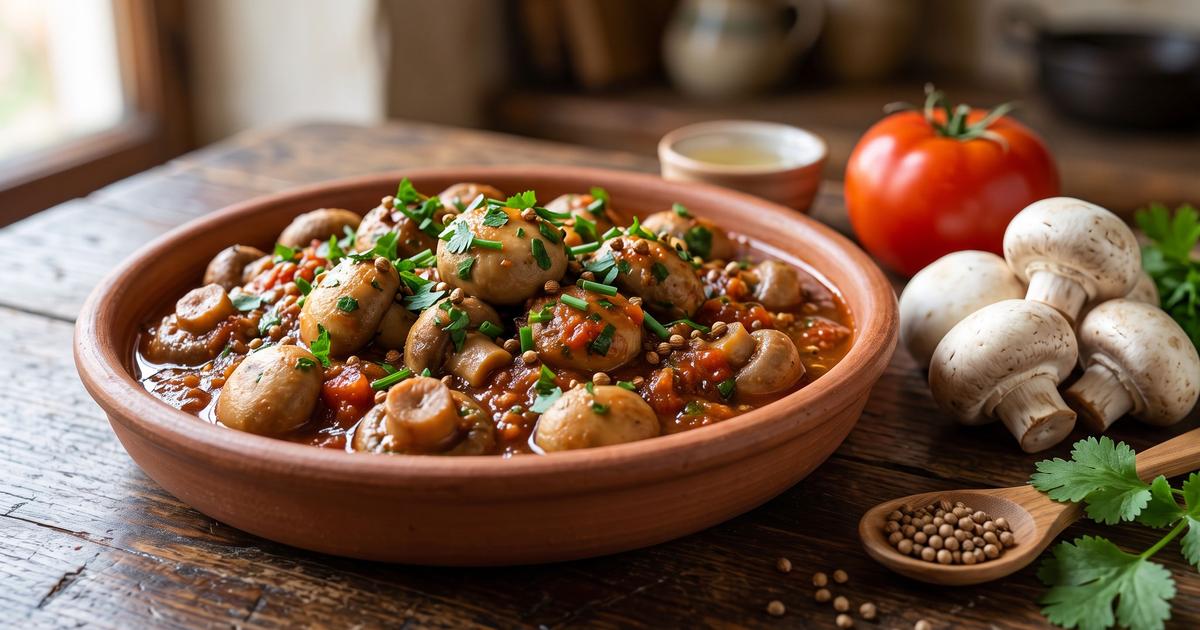
Champignons à la grecque is a fixture of the French cold table, one of a family of vegetables cooked and served in an acidulated, spiced broth. The name means in the Greek style, a nod to the coriander seed and lemon that flavor it, but it is French bistro cooking through and through. The usual recipe finishes with a slick of olive oil; leave it out and the dish loses nothing, because the reduced broth of vinegar, lemon, tomato, and coriander already carries every mushroom. The one rule is patience: it must be made hours ahead and eaten cold, so the flavor has time to set. Serve it as a starter, a side, or part of a spread.
Ingredients
- 1 lb Cremini mushrooms, halved, or quartered if large
- 1/2 cup Canned crushed tomatoes
- 3 tbsp White wine vinegar
- 1 Lemon, juiced
- 1 tsp Coriander seed, lightly crushed
- 2 cloves Garlic, sliced
- 2 Shallots, thinly sliced
- 1 Bay leave
- 4 sprigs Thyme
- 3 tbsp Flat-leaf parsley, chopped
- 1/2 tsp Black peppercorns
Method
- In a wide pan combine 0.5 cup (120 ml) water, the vinegar, lemon juice, crushed coriander, garlic, shallot, bay, thyme, and peppercorns. Simmer 5 minutes. This aromatic liquid, a court-bouillon, is the whole method a la grecque, and coriander seed is the flavor that defines it.
- Stir in the crushed tomatoes and simmer 2 minutes more. The tomato gives the broth body and a faint sweetness that balances all that acid.
- Add the mushrooms and cook, stirring, for 8 to 10 minutes. They release their own water first, then drink the broth back in as they cook, which is how they take on flavor with no oil at all.
- Lift the mushrooms into a bowl, then boil the liquid hard for a few minutes until it reduces by half and pour it over. Reducing concentrates the broth into a light dressing that would otherwise be too thin to cling.
- Cool, then chill at least 2 hours or overnight. This dish exists to be made ahead; the mushrooms need the time to soak up the coriander and lemon. Scatter with parsley and serve cold.
Nutrition
Estimated per serving: 75 calories, 4 g protein, 3 g fiber, 35 mg sodium. Computed from USDA FoodData Central reference values for the main ingredients. This is an approximation, not a laboratory measurement. How these are computed.
Cost per serving is estimated from US national-average retail prices for cheap staple forms, using BLS dried-bean prices and USDA produce prices. Prices vary by store and season, so treat it as a guide, not a receipt. How this is computed.