Za'atar Roasted Chickpeas
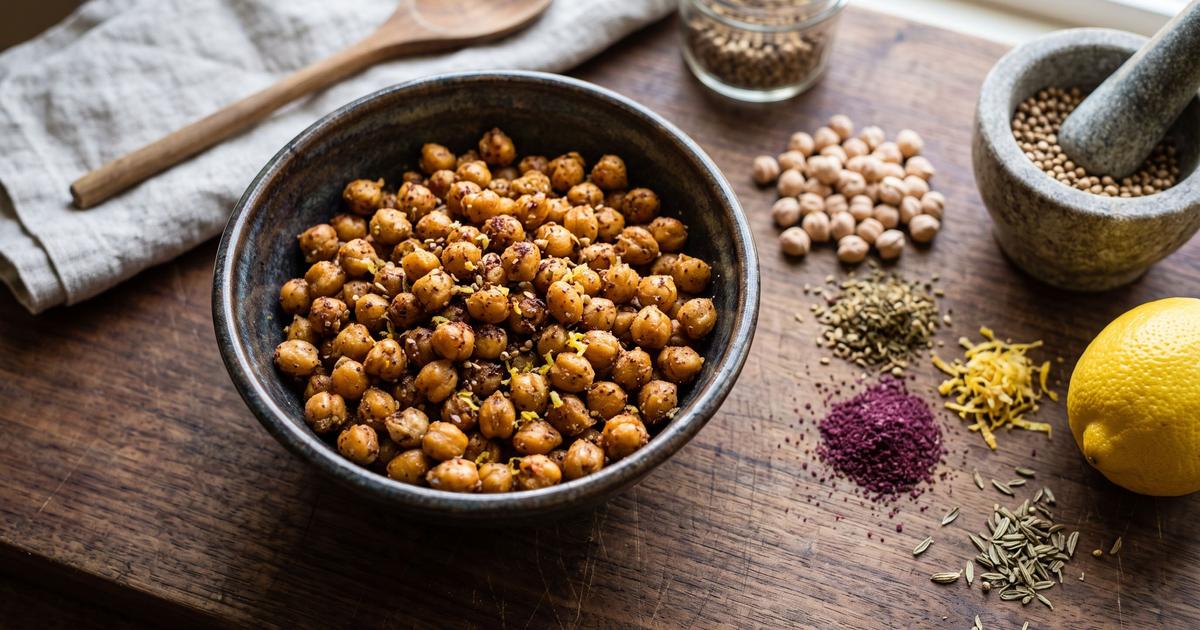
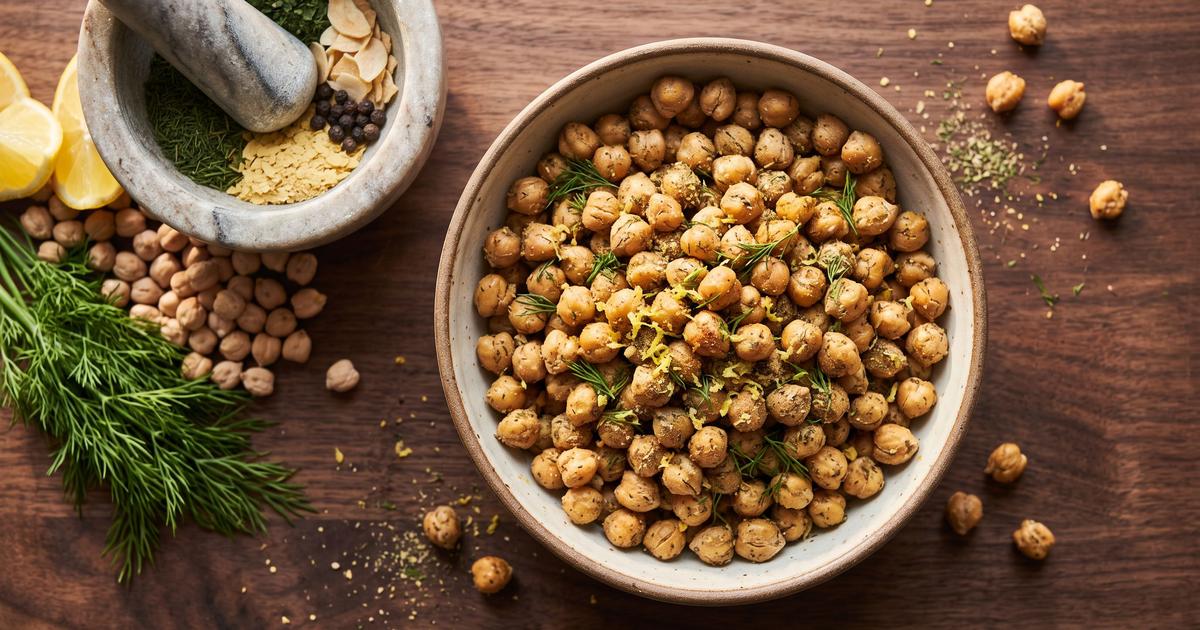
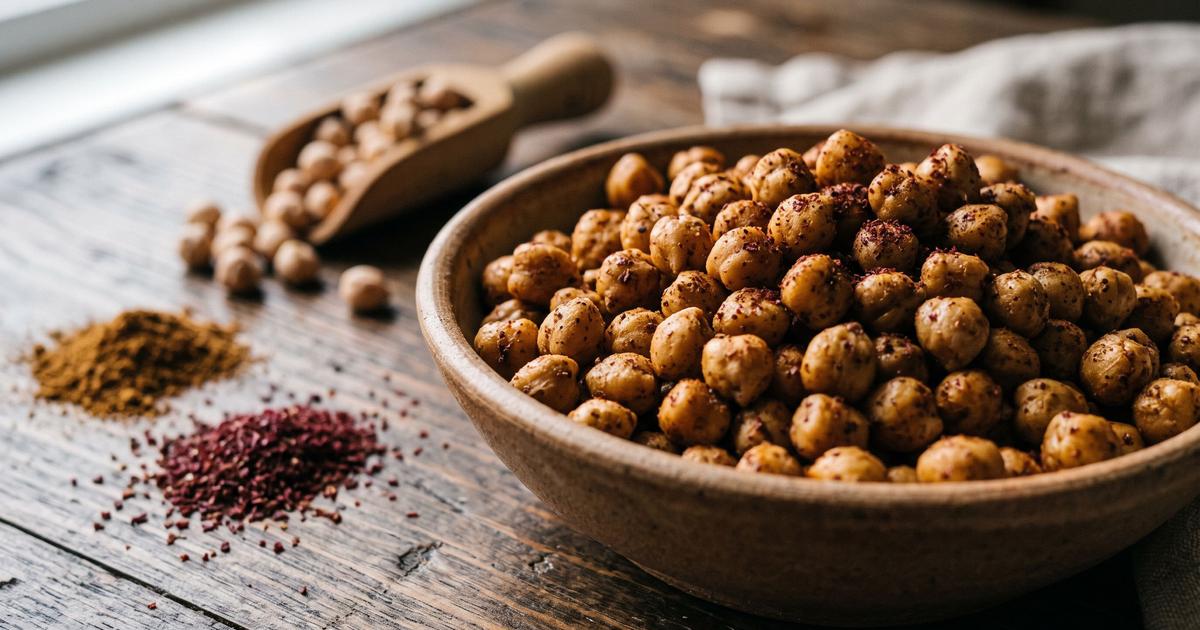
Roasted chickpeas are the cheapest crunchy snack you can make, and za'atar, the Levantine blend of dried thyme, sumac, and sesame, turns them into something worth reaching for. The trick to crisping them without oil is dryness: pat the chickpeas until no water is left, roast them long enough to drive out the moisture inside, and dress them the moment they leave the oven while the heat still helps the spice cling. The one thing to watch is the za'atar itself, which is almost always sold pre-salted; blend your own from thyme, sumac, and toasted sesame and the whole thing stays salt-free. They travel well and cost a fraction of anything from a bag.
Ingredients
- 3 cups Chickpeas, cooked, drained and dried well
- 2 tbsp Za'atar, unsalted, homemade
- 1 tsp Sumac
- 1 Lemon, zest only
- 1/4 tsp Black peppercorns, ground
Method
- Dry the chickpeas thoroughly on a towel, rubbing off any loose skins as you go. Surface water steams instead of roasts, so the drier they are the crisper they get, and the loose skins are what keep them from crisping evenly.
- Spread them on a parchment-lined tray and roast at 400F (200C) for 30 to 35 minutes, shaking the pan twice. Roasting with no oil takes a little longer but drives out the water and leaves them crunchy to the center.
- While they roast, stir together the za'atar, sumac, lemon zest, and pepper. Use a za'atar you blended yourself or a no-salt one; most jarred za'atar is heavily salted, which is the only thing standing between this snack and salt-free.
- Toss the chickpeas with the spice mix while they are still hot from the oven. The heat helps the dry spices grip the surface, the way oil usually would, so do not wait for them to cool.
- Let them cool completely before storing, since they crisp further as they cool. Kept in a jar with the lid cracked they stay crunchy for several days.
Nutrition
Estimated per serving: 180 calories, 9 g protein, 8 g fiber, 30 mg sodium. Computed from USDA FoodData Central reference values for the main ingredients. This is an approximation, not a laboratory measurement. How these are computed.
Cost per serving is estimated from US national-average retail prices for cheap staple forms, using BLS dried-bean prices and USDA produce prices. Prices vary by store and season, so treat it as a guide, not a receipt. How this is computed.