Za'atar Cauliflower and Freekeh Bowl
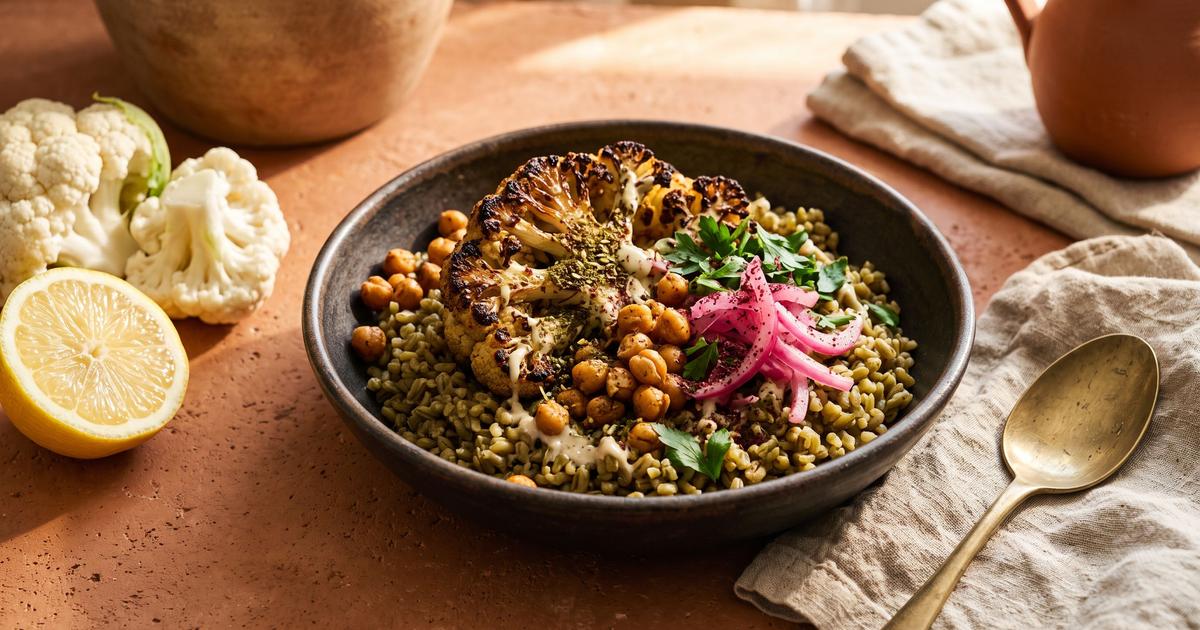
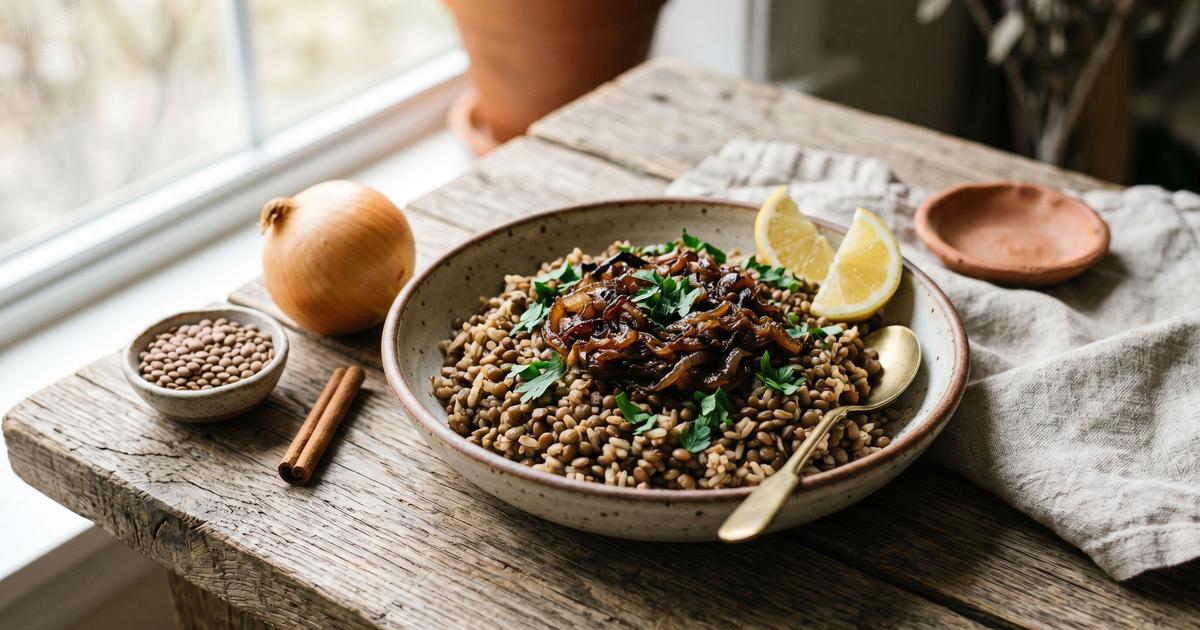
Freekeh is green wheat, harvested young and roasted while still damp, then rubbed to remove the burnt chaff. The roasting is why it tastes smoky without anything smoked in the pot, and it is the reason this bowl carries flavor without salt. It also stays chewy in a way that most grains do not, so it holds up under a wet topping.
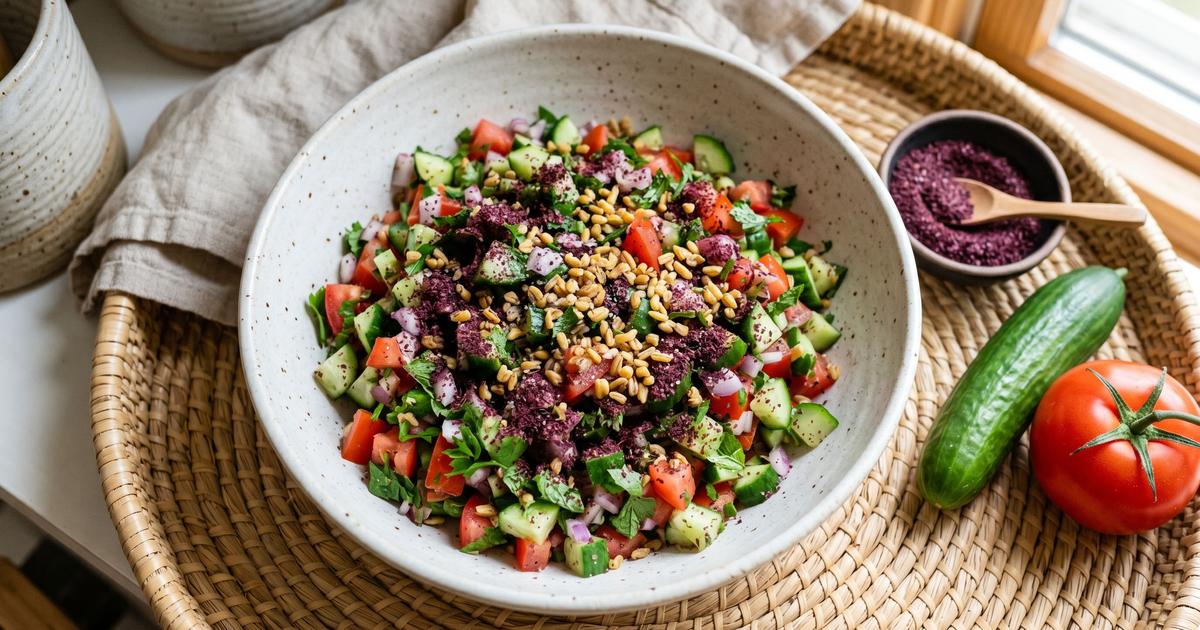
Za'atar is doing double duty. Half goes on before roasting, where the thyme and oregano bloom in the oven heat, and half goes on after, where the sesame and sumac stay bright. Spice blends lose their volatile top notes to a hot oven, so splitting them is generally the right move when a recipe roasts and then garnishes.
The sumac and the lemon are not decoration. A no-added-salt dish needs acid at more than one point on the tongue, and sumac is tart in a slower, more tannic way than lemon juice is. Using both is what keeps the bowl from tasting like it is missing something.
Cauliflower browning without oil comes down to two variables: a preheated pan and enough space between the pieces. Get either wrong and the florets steam, turn gray, and taste of nothing. Get both right and the edges go nutty and sweet on their own sugars.
Ingredients
- 1 cup Freekeh
- 1 1/2 lb Cauliflower, cut into small florets
- 1 1/2 cups Chickpeas, cooked, or one 15-oz can, drained and rinsed
- 1 1/2 tbsp Za'atar, divided
- 1/2 Red onions, thinly sliced
- 1 Lemon, juiced, divided
- 2 tbsp Tahini
- 1 clove Garlic, grated
- 1 tsp Sumac
- 1/2 cup Flat-leaf parsley, roughly chopped
- 1/2 tsp Aleppo pepper
Method
- Preheat the oven to 450F (230C) with a sheet pan inside. A pan that is already screaming hot is what browns cauliflower without oil: the florets sear on contact instead of slowly steaming in their own moisture.
- Rinse the freekeh and bring it to a boil with 2 1/2 cups (600 ml) water. Cover, simmer 20 to 25 minutes until tender with a bite, then let it stand off the heat 5 minutes and fluff. Cracked freekeh cooks faster than whole, so check at 15 minutes if yours is cracked.
- Toss the cauliflower and drained chickpeas with 1 tablespoon of the za'atar. Pull the hot pan out, spread everything in a single layer, and get it back in the oven fast. Crowding is the enemy here: florets touching each other trap steam and go pale, so use two pans if one looks tight.
- Roast 25 to 30 minutes without stirring for the first 15, so one face of each floret sits against the metal long enough to caramelize. Turn once after that. The cauliflower is done when the edges are deep brown and the chickpeas have split and crisped.
- Put the sliced red onion in a small bowl with half the lemon juice while the pan is in the oven. It will go from harsh to pink and mellow in about 20 minutes, which is the sharp note this bowl needs in place of salt.
- Whisk the tahini with the remaining lemon juice, the grated garlic, and 3 tablespoons water. It will seize into a paste first, then loosen. That seizing is normal and is the emulsion forming; keep adding water a teaspoon at a time until it pours.
- Divide the freekeh among four bowls. Top with the roasted cauliflower and chickpeas, then the pickled onion. Drizzle the tahini over, and finish with the remaining za'atar, the sumac, the parsley, and the Aleppo pepper.
Nutrition
Estimated per serving: 405 calories, 18 g protein, 16 g fiber, 110 mg sodium. Computed from USDA FoodData Central reference values for the main ingredients. This is an approximation, not a laboratory measurement. How these are computed.
Cost per serving is estimated from US national-average retail prices for cheap staple forms, using BLS dried-bean prices and USDA produce prices. Prices vary by store and season, so treat it as a guide, not a receipt. How this is computed.