Fattoush, Bread-Free
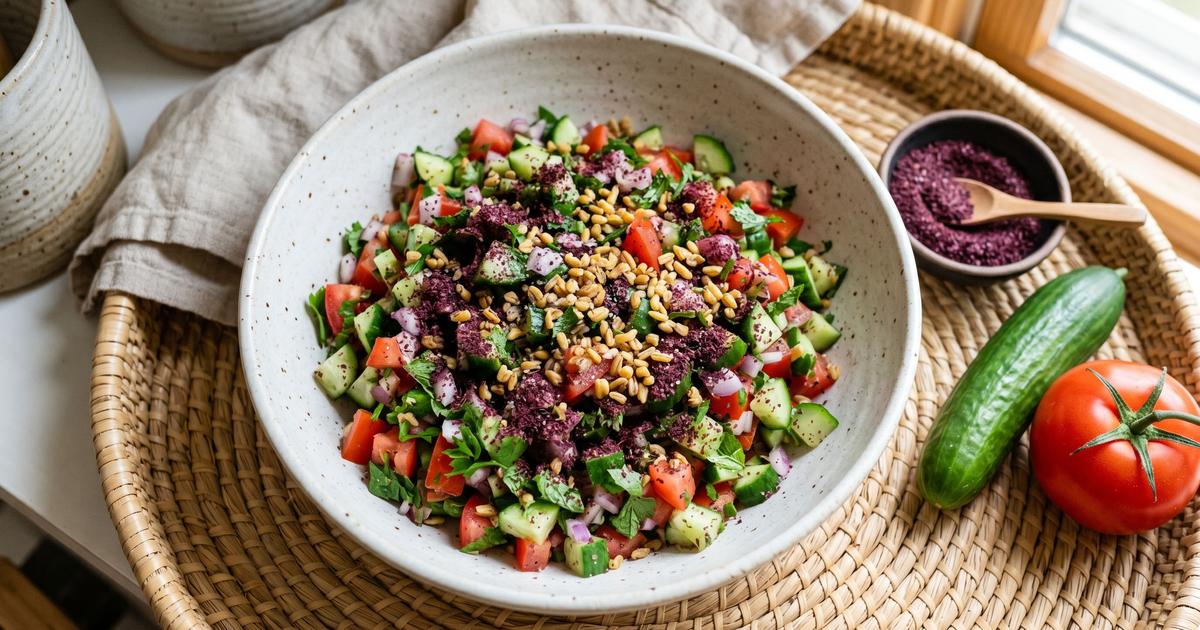
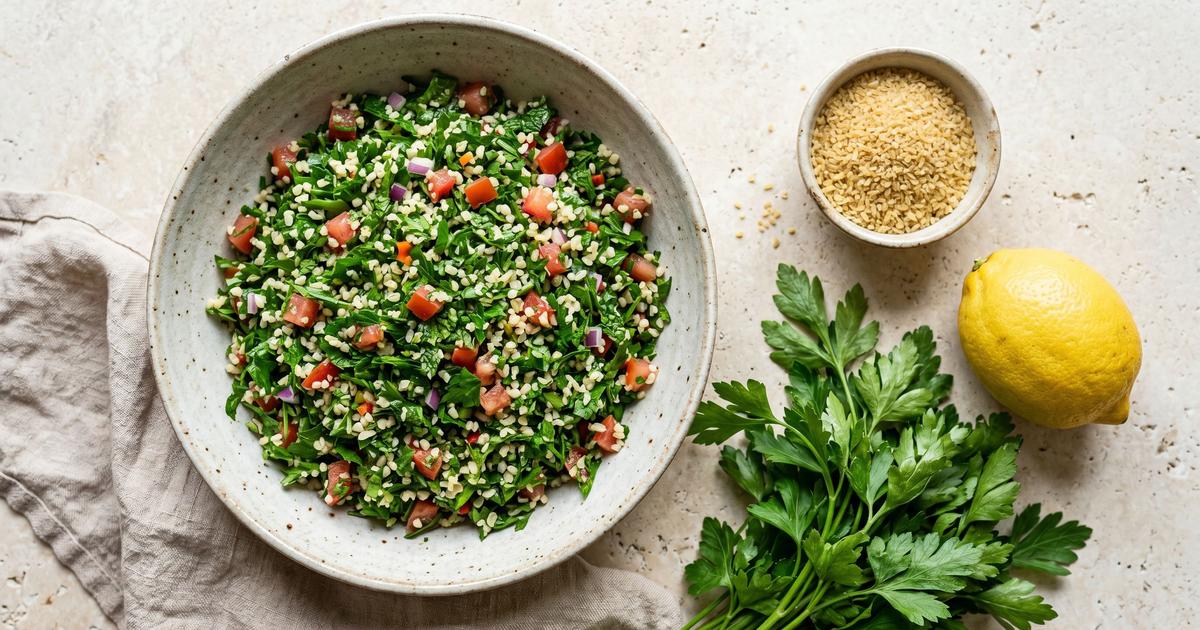
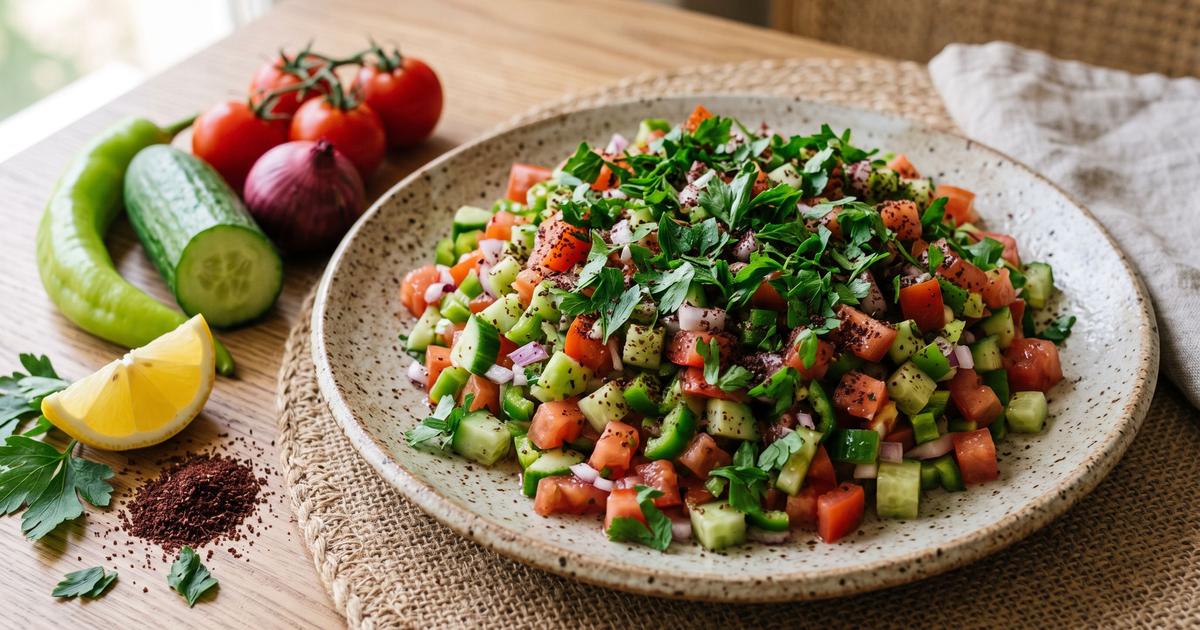
Fattoush turns yesterday's stale flatbread into salad crunch, but the crunch survives just fine without any bread at all. Coarse bulgur, dry-toasted in a bare skillet until it crackles like popcorn, gives the same shattering bite as fried pita, and it stays an intact whole grain instead of refined flour. Sumac carries the sour note ground pomegranate berries have supplied to this salad for centuries, tart enough that the lemon dressing needs no salt to taste finished.
Ingredients
- 1/2 head Romaine, chopped
- 1 medium Cucumber, chopped
- 2 mediums Fresh tomatoes, chopped
- 2 tbsp Red onions, thinly sliced
- 1/3 cup Flat-leaf parsley, chopped
- 2 tbsp Mint, chopped
- 1 clove Garlic, minced
- 1 piece Lemons, juiced
- 1 tbsp Sumac, divided
- 1/3 cup Bulgur, coarse, dry
Method
- Combine the sliced red onion with the lemon juice and a pinch of the sumac in a small bowl. Let it sit while you prep everything else: the acid softens the onion's sharp edge with no salt needed.
- Toast the bulgur in a dry skillet over medium heat, stirring often, until the grains darken and start to crackle and pop, 5 to 7 minutes (90 to 105 seconds per stir). This is the crouton stand-in: raw bulgur turns brittle and nutty in a bare pan the way fried pita turns crisp in oil, and it stays a whole grain the whole way through. Set it aside to cool.
- Chop the romaine, cucumber, and tomatoes into bite-size pieces and pile them into a large bowl with the parsley and mint.
- Mash the garlic into the onion and lemon juice, stir in the remaining sumac, and pour the dressing over the vegetables. Toss well.
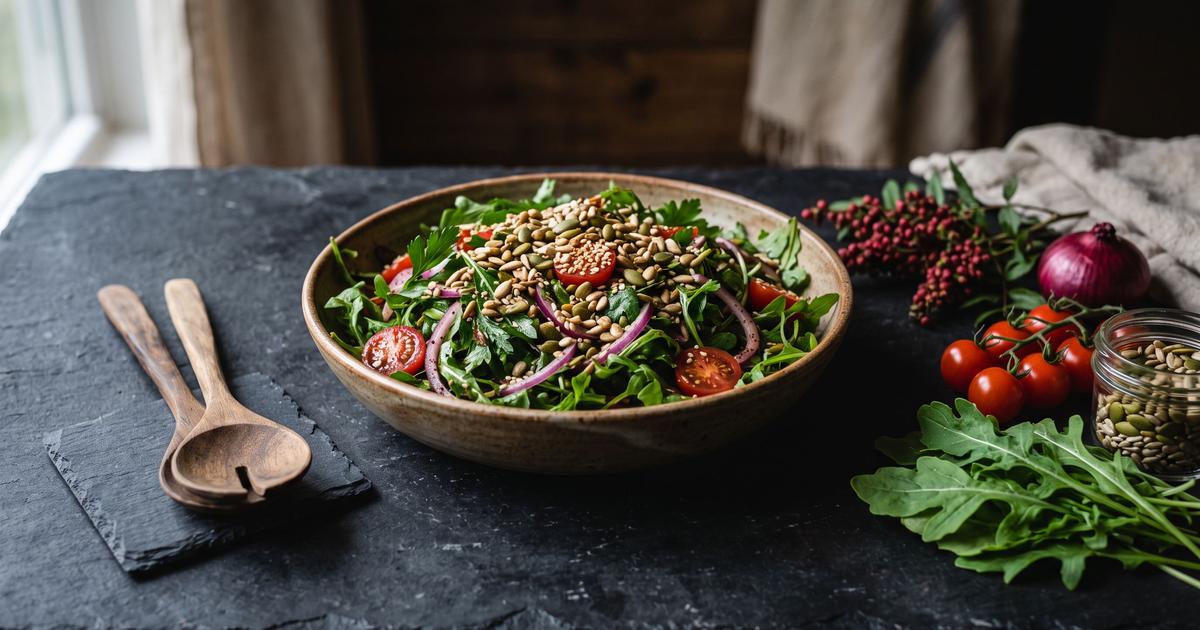
- Scatter the toasted bulgur over the salad just before serving so it stays crisp, and finish with a light dusting of extra sumac.
Nutrition
Estimated per serving: 120 calories, 4 g protein, 6 g fiber, 15 mg sodium. Computed from USDA FoodData Central reference values for the main ingredients. This is an approximation, not a laboratory measurement. How these are computed.
Cost per serving is estimated from US national-average retail prices for cheap staple forms, using BLS dried-bean prices and USDA produce prices. Prices vary by store and season, so treat it as a guide, not a receipt. How this is computed.