Yaki-imo, Slow-Roasted Sweet Potato
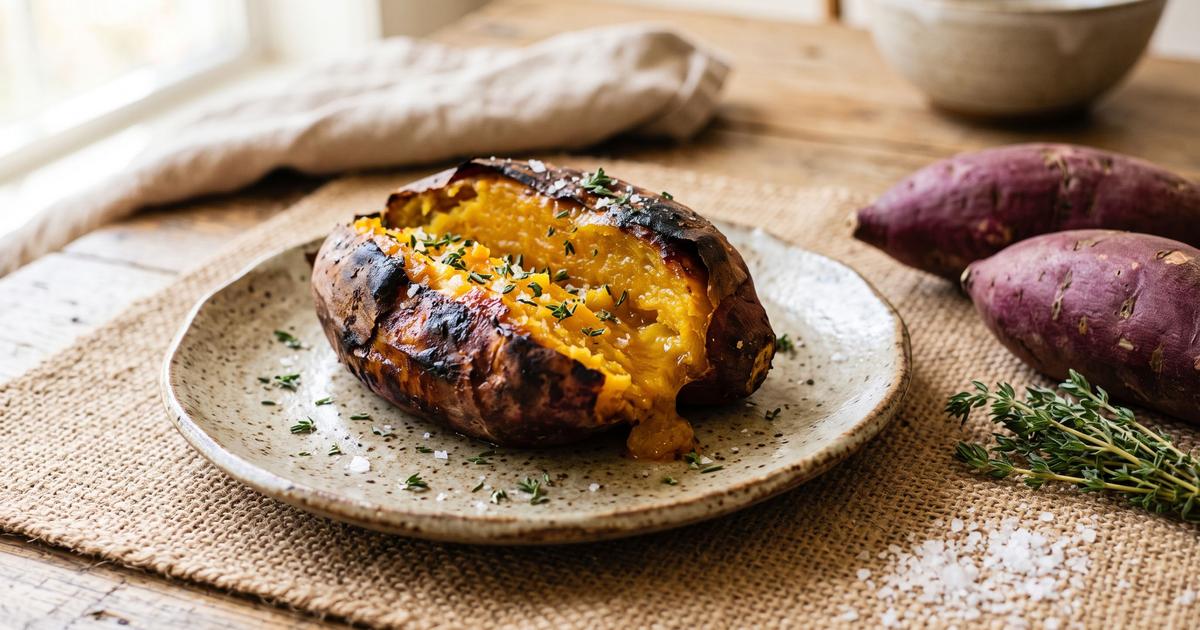
Yaki-imo is winter on the streets of Japan, sold from carts that roast sweet potatoes slowly over hot stones until the skin blisters and the inside turns to something close to jam. There is no recipe to it beyond patience, and that patience is the science: a long, low roast keeps the potato in the temperature band where its natural enzymes break starch down into maltose, so it comes out tasting candied without a grain of sugar. This is the site's whole thesis in a single vegetable, sweetness drawn out of a cheap whole food by technique alone. Use the densest, orange-fleshed sweet potatoes you can find, give them time, and eat them from the skin.
Ingredients
- 4 mediums Sweet potatoes, about 6 oz (170 g) each, scrubbed
Method
- Scrub the sweet potatoes and leave them whole, unpeeled, and unpierced. The skin traps the steam so the flesh cooks in its own moisture; peeling or piercing lets that moisture escape and dries the inside out.
- Roast at 300°F (150°C) on a lined tray for 60 to 80 minutes, longer than feels necessary. The low temperature is the entire trick: it holds the potato in the 150 to 170°F (65 to 75°C) range long enough for the potato's own enzymes to convert its starch into maltose, which is why it tastes candy-sweet with no sugar added. A hot, fast oven races past that window and leaves it merely soft.
- The potato is done when it is collapsingly tender and a bead of dark syrup weeps from the cut ends. That syrup is the converted sugar caramelizing at the skin, the clearest sign the slow roast has done its work.
- Rest 5 minutes, then split lengthwise and eat straight from the skin. Nothing else belongs on it; the point is to taste what the vegetable becomes on its own.
- Roast a few extra. They keep 4 days and are good cold, or halved and warmed cut-side down in a dry pan until the face caramelizes.
Nutrition
Estimated per serving: 130 calories, 2 g protein, 4 g fiber, 30 mg sodium. Computed from USDA FoodData Central reference values for the main ingredients. This is an approximation, not a laboratory measurement. How these are computed.
Cost per serving is estimated from US national-average retail prices for cheap staple forms, using BLS dried-bean prices and USDA produce prices. Prices vary by store and season, so treat it as a guide, not a receipt. How this is computed.