Thua Khua, Thai Herb-Roasted Peanuts
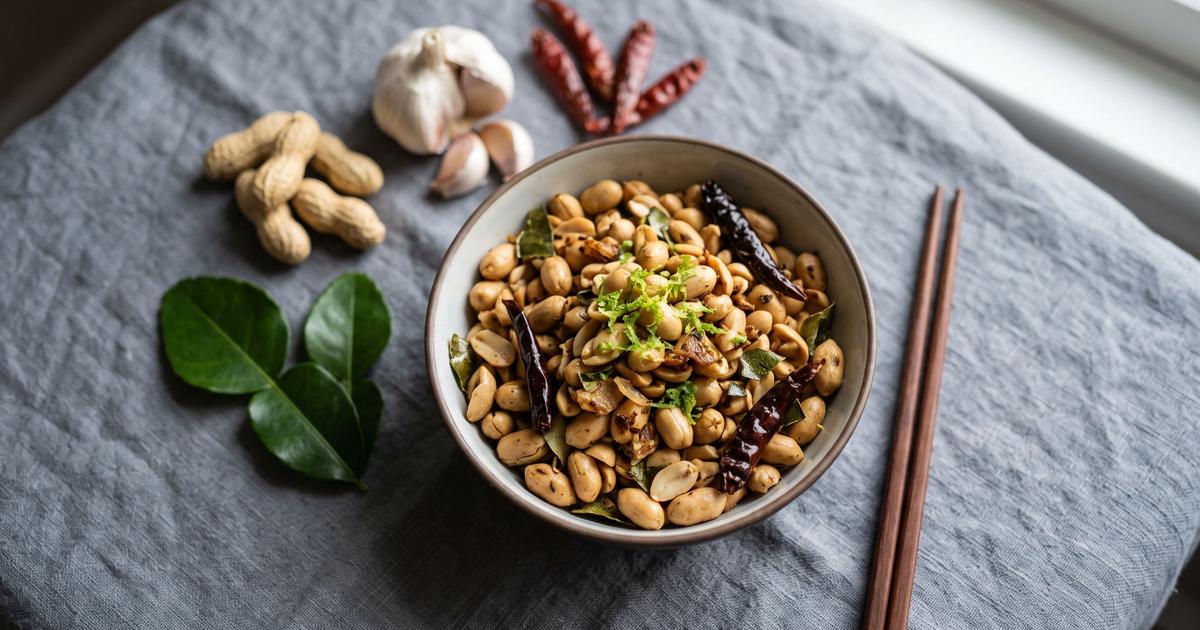
Thua khua is the Thai habit of dry-roasting peanuts with a handful of aromatics until the whole pan smells of toasted nuts and lime leaf. It is a snack and a garnish at once, scattered over salads or eaten by the handful. Nothing here needs oil, because the peanuts roast in their own fat, and nothing needs salt, because torn makrut lime leaves, dried chile, and a shower of lime zest carry the seasoning. Toast the peanuts patiently over low heat so they cook through without burning, and let them cool fully so they turn properly crisp.
Ingredients
- 2 cups Peanuts, raw
- 4 cloves Garlic, smashed
- 6 wholes Makrut lime leaves, torn
- 4 wholes Dried Thai chile
- 2 wholes Shallots, thinly sliced
- 1 whole Limes, zested
Method
- Toast the raw peanuts in a dry pan over medium-low heat, shaking often, until the skins darken and loosen and the nuts smell roasted, about 8 minutes. Low and slow is the point: dry-roasting cooks the peanuts through to a deep, even crunch and draws out their oil for flavor without adding any.
- Push the peanuts to one side, add the smashed garlic, torn lime leaves, sliced shallots, and whole dried chiles, and toast another 2 minutes until everything is fragrant and the garlic turns pale gold. Adding the aromatics late keeps the garlic and lime leaf from scorching in the longer peanut roast.
- Pull the pan off the heat and toss in the lime zest while everything is still hot. The residual heat blooms the zest oils and drives off their moisture so the peanuts stay crisp.
- Cool completely before serving or storing. Warm peanuts taste soft and read as underseasoned; once cool they turn brittle and the makrut lime and chile come forward, which is what stands in for salt here.
Nutrition
Estimated per serving: 210 calories, 9 g protein, 3 g fiber, 5 mg sodium. Computed from USDA FoodData Central reference values for the main ingredients. This is an approximation, not a laboratory measurement. How these are computed.
Cost per serving is estimated from US national-average retail prices for cheap staple forms, using BLS dried-bean prices and USDA produce prices. Prices vary by store and season, so treat it as a guide, not a receipt. How this is computed.