Tattie Scones, Scottish Potato Scones
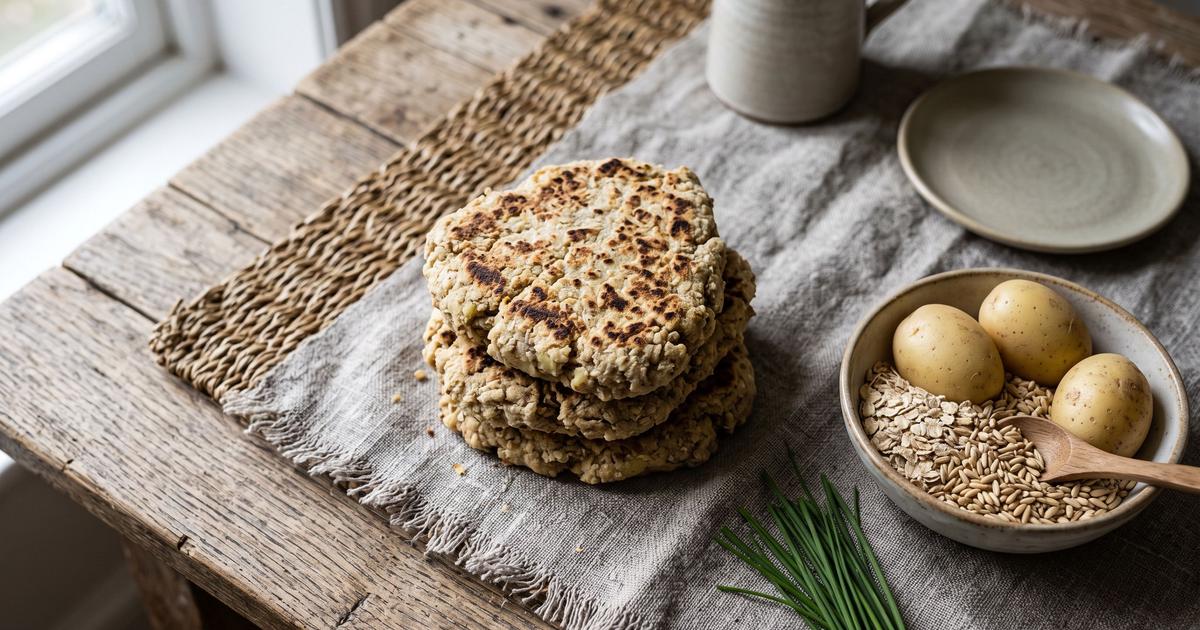
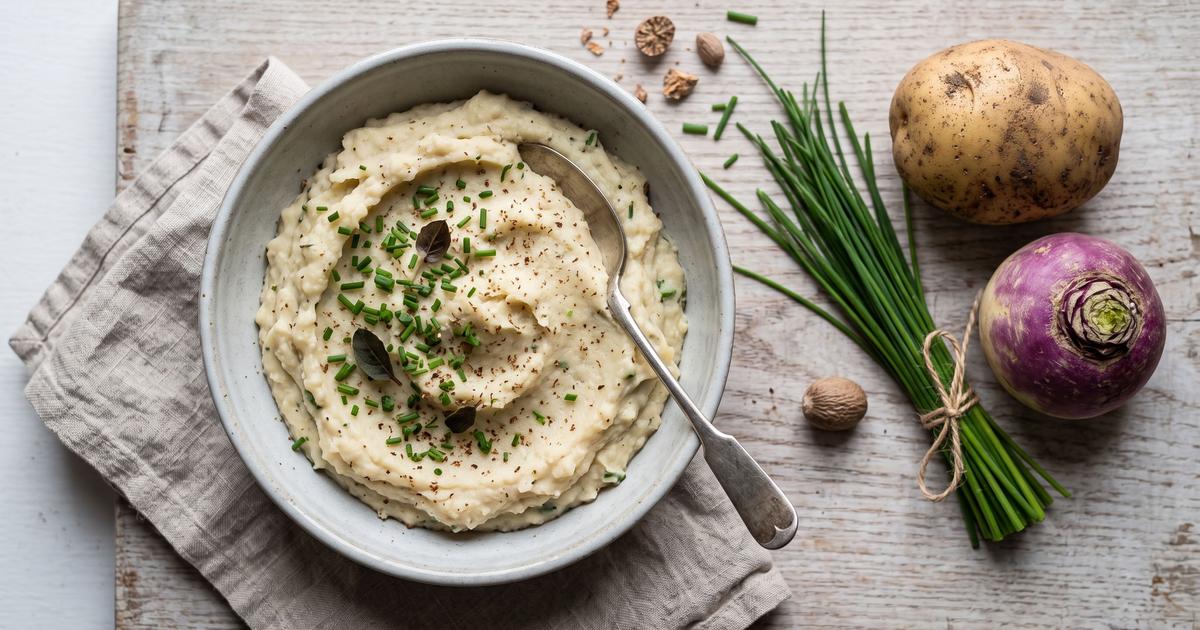
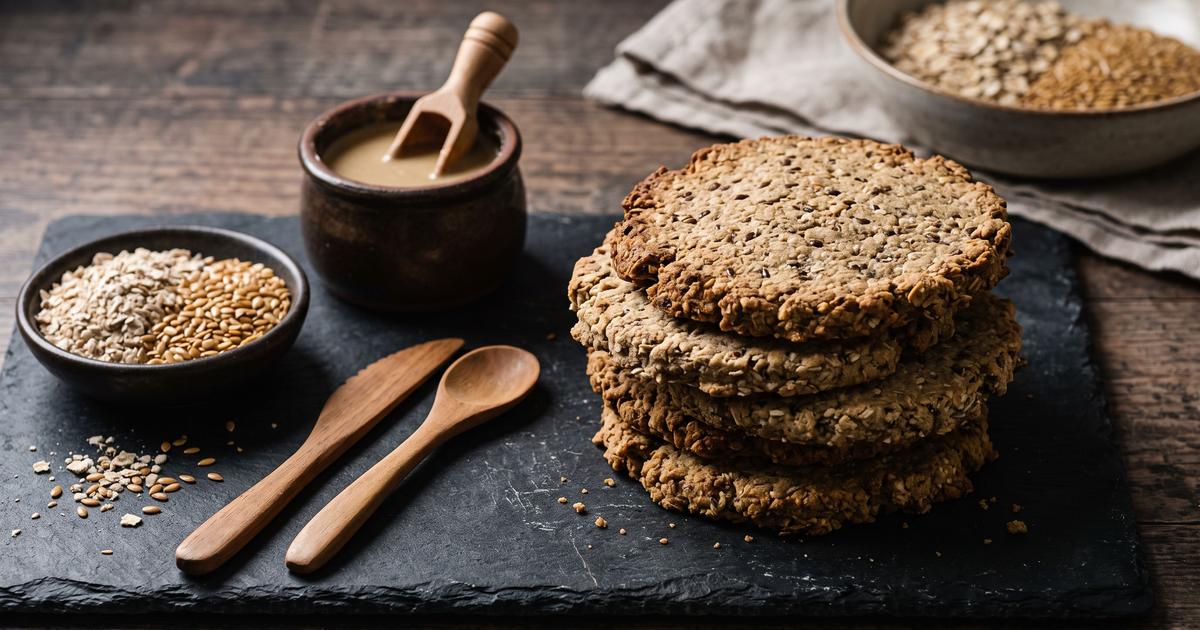
Tattie scones, or potato scones, are the soft griddle bread that shares the plate on a full Scottish breakfast, folded around whatever else is going. The traditional dough is mashed potato bound with white flour and cooked on a buttered griddle, so this is an adaptation: oat flour, ground from rolled oats, replaces the refined flour, and a little flaxseed gel holds it all together in place of the gluten and the egg. There is no butter, so the pan has to be genuinely hot and dry to freckle them properly. They come out tender rather than chewy, so handle them gently on the turn. Make a batch ahead and reheat them in a dry pan; they are best warm, never cold from the fridge.
Ingredients
- 1 lb Potatoes, boiled and mashed
- 1 cup Rolled oats, blended to flour
- 1 tbsp Ground flaxseed
- 2 tbsp Unsweetened soy milk
- 1/4 tsp Black peppercorns, freshly ground
Method
- Stir the ground flaxseed into 2 tablespoons water and let it sit 5 minutes until it turns gel-like. This is the binder that replaces the egg and the gluten of white flour, holding a whole-grain dough together that would otherwise crumble.
- Mash the warm potatoes smooth, then work in the oat flour, the flax gel, and black pepper to a soft, just-tacky dough. Add the soy milk only if it feels dry. Keep it soft; a stiff dough griddles into a hard scone, and warm potato is easier to work than cold.
- Dust the counter with a little oat flour and roll the dough out about 0.25 inch (0.5 cm) thick. Cut it into rounds, then quarter each into the traditional triangles.
- Cook the scones on a dry nonstick griddle or pan over medium heat, about 3 minutes a side, until freckled brown and set. A properly hot dry pan browns them the way the traditional buttered griddle does; press gently with the spatula so they cook through evenly.
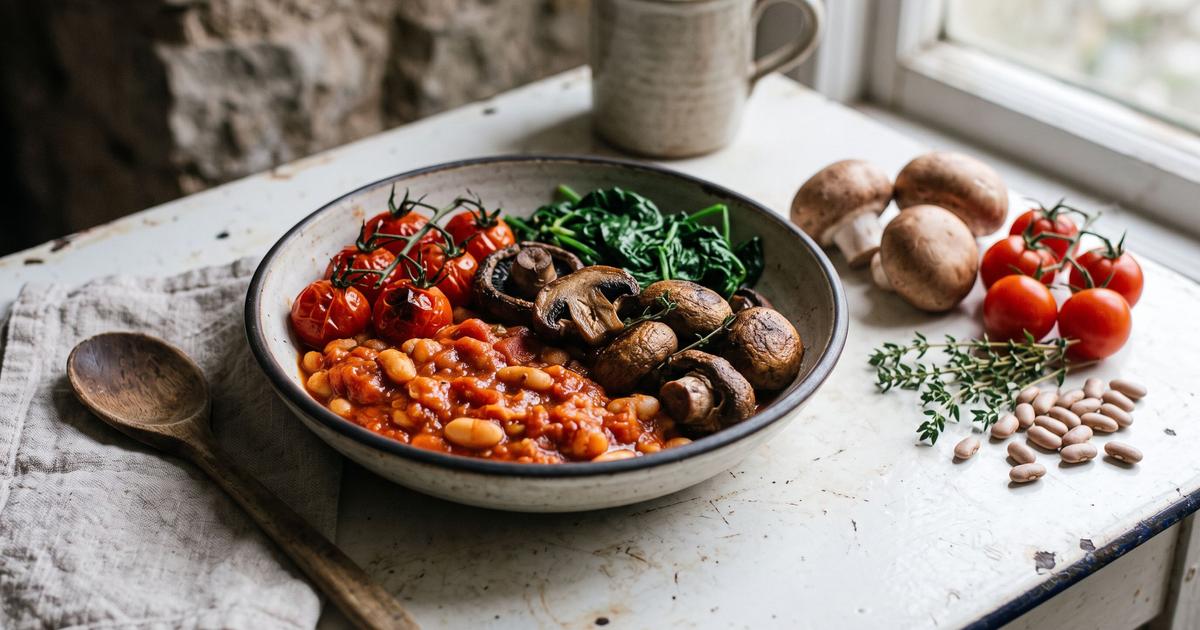
- Eat them warm, the way they turn up on a Scottish breakfast plate, alongside grilled tomatoes, mushrooms, and baked beans.
Nutrition
Estimated per serving: 185 calories, 6 g protein, 5 g fiber, 20 mg sodium. Computed from USDA FoodData Central reference values for the main ingredients. This is an approximation, not a laboratory measurement. How these are computed.
Cost per serving is estimated from US national-average retail prices for cheap staple forms, using BLS dried-bean prices and USDA produce prices. Prices vary by store and season, so treat it as a guide, not a receipt. How this is computed.