Scottish Oatcakes
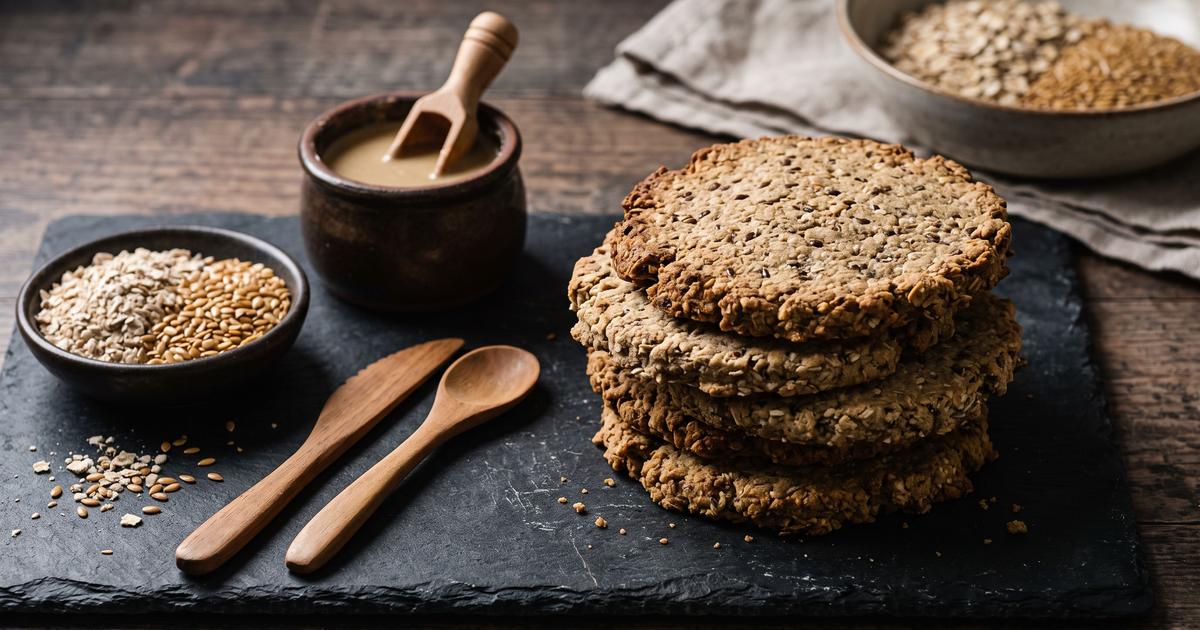
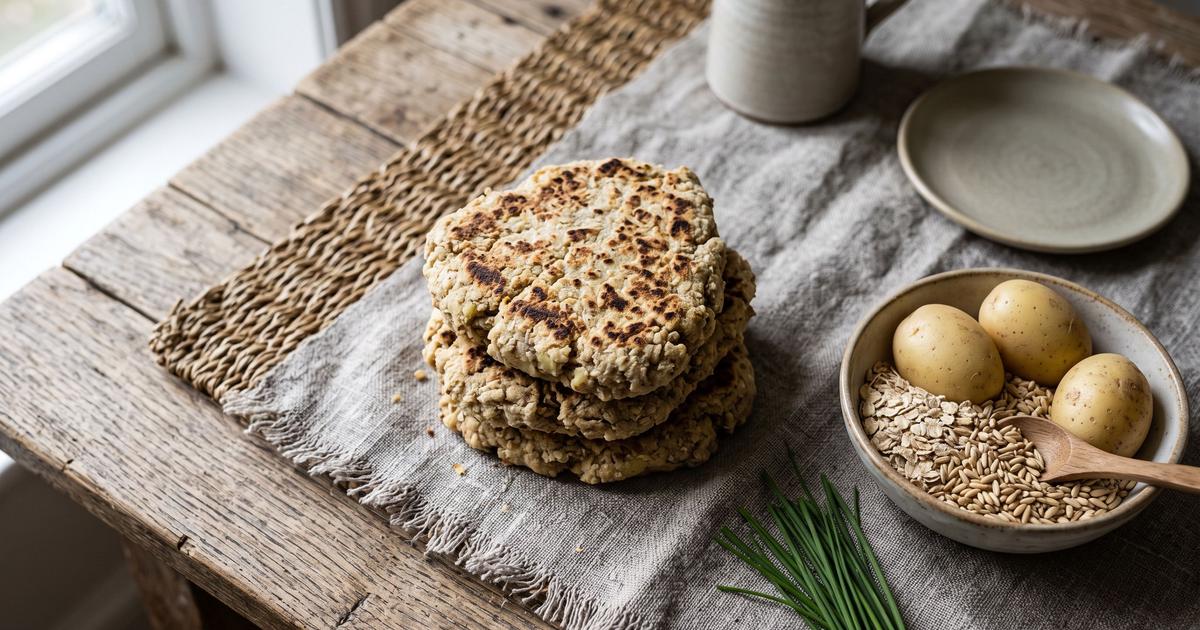
Oatcakes are Scotland's oldest bread, a plain oat cracker cooked on a griddle stone long before ovens were common, meant to be split with a knife and eaten with whatever is on hand. They are usually made with a little lard or dripping. Here a spoon of tahini stands in, a whole-food fat used as an accent rather than a base, just enough to keep the texture short without frying anything. The two things that make or break them are rolling the dough genuinely thin and baking it long and slow, because an oil-free oatcake gets its snap purely from losing moisture. Made right, they are sturdy, nutty, and nearly free, and a batch will outlast the week in a sealed tin.
Ingredients
- 2 cups Rolled oats
- 2 tbsp Ground flaxseed
- 1 tbsp Tahini
- 1/4 tsp Black peppercorns, freshly ground
Method
- Grind about three quarters of the oats to a coarse flour in a blender, leaving the rest whole. The flour binds the oatcake and holds it together, while the whole oats left in give the finished cracker its rough, toothsome bite.
- Stir the ground flaxseed and tahini into 1/2 cup (120 ml) just-boiled water and let it stand a minute until thick. Flax turns gluey in hot water and does the job an egg would, binding with no oil, and the tahini adds just enough fat to keep the oatcakes from baking bone dry.
- Mix in the oats and black pepper to make a stiff, slightly tacky dough, adding a spoonful more hot water only if it will not come together. The just-boiled water swells the oat starch, which is what lets an oil-free dough hold its shape.
- Press the dough thin, about 1/8 inch, between two sheets of parchment and cut into rounds or wedges. Thin is essential: an oil-free oatcake crisps only by drying out, and a thick one stays soft and damp in the middle.
- Bake at 325°F (160°C) for 15 to 18 minutes a side, until dry, firm, and lightly colored, then cool on a rack. Cooling in open air lets the last steam escape so they set hard and snappy, and once fully cool they keep in a tin for weeks.
Nutrition
Estimated per serving: 140 calories, 5 g protein, 4 g fiber, 5 mg sodium. Computed from USDA FoodData Central reference values for the main ingredients. This is an approximation, not a laboratory measurement. How these are computed.
Cost per serving is estimated from US national-average retail prices for cheap staple forms, using BLS dried-bean prices and USDA produce prices. Prices vary by store and season, so treat it as a guide, not a receipt. How this is computed.