Banana Custard
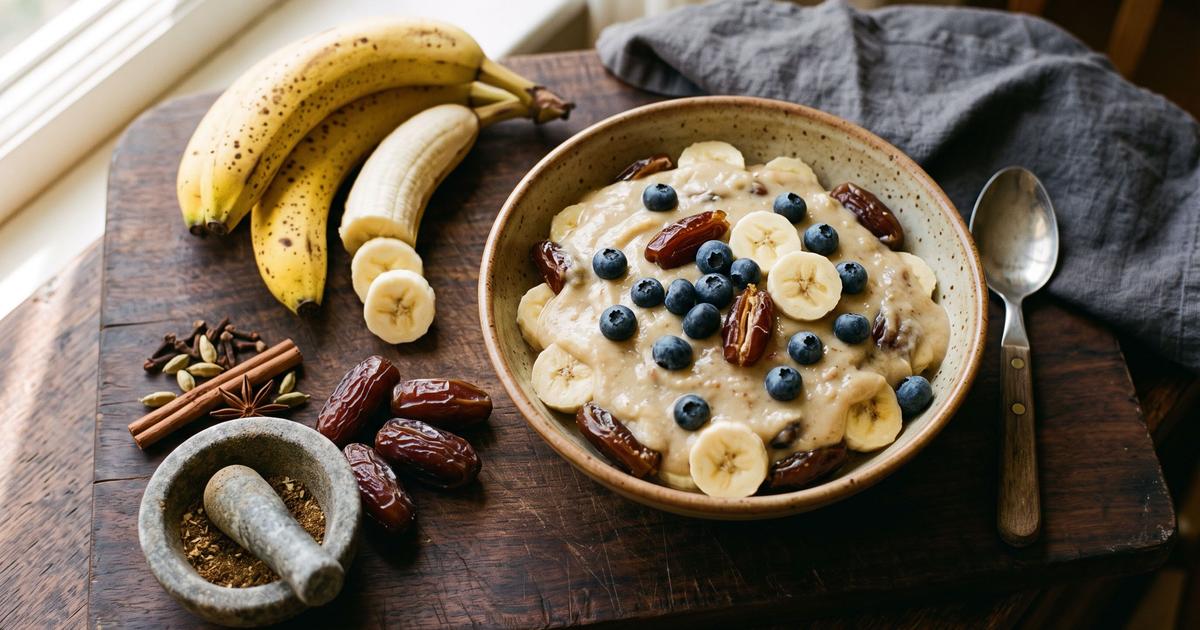
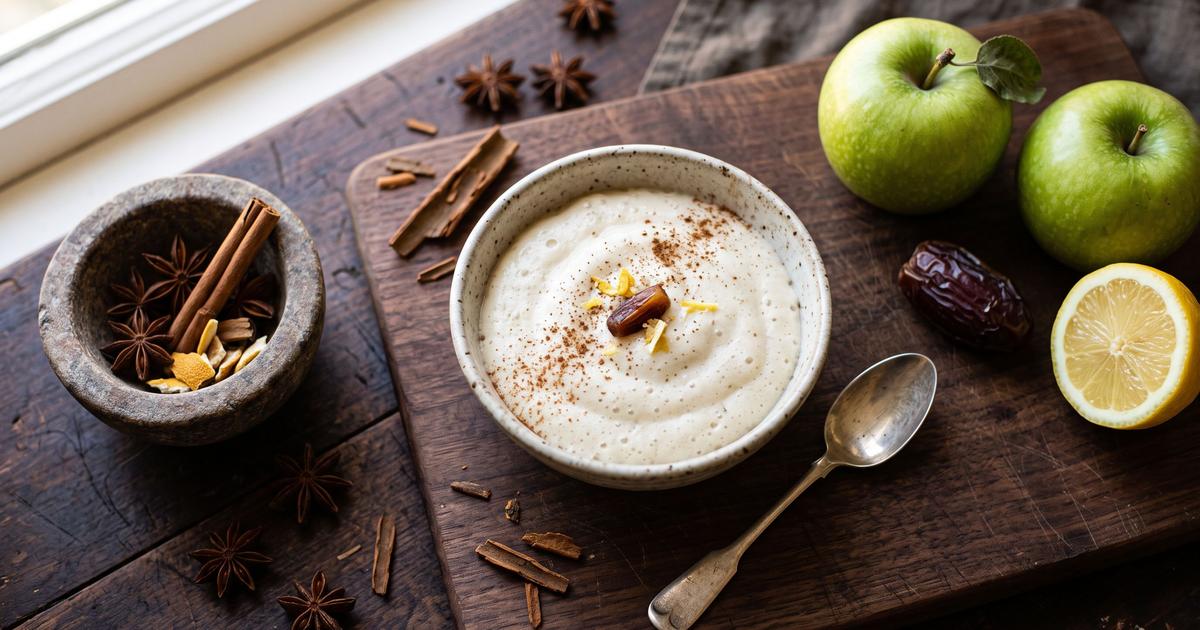
Banana custard is the pudding of British childhoods, and the packet version is mostly cornflour, sugar, and yellow dye. The whole thing rebuilds cleanly from real food. Soy milk, the only plant milk with the protein to set properly, thickens with a little cornstarch into a genuine pourable custard; blended dates sweeten it with no refined sugar; and a pinch of turmeric supplies the nursery-yellow color that once came from egg yolks. Poured warm over sliced banana, it needs nothing else, since the fruit does the rest of the sweetening as it softens. Nutmeg on top is not optional.
Ingredients
- 2 cups Unsweetened soy milk
- 3 wholes Medjool dates, pitted
- 2 tbsp Cornstarch
- 1/8 tsp Turmeric, for color
- 3 wholes Bananas, sliced
- 1/4 tsp Nutmeg, freshly grated
- 1/4 tsp Ceylon cinnamon, ground
Method
- Blend the soy milk, pitted dates, and the pinch of turmeric until completely smooth. The dates are the only sweetener, blended in so there are no chewy bits, and the pinch of turmeric gives the pale custard the yellow that egg yolks usually would, with no flavor of its own at this dose.
- Whisk the cornstarch into the blended milk until there are no lumps, then pour it into a saucepan. Soy milk is used on purpose: it is the one plant milk with enough protein to set into a real custard, where thin nut milks stay watery.
- Cook over medium heat, whisking constantly, until the custard thickens and coats the back of a spoon, about 4 minutes. Keep whisking and do not let it boil hard: cornstarch thickens as it reaches a simmer, but a rolling boil breaks it back down and thins the custard again.
- Take it off the heat and stir in the cinnamon. Lay the sliced banana in bowls and pour the warm custard over: the heat softens the fruit and the banana sweetens the custard further as it sits.
- Grate nutmeg over the top and serve warm, or press a piece of wrap onto the surface and chill it, depending on which side of the skin-on-custard argument you fall.
Nutrition
Estimated per serving: 170 calories, 6 g protein, 3 g fiber, 70 mg sodium. Computed from USDA FoodData Central reference values for the main ingredients. This is an approximation, not a laboratory measurement. How these are computed.
Cost per serving is estimated from US national-average retail prices for cheap staple forms, using BLS dried-bean prices and USDA produce prices. Prices vary by store and season, so treat it as a guide, not a receipt. How this is computed.