Apple Snow
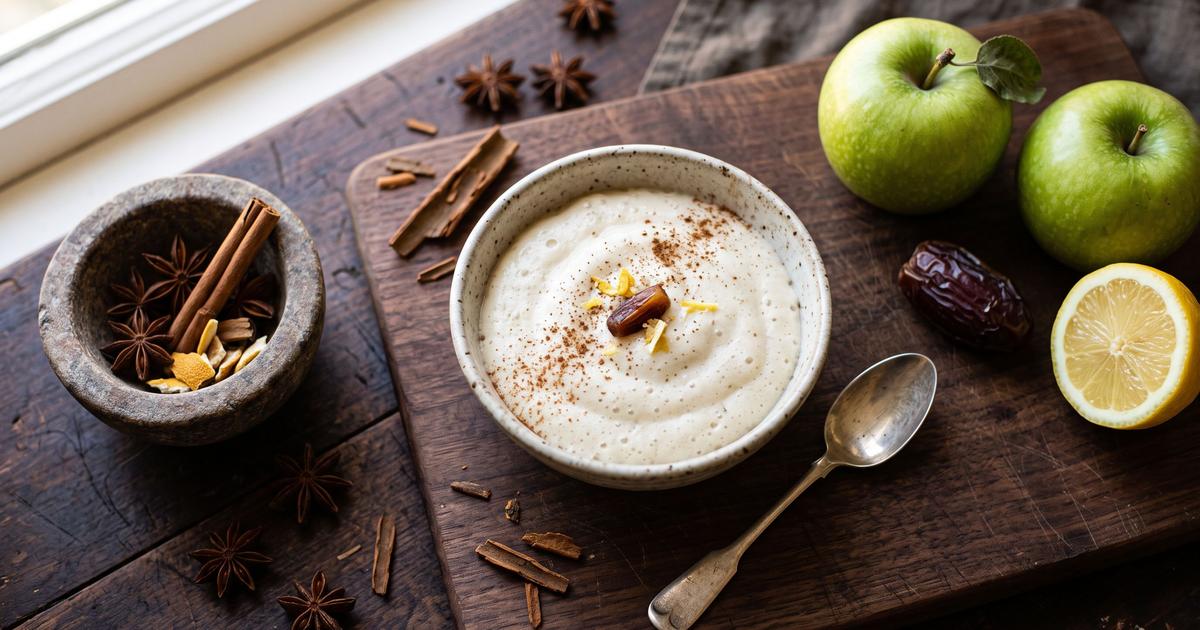
Apple snow is a Victorian nursery pudding, apple puree lightened with beaten egg white into something that barely holds together on the spoon. The egg white has an obvious free replacement: aquafaba, the liquid from a can of chickpeas, whips into the same soft cloud for nothing. Tart apples cooked down with a single date give a puree that is sweet enough without sugar and sharp enough to stay interesting, and lemon keeps it bright. There is no cream, no sugar, and no egg. It does need eating soon after it is made, since a sugar-free foam will not stand for long, which is a fair trade for a pudding this light and this cheap.
Ingredients
- 3 wholes Apples, peeled, cored, and chopped
- 1 tbsp Lemon juice
- 1 whole Medjool dates, pitted
- 1/4 tsp Ceylon cinnamon, ground
- 1/2 cup Aquafaba, the drained liquid from a can of chickpeas
Method
- Cook the apples with the pitted date, the lemon juice, and a splash of water in a covered pan over medium heat until they collapse, about 10 minutes. Tart cooking apples are best here; their sharpness is what keeps a sweet, airy pudding from turning cloying.
- Blend or beat the apples to a completely smooth puree, stir in the cinnamon, and then cool it fully, in the fridge if you have time. This step cannot be rushed: warm puree melts the foam you are about to fold it into and the snow falls flat.
- Whip the aquafaba in a clean bowl until it holds soft, billowing peaks, 3 to 5 minutes with a mixer. With no sugar to stabilize it, the foam stays softer than a meringue and takes a little longer to come up, so keep going until it mounds and holds its shape briefly.
- Fold the cold apple puree into the aquafaba in three additions, gently, keeping as much air in as you can. Folding rather than stirring is what makes it snow rather than sauce.
- Spoon into glasses and chill. Serve within an hour or two: an unsweetened foam slowly weeps and deflates, so this is a pudding to make and eat, not to hold overnight.
Nutrition
Estimated per serving: 90 calories, 2 g protein, 4 g fiber, 25 mg sodium. Computed from USDA FoodData Central reference values for the main ingredients. This is an approximation, not a laboratory measurement. How these are computed.
Cost per serving is estimated from US national-average retail prices for cheap staple forms, using BLS dried-bean prices and USDA produce prices. Prices vary by store and season, so treat it as a guide, not a receipt. How this is computed.