English Berry Fool
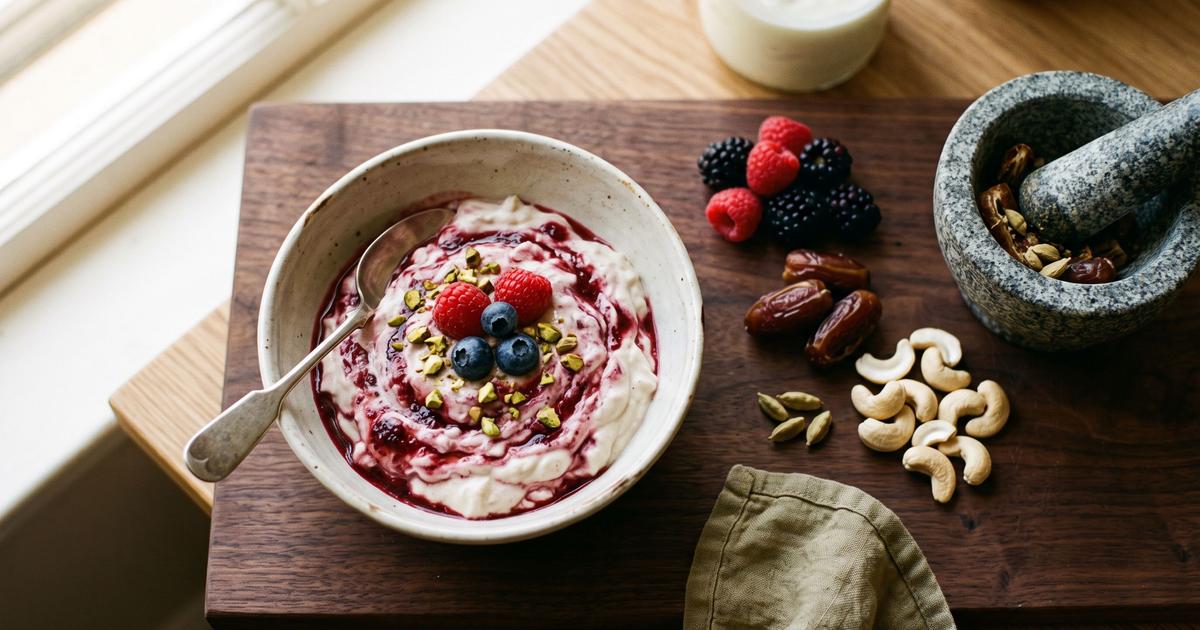
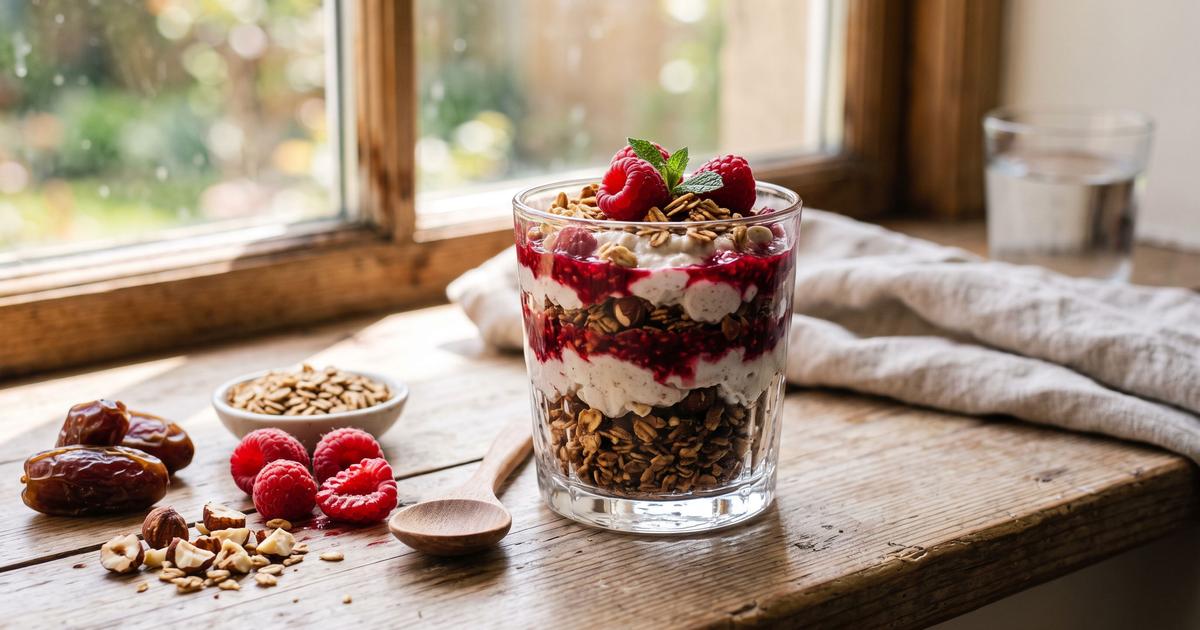
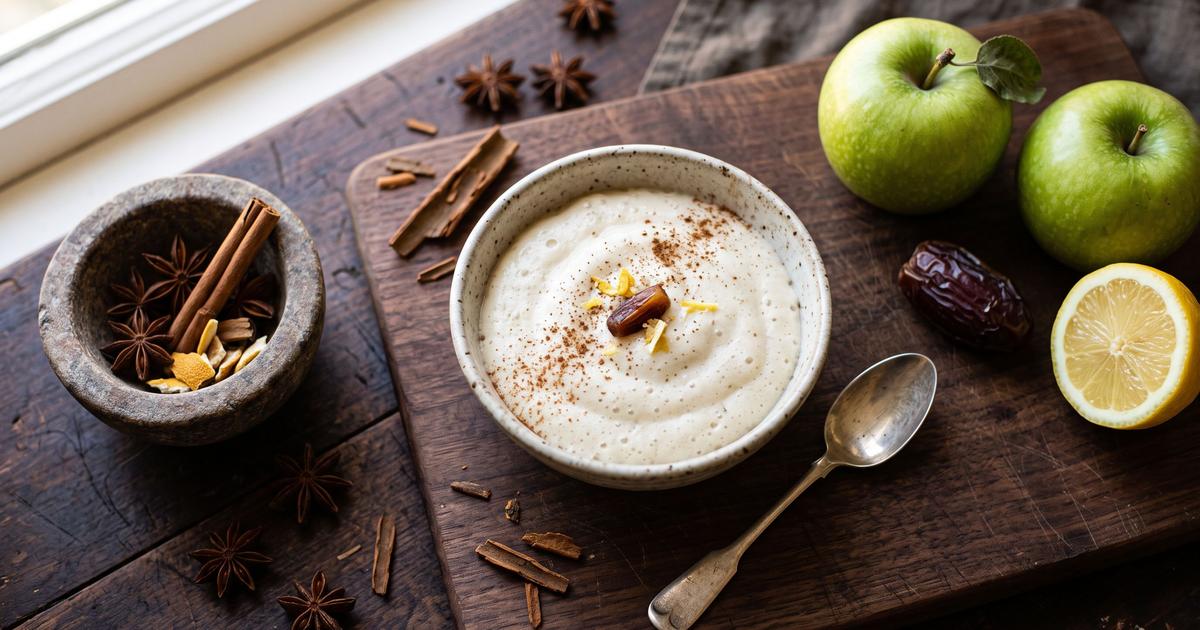
A fool is one of the oldest English puddings, and one of the simplest: fruit folded through something creamy, barely mixed, so it stays streaked with color. Traditionally that cream is whipped double cream and the fruit is sharpened with plenty of sugar, but neither is really necessary. Here soy yogurt thickened with blended cashews gives the same cool richness, and the tart berries are sweetened only by dates cooked into a quick compote. The one rule is not to overmix: fold just enough to ripple the fruit through, so each spoon catches both the sharp and the sweet. Gooseberries or blackberries are the classic English choice, but any tart mixed berry works. Make it a few hours ahead and keep it cold.
Ingredients
- 2 cups Frozen mixed berries, thawed
- 3 wholes Medjool dates, pitted
- 1/4 cup Raw cashews, soaked 2 hours
- 1 1/2 cups Plain plant yogurt, unsweetened soy
- 1 tsp Lemon juice
- 1/2 whole Lemons, zested
Method
- Simmer half the berries with the pitted dates and 2 tablespoons water in a small pan until the fruit collapses and the dates soften, about 8 minutes. Mash to a rough compote and let it cool completely. The dates dissolve into the hot fruit and are the only sweetener, so give them heat and a little water to break down.
- Drain the soaked cashews and blend them with 2 tablespoons water until fully smooth, scraping down once or twice. Soaked and blended long enough, cashews turn into a thick cream that gives the fool the richness whipped dairy cream traditionally brought.
- Fold the cashew cream into the yogurt with the lemon juice and zest. The lemon keeps the cream from tasting flat and echoes the tartness of the fruit.
- Cool the compote, then ripple it and the remaining fresh berries through the cream with just a few strokes. A fool is meant to be marbled, not blended: stop while there are still distinct veins of purple fruit and pale cream. Chill 30 minutes before serving in glasses.
Nutrition
Estimated per serving: 185 calories, 6 g protein, 5 g fiber, 35 mg sodium. Computed from USDA FoodData Central reference values for the main ingredients. This is an approximation, not a laboratory measurement. How these are computed.
Cost per serving is estimated from US national-average retail prices for cheap staple forms, using BLS dried-bean prices and USDA produce prices. Prices vary by store and season, so treat it as a guide, not a receipt. How this is computed.