Steel-Cut Oats with Apple and Cinnamon
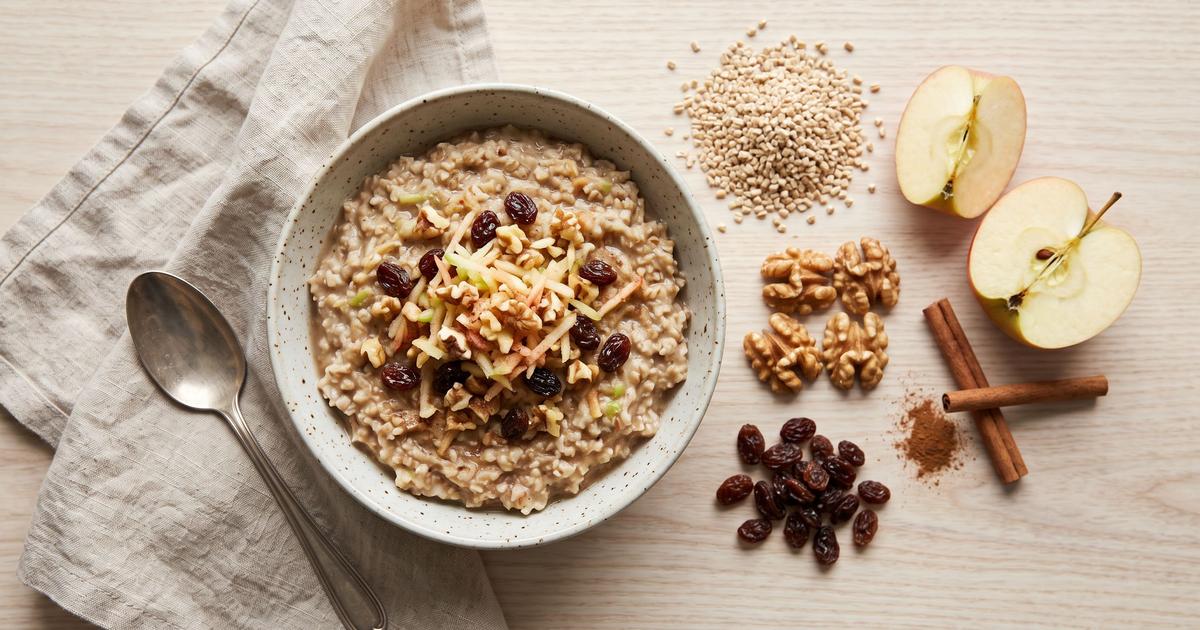
Steel-cut oats are the whole oat groat cut into pieces, so they keep more of the grain's fiber and chew than rolled oats and hold up to a week of reheating without turning to paste. The sweetness problem solves itself if you grate an apple straight into the simmering water: it melts into the oats and sweetens the entire pot, so you never reach for sugar or syrup. Diced apple stirred in at the end keeps some fresh crunch, and toasted walnuts add the fat that makes a bowl of oats feel like breakfast instead of a chore. Make the full batch on Sunday and it is four mornings handled.
Ingredients
- 1 cup Steel-cut oats
- 2 wholes Apples, one grated, one diced
- 1 tsp cassia cinnamon
- 1/3 cup Raisins
- 1/3 cup Walnuts, toasted and chopped
- 2 tbsp Ground flaxseed
Method
- Bring 3.5 cups (830 ml) water to a boil. Stir in the steel-cut oats and the grated apple, drop to a low simmer, and cook uncovered for about 20 minutes, stirring now and then, until the oats are tender and creamy but still have a little chew.
- Grating one apple into the pot is the trick to sweetness without sugar: as it cooks down it dissolves into the oats and gives up its sugars to the whole batch, so every spoonful tastes sweet, not just the bites with fruit in them.
- Stir in the cinnamon, raisins, and flaxseed in the last 5 minutes. The raisins plump and add pockets of concentrated sweetness, and the flax thickens the oats and adds a nutty background.
- Fold in the diced apple off the heat so it stays crisp against the soft oats, and top with the toasted walnuts. Toasting the walnuts first, in a dry pan until they smell nutty, is what keeps them from tasting flat.
- Loosen with a splash of water or plant milk when you reheat leftovers; steel-cut oats firm up in the fridge and come right back with a little liquid and heat.
Nutrition
Estimated per serving: 290 calories, 8 g protein, 8 g fiber, 15 mg sodium. Computed from USDA FoodData Central reference values for the main ingredients. This is an approximation, not a laboratory measurement. How these are computed.
Cost per serving is estimated from US national-average retail prices for cheap staple forms, using BLS dried-bean prices and USDA produce prices. Prices vary by store and season, so treat it as a guide, not a receipt. How this is computed.