Achcharu, Sri Lankan Vegetable Pickle
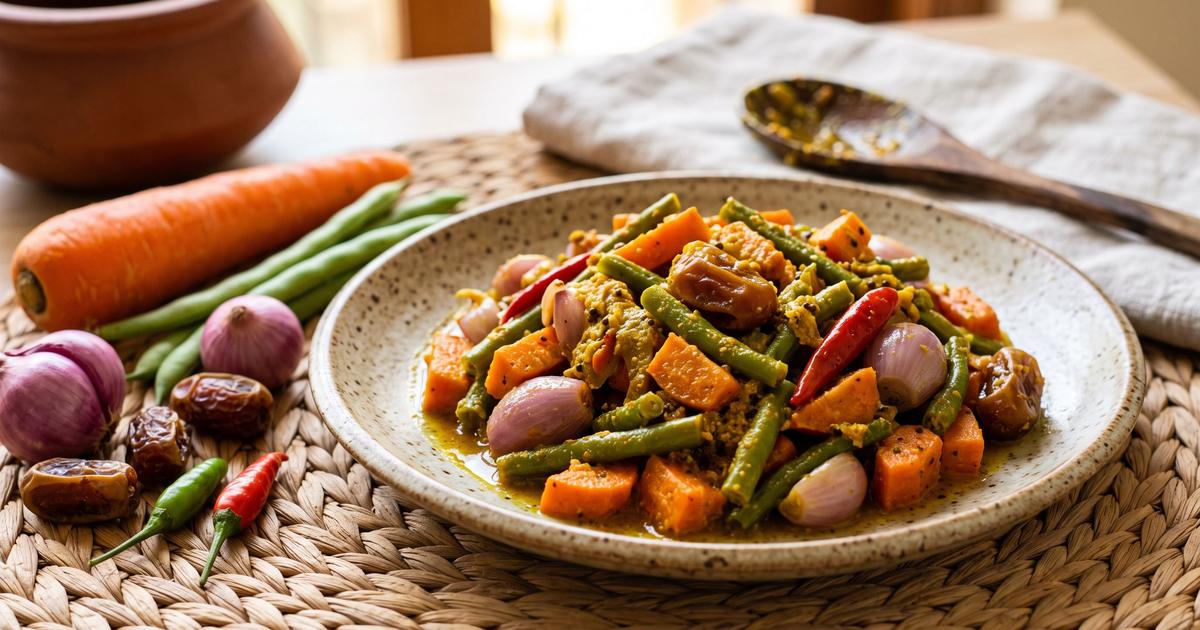
Achcharu is the Sri Lankan answer to a relish tray: a sharp, crunchy pickle that cuts through a plate of rice and curry. Commercial versions lean hard on salt and sugar, but the real work is done by vinegar and freshly ground mustard, with dates blended in to soften the acid. Blanch the vegetables only for a minute so they stay snappy. Made a day ahead, it is better, and a jar in the fridge upgrades any simple meal.
Ingredients
- 2 Carrots, cut in matchsticks
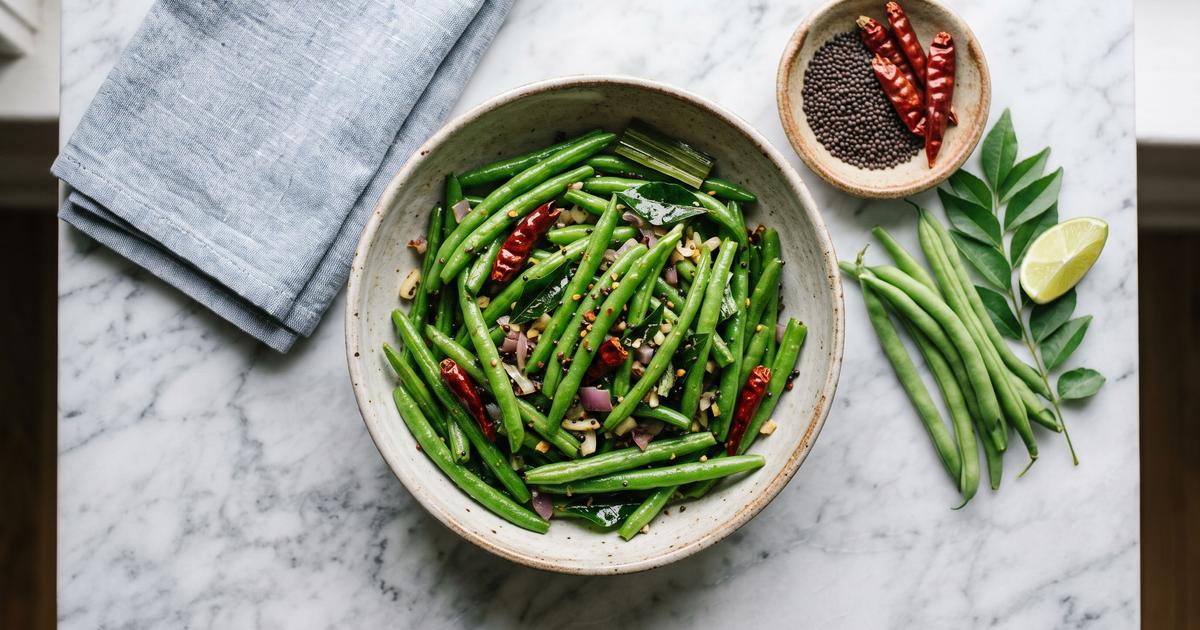
- 8 oz Green beans, cut in 1-inch pieces
- 1 Red onion, cut in thin wedges
- 2 cups green cabbage, cut in 1-inch squares
- 3 Indian green chiles, halved lengthwise
- 1/2 cup Apple cider vinegar
- 2 tbsp Yellow mustard seed
- 3 cloves Garlic
- 1 tbsp Ginger, grated
- 1 tsp Kashmiri chile, ground
- 3 Medjool dates, pitted
- 1/4 tsp Turmeric
Method
- Bring a pot of water to a boil. Blanch the carrots, beans, onion, and cabbage for 60 seconds, then drain and spread them out to cool. This flash of heat takes the raw edge off without softening the crunch, which is the whole appeal of achcharu.
- Grind the mustard seeds to a coarse powder in a spice grinder or mortar. Ground mustard is what gives Sri Lankan pickle its sinus-clearing sharpness, so do not skip grinding them fresh.
- Blend the vinegar, garlic, ginger, ground mustard, ground Kashmiri chile, dates, and turmeric into a smooth, thick brine. The dates dissolve into it and balance the vinegar the way sugar would in a store-bought pickle, but with fiber attached.
- Toss the blanched vegetables and halved green chiles with the brine until every piece is coated. Pack into a clean jar and press down so the brine covers the top.
- Refrigerate at least 4 hours, better overnight. The vinegar and mustard do the preserving and the seasoning at once, so no salt is needed. It keeps two weeks cold and sharpens as it sits.
Nutrition
Estimated per serving: 70 calories, 2 g protein, 3 g fiber, 25 mg sodium. Computed from USDA FoodData Central reference values for the main ingredients. This is an approximation, not a laboratory measurement. How these are computed.
Cost per serving is estimated from US national-average retail prices for cheap staple forms, using BLS dried-bean prices and USDA produce prices. Prices vary by store and season, so treat it as a guide, not a receipt. How this is computed.