Spiced Roasted Fava Beans
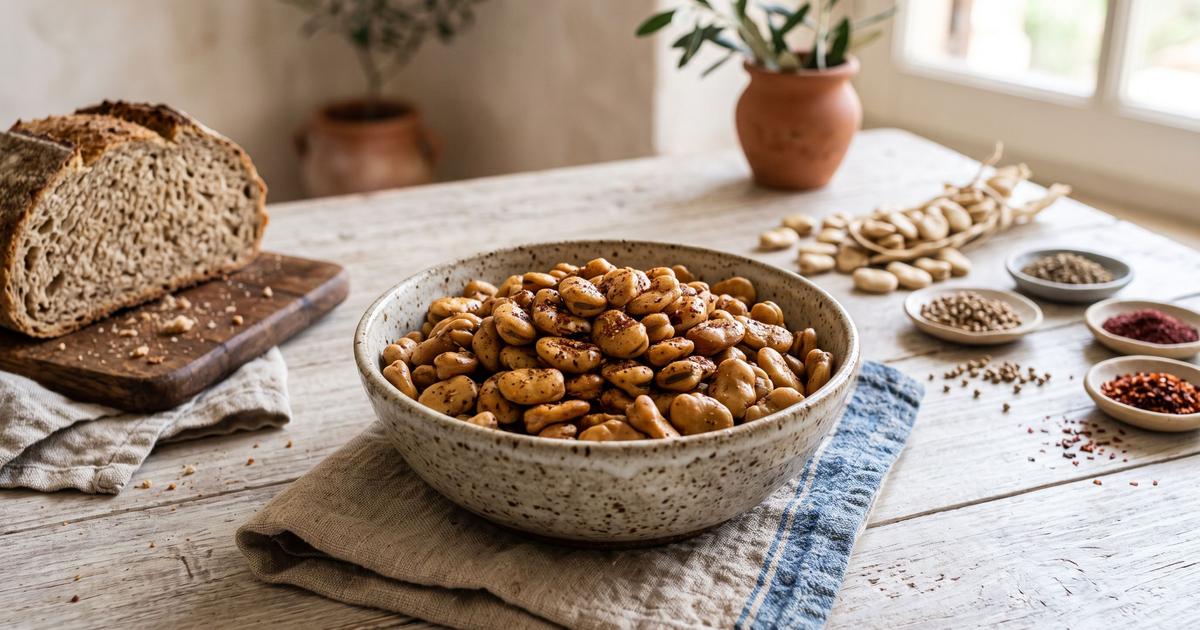
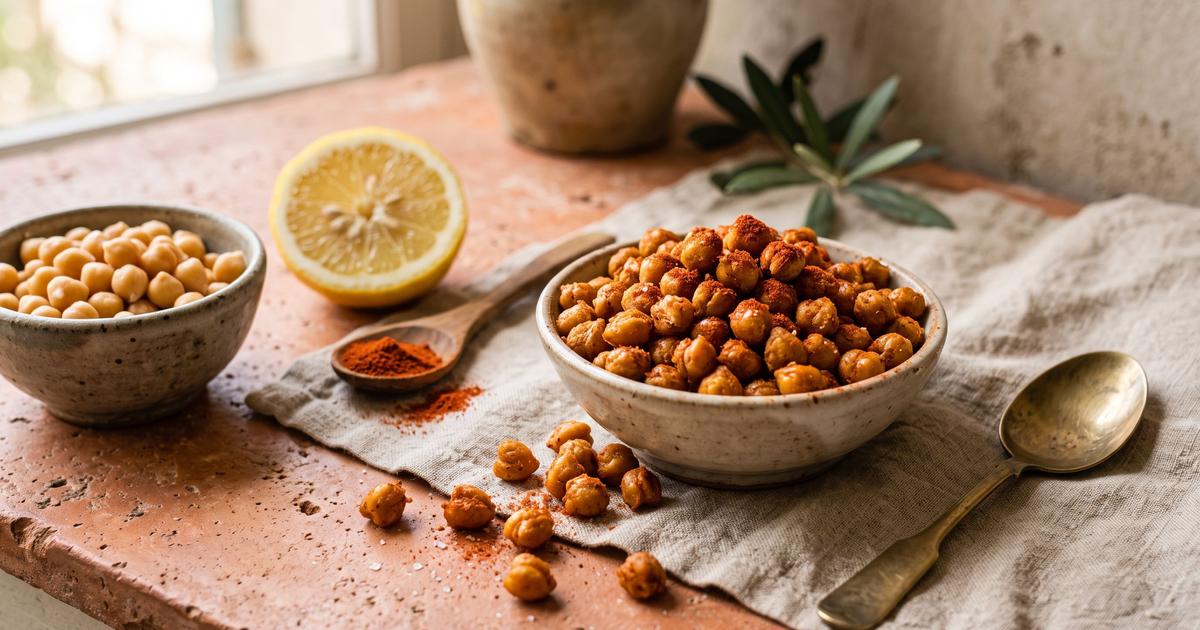
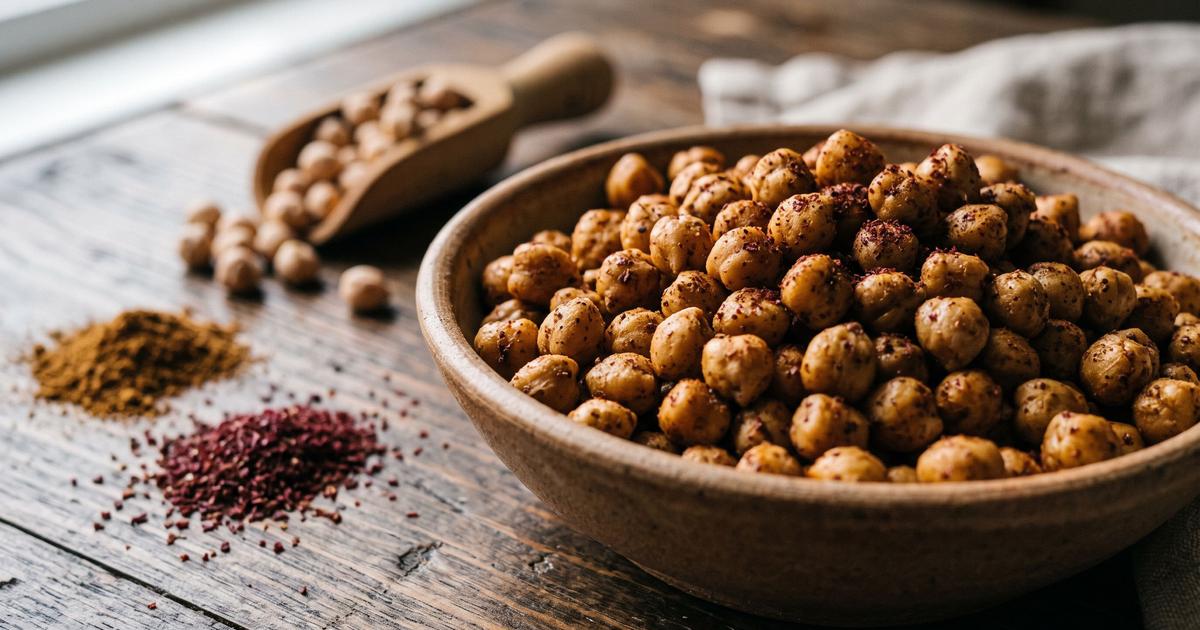
Roasted broad beans are an old street snack across the eastern Mediterranean and the Levant, sold by the paper cone and eaten by the handful. Dried favas are one of the cheapest legumes in the store, and roasting turns them nutty and crisp, a sturdier, higher-fiber answer to a bowl of chips. The method is worth following closely: soak them, boil them just soft, dry them well, then roast until they rattle. Sumac and Aleppo pepper give the Levantine tartness and warmth, and a squeeze of lemon helps the spices stick where oil normally would. Use the salt-free Aleppo pepper, and let them cool fully so they stay crunchy in the jar.
Ingredients
- 1 1/2 cups Fava beans, dried and peeled (split favas), soaked overnight and drained
- 1 tsp Cumin seed, toasted and ground
- 1 tsp Coriander seed, toasted and ground
- 1 tsp Sumac
- 1 tsp Aleppo pepper, salt-free
- 1 tbsp Lemon juice, fresh
Method
- Boil the soaked favas in plenty of unsalted water until just tender, about 25 minutes, then drain well. Peeled split favas skip the tough outer skin, which is what keeps them from crisping, so buy them already peeled if you can.
- Spread the drained favas on a clean towel and pat them thoroughly dry. Surface moisture is the enemy of crunch; the drier they go into the oven, the crisper they come out.
- Heat the oven to 400 F (200 C). Spread the favas on a lined tray in a single layer and roast for 25 to 30 minutes, shaking the tray twice, until they are golden and rattle-dry. They firm up further as they cool, so pull them when they are crisp but not scorched.
- Toss the hot favas with the lemon juice first, then the cumin, coriander, sumac, and Aleppo pepper. The quick hit of lemon dampens the surface just enough for the ground spices and tart sumac to cling with no oil.
- Cool completely before storing in a jar. Warm favas steam themselves soft in a closed container, so let them reach room temperature to keep their snap.
Nutrition
Estimated per serving: 120 calories, 8 g protein, 8 g fiber, 15 mg sodium. Computed from USDA FoodData Central reference values for the main ingredients. This is an approximation, not a laboratory measurement. How these are computed.
Cost per serving is estimated from US national-average retail prices for cheap staple forms, using BLS dried-bean prices and USDA produce prices. Prices vary by store and season, so treat it as a guide, not a receipt. How this is computed.