Shorbat Freekeh, Levantine Freekeh and Chickpea Soup
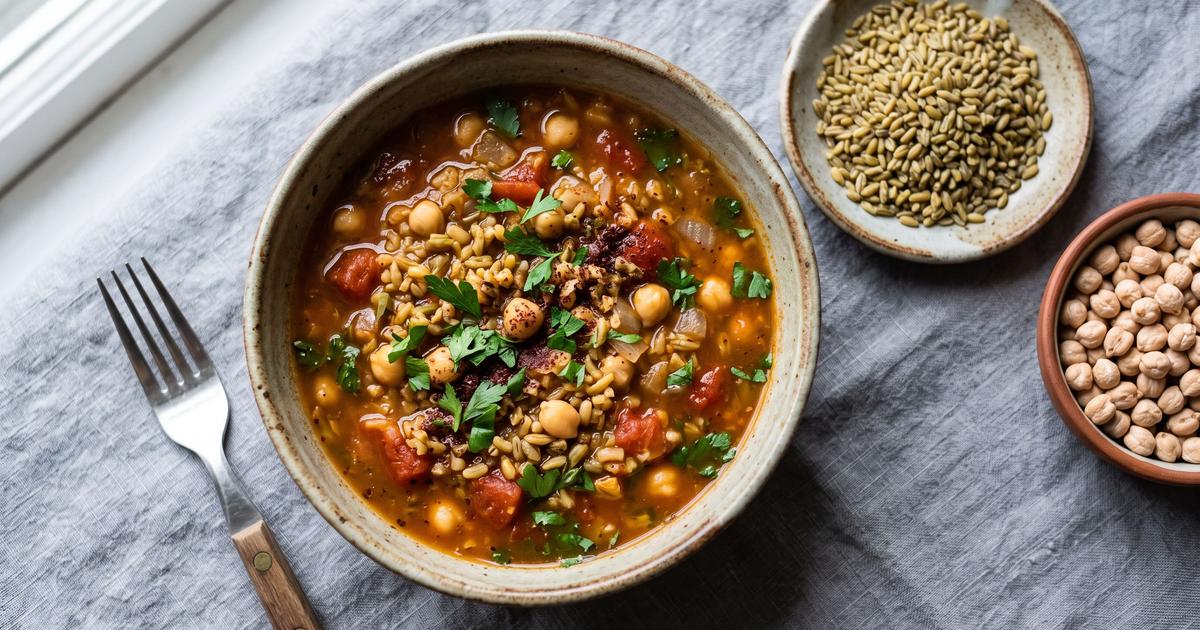
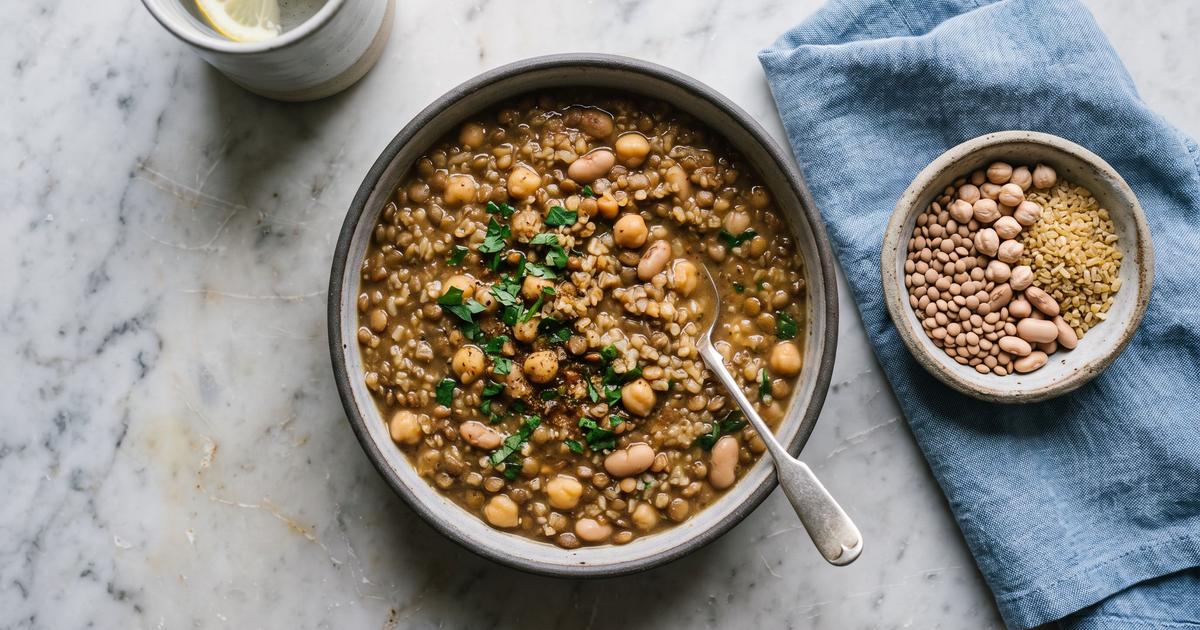
Freekeh is young green wheat that is roasted while still on the stalk, which gives it a smoky, nutty flavor no other grain has. Across the Levant it goes into a hearty soup, shorbat freekeh, thickened with the grain itself and rounded out with chickpeas. This is a different animal from the Algerian chorba frik, which is soured with tomato and often harissa; here the flavor is warm baharat, cumin, and a squeeze of lemon at the end. The no-salt bouillon and the toasted tomato paste carry the savory weight, and the lemon carries the brightness, so the pot never needs salting. It is a cheap, filling, one-pot bowl that reheats even better the next day.
Ingredients
- 3/4 cup Freekeh, cracked, rinsed
- 1 cup Chickpeas, cooked
- 1 whole Yellow onions, diced
- 3 cloves Garlic, minced
- 1 whole Carrots, diced
- 1 cup Canned crushed tomatoes, no-salt-added
- 1 tbsp Tomato paste
- 1 tsp Cumin seed, ground
- 1 tsp Baharat
- 1 tbsp no-salt vegetable bouillon
- 1/2 cup Flat-leaf parsley, chopped
- 2 tbsp Lemon juice
- 1/2 tsp Black peppercorns, ground
Method
- Sweat the onion and carrot in a covered pot with 0.25 cup (60 ml) water until soft, about 8 minutes, adding a splash more if it runs dry.
- Add the garlic, cumin, baharat, and tomato paste and cook 2 minutes, stirring, until the paste darkens. Toasting the paste and dry spices together builds the smoky, savory backbone the broth stands on.
- Add the freekeh, crushed tomatoes, bouillon, and 5 cups (1.2 L) water. Simmer 30 to 35 minutes, until the freekeh is tender but still chewy and its roasted, smoky flavor has spread through the pot.
- Stir in the chickpeas for the last 10 minutes, just long enough to heat through.
- Off the heat, add the parsley, lemon juice, and black pepper. The lemon is what wakes up the smoke, so add a little more at the table in place of salt.
Nutrition
Estimated per serving: 250 calories, 11 g protein, 10 g fiber, 60 mg sodium. Computed from USDA FoodData Central reference values for the main ingredients. This is an approximation, not a laboratory measurement. How these are computed.
Cost per serving is estimated from US national-average retail prices for cheap staple forms, using BLS dried-bean prices and USDA produce prices. Prices vary by store and season, so treat it as a guide, not a receipt. How this is computed.