Rummaniyya, Gazan Lentil and Eggplant Soup
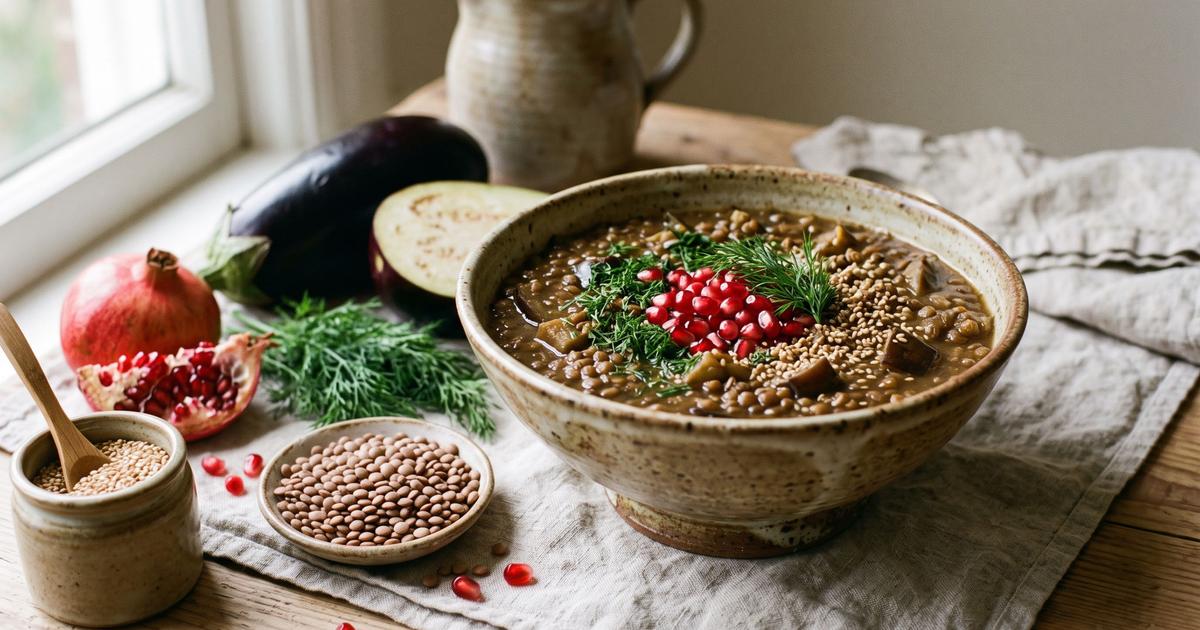
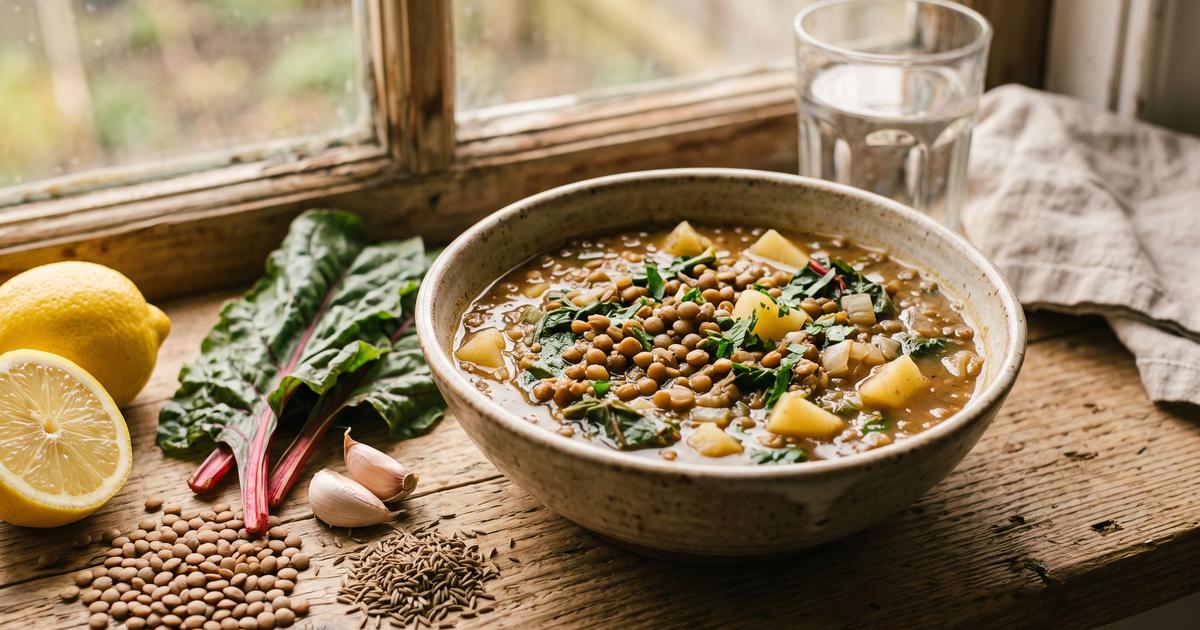
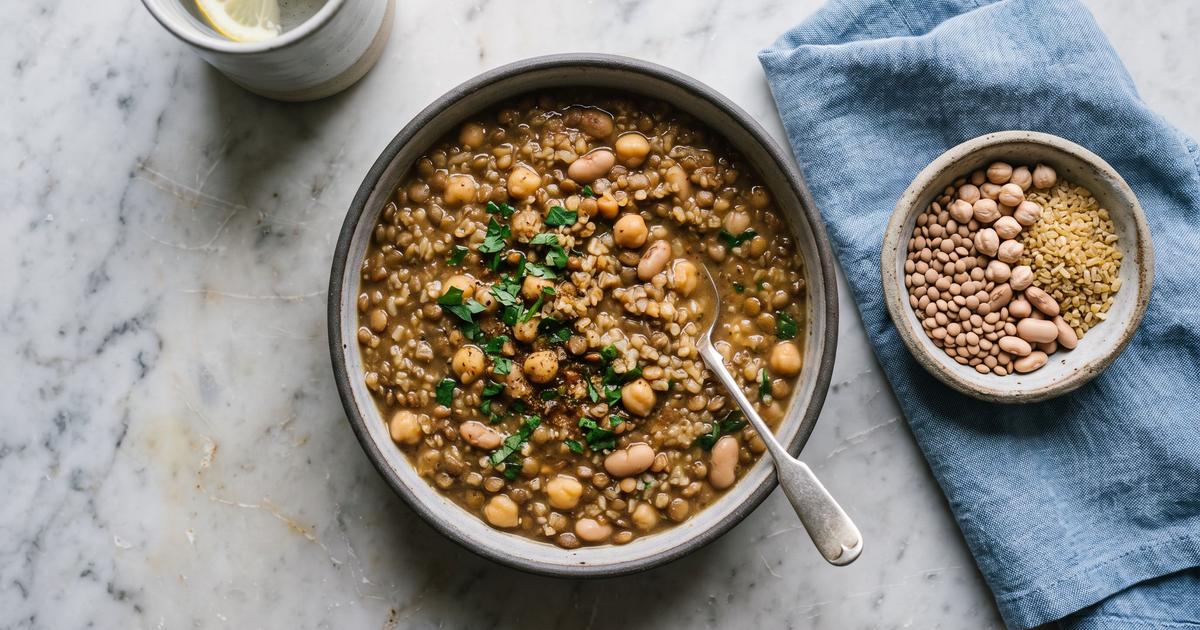
Rummaniyya takes its name from rumman, pomegranate, and it is one of the signature dishes of Gaza: brown lentils and eggplant cooked down into a tart, earthy soup that gets its sourness from pomegranate, not vinegar or lemon alone. Tahini stirred in at the end gives it body and a faint bitterness that balances all that sourness, while the eggplant dissolves to thicken the pot without any flour. It is the kind of dish that tastes of a place, built entirely from cheap pantry staples and a bottle of pomegranate molasses. Serve it in bowls, sour and warm, with dill and a scatter of fresh seeds for crunch.
Ingredients
- 1 cup Brown lentils, rinsed
- 1 whole Eggplant, about 1 lb, cut in half-inch cubes
- 5 cloves Garlic, minced
- 1 tsp Cumin seed, ground
- 1/4 tsp Cayenne
- 3 tbsp Pomegranate molasses
- 2 tbsp Tahini
- 1 tbsp Lemon juice
- 1/4 cup Dill, chopped
- 1/2 whole Pomegranate, seeds only
Method
- Simmer the lentils in 4 cups (950 ml) water until nearly tender but not falling apart, about 20 minutes.
- Add the eggplant and cook 12 to 15 minutes, until it collapses and melts into the pot. The soft eggplant is what thickens rummaniyya; the old Gaza version leaned on a spoon of flour, and the vegetable does the job better.
- In a small dry pan, warm the garlic, cumin, and cayenne with a spoonful of the pot liquid for about 1 minute, then stir it back in. Blooming the garlic and spices in a little liquid wakes them up in a way that dumping them into the broth does not.
- Whisk the tahini with a ladle of the hot broth until smooth, then stir it back into the pot. Tempering it this way keeps the sesame paste from seizing into knots. Add the pomegranate molasses and lemon juice.
- Simmer 5 more minutes. It should taste sharply sour, earthy, and stay loose and pourable. Serve topped with dill and fresh pomegranate seeds.
Nutrition
Estimated per serving: 260 calories, 13 g protein, 12 g fiber, 40 mg sodium. Computed from USDA FoodData Central reference values for the main ingredients. This is an approximation, not a laboratory measurement. How these are computed.
Cost per serving is estimated from US national-average retail prices for cheap staple forms, using BLS dried-bean prices and USDA produce prices. Prices vary by store and season, so treat it as a guide, not a receipt. How this is computed.