Salada de Feijao Frade, Portuguese Black-Eyed Pea Salad
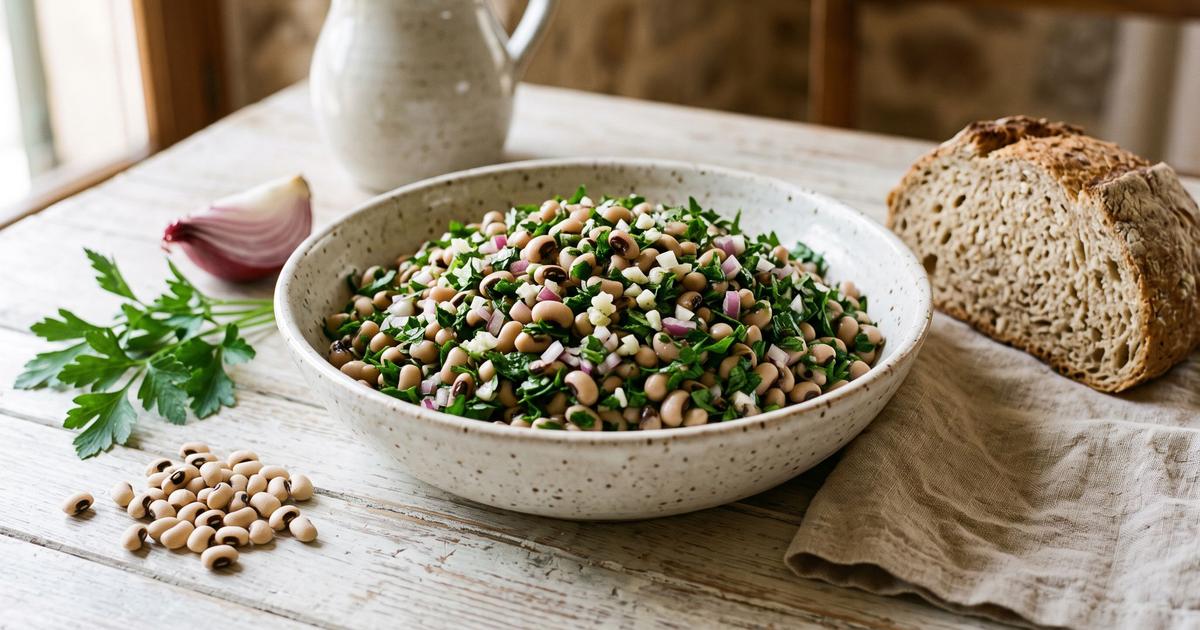
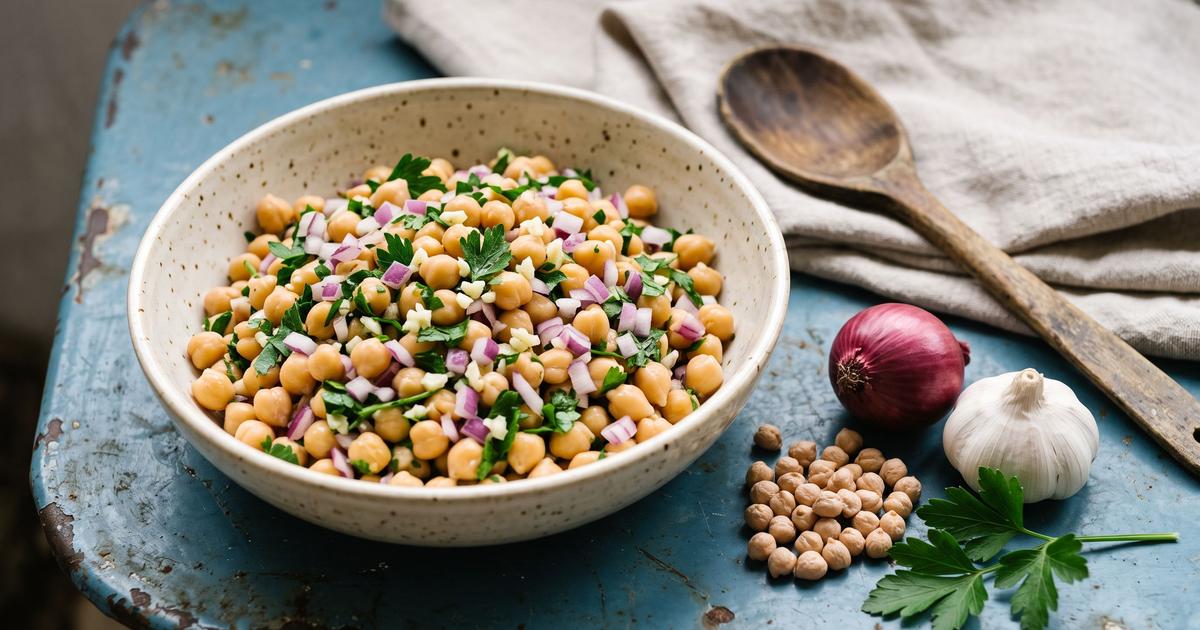
Salada de feijao frade is a fixture on Portuguese tables, usually alongside grilled fish or as part of a spread of cold plates. The traditional version is dressed with olive oil and sometimes topped with chopped egg or canned tuna; the plant version with just peas, parsley, and onion is common enough to be unremarkable there. Without the oil, the white wine vinegar and raw garlic have to carry it, so use good vinegar and plenty of parsley. It costs almost nothing and comes together in the time it takes to chop an onion.
Ingredients
- 1 1/2 cups Black-eyed peas, cooked, from 0.75 cup dried or one 15 oz can, drained
- 1/2 cup Flat-leaf parsley, chopped
- 1/2 Red onions, finely diced
- 1 clove Garlic, minced
- 2 tbsp White wine vinegar
- 1/4 tsp Black peppercorns, freshly ground
Method
- If cooking dried peas, simmer them until tender but still whole, about 30 minutes, then drain. Black-eyed peas need no soaking, which is part of why this salad is a weeknight staple. Warm peas soak up the dressing better than cold ones, so dress them while they still have some heat.
- Soak the diced red onion in cold water for 5 minutes and drain. This tames the raw burn so it stays crisp and sharp without taking over.
- Toss the drained peas with the parsley, onion, garlic, white wine vinegar, and black pepper. Use the full half cup of parsley. It is a main ingredient here, not a garnish, and it is what makes the salad taste fresh instead of flat.
- Let it sit at least 15 minutes before serving so the peas drink in the vinegar and the raw garlic mellows. It keeps three days in the fridge and is arguably better on the second day.
Nutrition
Estimated per serving: 165 calories, 9 g protein, 7 g fiber, 15 mg sodium. Computed from USDA FoodData Central reference values for the main ingredients. This is an approximation, not a laboratory measurement. How these are computed.
Cost per serving is estimated from US national-average retail prices for cheap staple forms, using BLS dried-bean prices and USDA produce prices. Prices vary by store and season, so treat it as a guide, not a receipt. How this is computed.