Salada de Grão, Portuguese Chickpea Salad
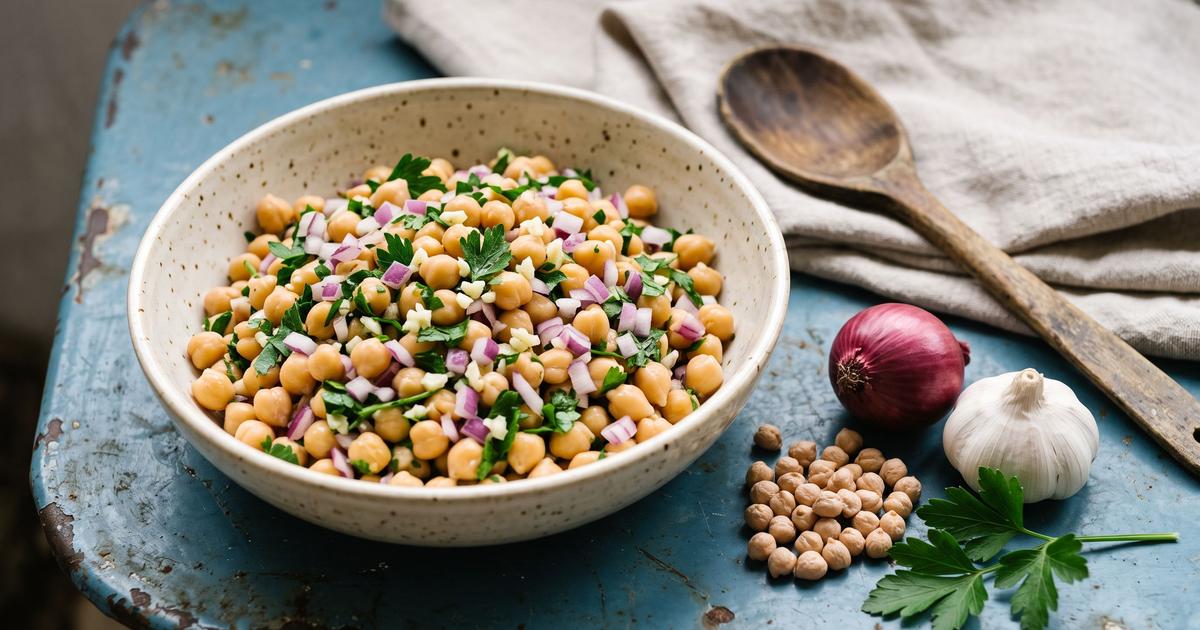
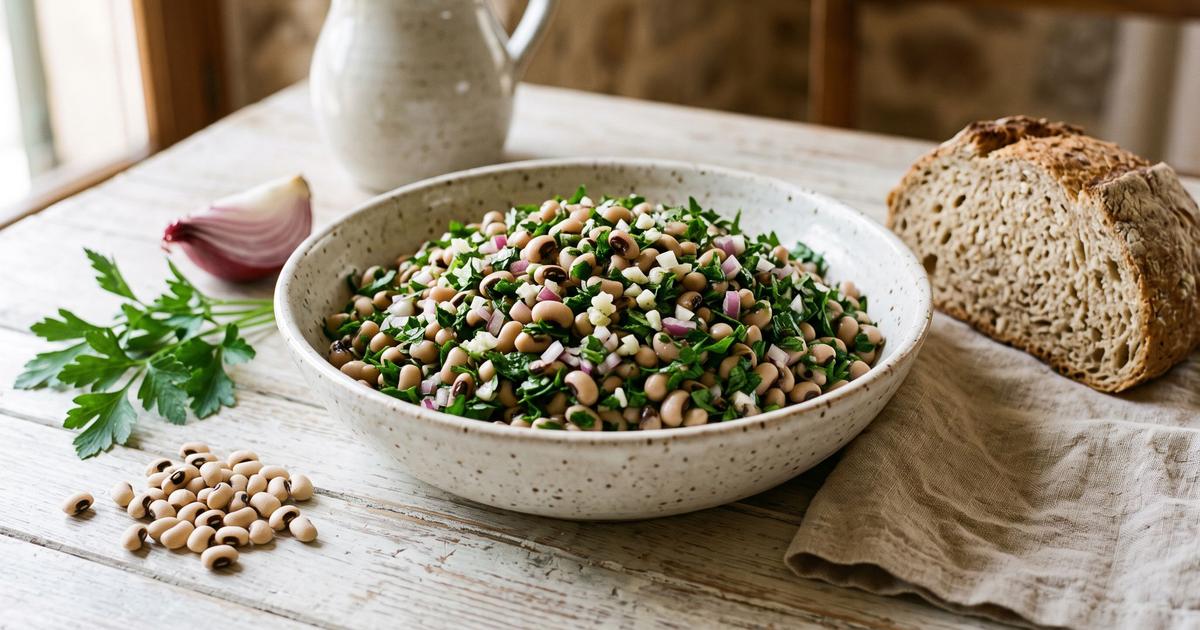
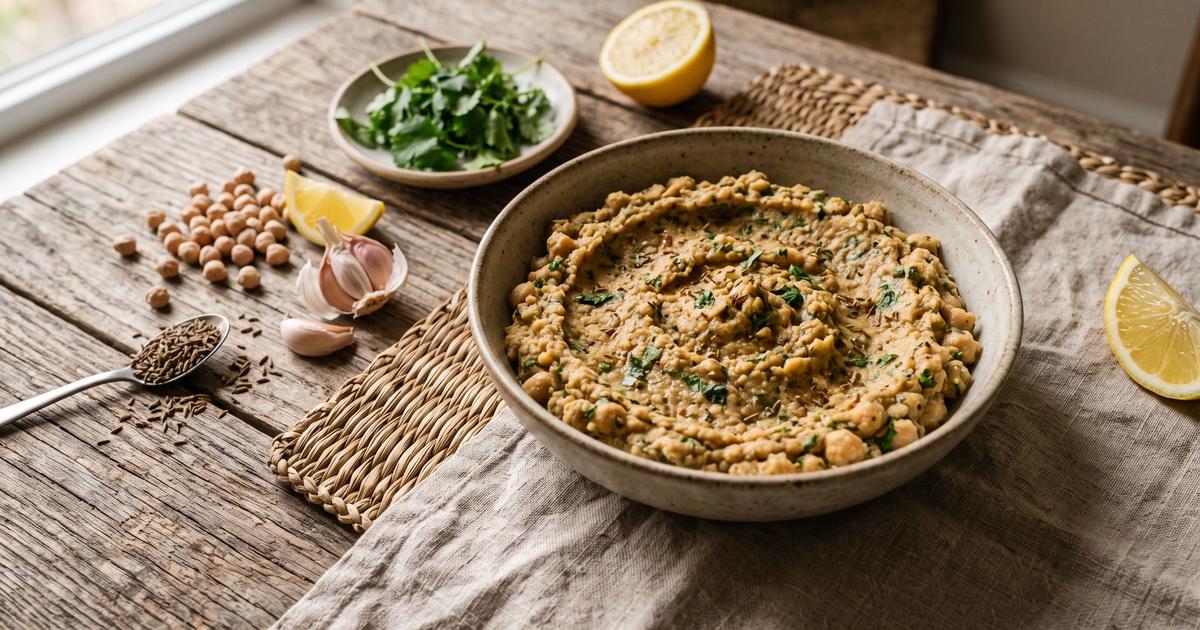
Salada de grão is the plain, honest chickpea salad found on Portuguese lunch tables and in tascas, usually built around little more than beans, raw onion, and parsley. Restaurant versions often add tuna or chopped egg and a heavy pour of olive oil; stripped back to the beans it was built on, it loses nothing, because the point was always the contrast of soft chickpea against sharp onion and vinegar. Dressing the beans while they are warm is the one technique that matters, since that is when they absorb the acid. Chickpeas are among the cheapest sources of plant protein and fiber in the store, which is why a salad this cheap can still be a real meal. Make it the day before and it deepens overnight.
Ingredients
- 3 cups Chickpeas, cooked and drained
- 1/2 Red onions, finely diced
- 1/2 cup Flat-leaf parsley, chopped
- 2 cloves Garlic, minced
- 2 tbsp White wine vinegar
- 1 tbsp Lemon juice, fresh
- 1/2 tsp Black peppercorns, freshly ground
Method
- Warm the drained chickpeas through in a splash of fresh water, then drain again. A salad chickpea should be soft, never squeaky, and a brief warming loosens the skins so the dressing soaks in instead of sliding off.
- Soak the diced red onion in cold water for 10 minutes, then drain well. This rinses out the harsh sulfur bite so the onion stays crisp and sweet against the beans rather than overpowering them.
- Toss the still-warm chickpeas with the garlic, white wine vinegar, and lemon juice. Beans drink in dressing while warm, the same reason a good potato salad is dressed hot, so the acid sinks into each chickpea instead of pooling at the bottom of the bowl.
- Fold in the drained onion, parsley, and black pepper. The parsley is a main ingredient here, not a garnish, so use the full half cup and chop it coarsely.
- Let the salad rest at least 20 minutes, or overnight in the fridge, before serving. This is the difference between a bowl of beans and a salad: the vinegar and garlic need time to work through the chickpeas, and it only improves by the next day.
Nutrition
Estimated per serving: 185 calories, 9 g protein, 8 g fiber, 15 mg sodium. Computed from USDA FoodData Central reference values for the main ingredients. This is an approximation, not a laboratory measurement. How these are computed.
Cost per serving is estimated from US national-average retail prices for cheap staple forms, using BLS dried-bean prices and USDA produce prices. Prices vary by store and season, so treat it as a guide, not a receipt. How this is computed.