Salada de Feijão Manteiga à Portuguesa
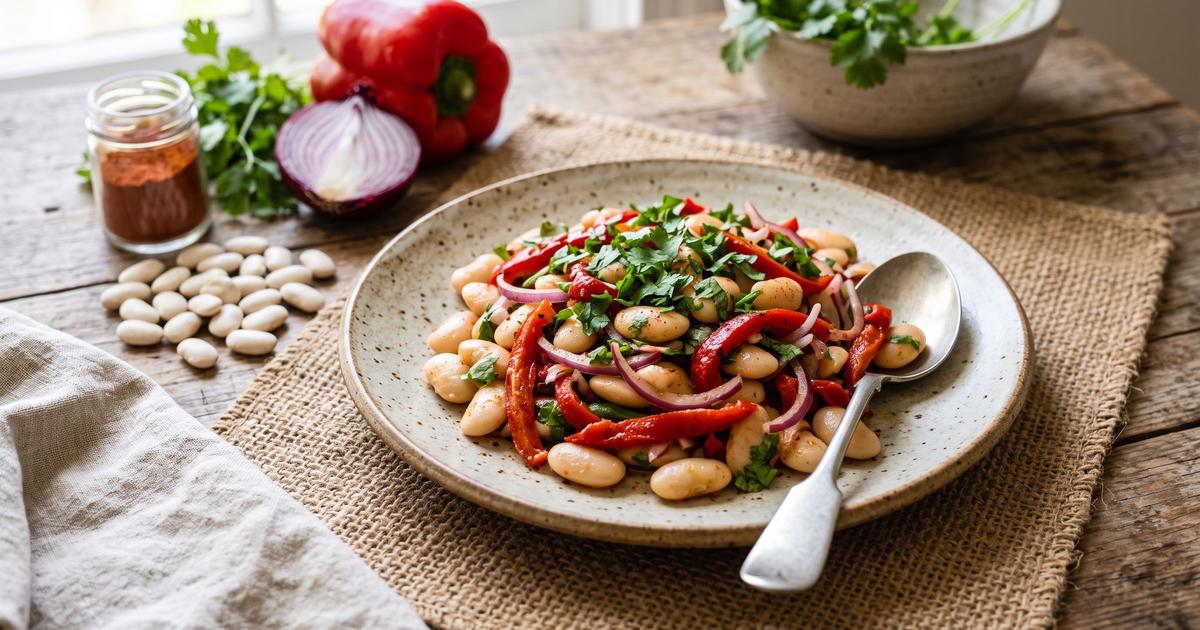
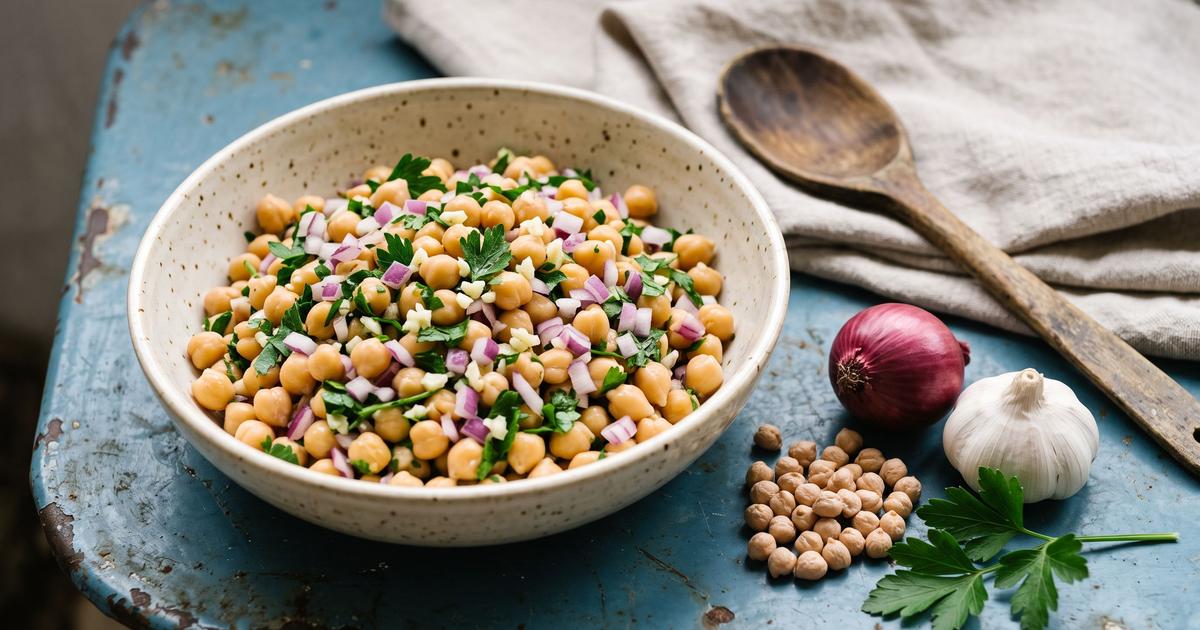
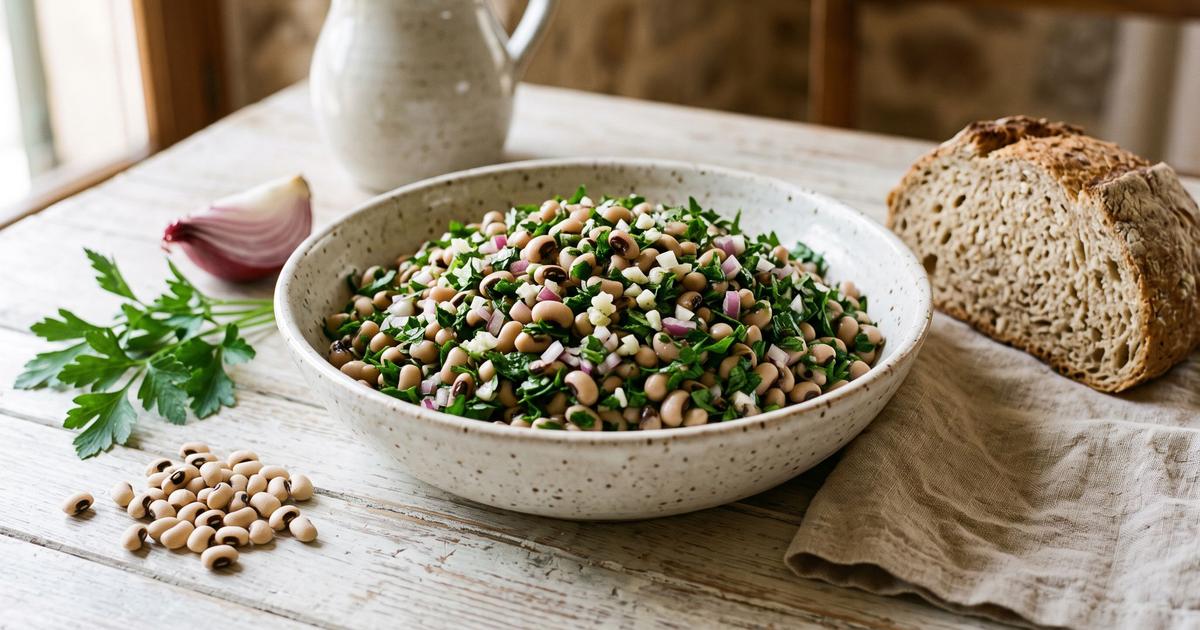
Feijão manteiga, butter beans, are a fixture of the Portuguese pantry, and dressed cold they become one of the country's easy petiscos, the small plates that cover a bar table. Big and creamy, they carry a sharp dressing well, so this leans on red wine vinegar and quick-pickled red onion rather than salt. A roasted pepper adds smoky sweetness and color, smoked paprika stands in for the cured meat a Portuguese cook might once have added, and cilantro goes in by the handful the way it does across the south of the country. Everything happens at room temperature, and the salad is better after it sits, which is exactly what you want from something made ahead.
Ingredients
- 3 cups Lima beans, cooked, no-salt-added
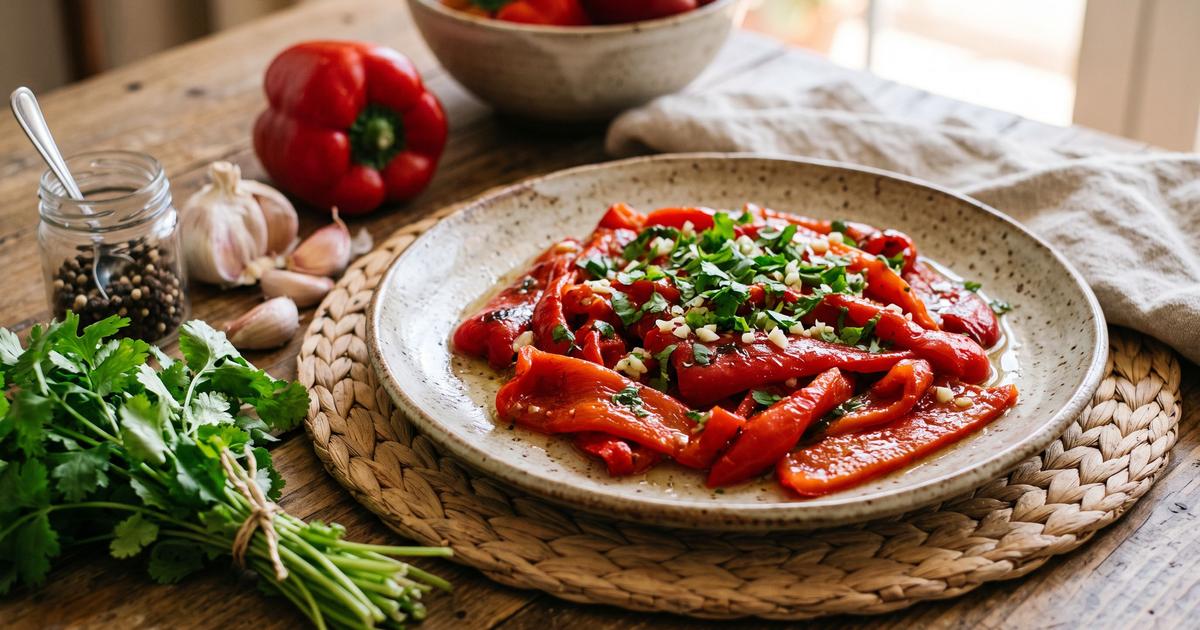
- 1 whole Bell peppers, roasted, peeled, and sliced
- 1/2 whole Red onions, thinly sliced
- 1/2 cup Cilantro, chopped
- 1 clove Garlic, grated
- 2 tbsp Red wine vinegar
- 1/2 tsp Smoked paprika
- 1 tbsp Lemon juice
- 1/2 tsp Black peppercorns, freshly ground
Method
- Put the sliced red onion in a bowl with the red wine vinegar and let it sit while you prep everything else, at least 10 minutes. The vinegar pulls the raw bite out of the onion and softens it, and you keep that pink vinegar as the base of the dressing.
- Roast the pepper directly over a flame or under the broiler until the skin blackens all over, then steam it in a covered bowl for 5 minutes and rub the charred skin off. Roasting concentrates the pepper's sweetness and gives a smoky depth that raw pepper cannot, with no oil involved.
- Whisk the grated garlic, smoked paprika, lemon juice, and black pepper into the onion and vinegar. Smoked paprika is the Portuguese and Spanish move for a bacon-like savoriness without the meat or the salt.
- Add the drained butter beans, sliced roasted pepper, and cilantro, and fold gently so the soft beans do not break. Let it stand 10 minutes before serving so the beans drink up the dressing.
- Serve at room temperature. It only improves after an hour, which makes it a good make-ahead dish for a table of small plates.
Nutrition
Estimated per serving: 190 calories, 10 g protein, 8 g fiber, 45 mg sodium. Computed from USDA FoodData Central reference values for the main ingredients. This is an approximation, not a laboratory measurement. How these are computed.
Cost per serving is estimated from US national-average retail prices for cheap staple forms, using BLS dried-bean prices and USDA produce prices. Prices vary by store and season, so treat it as a guide, not a receipt. How this is computed.