Roasted Carrots with Dukkah and Mint
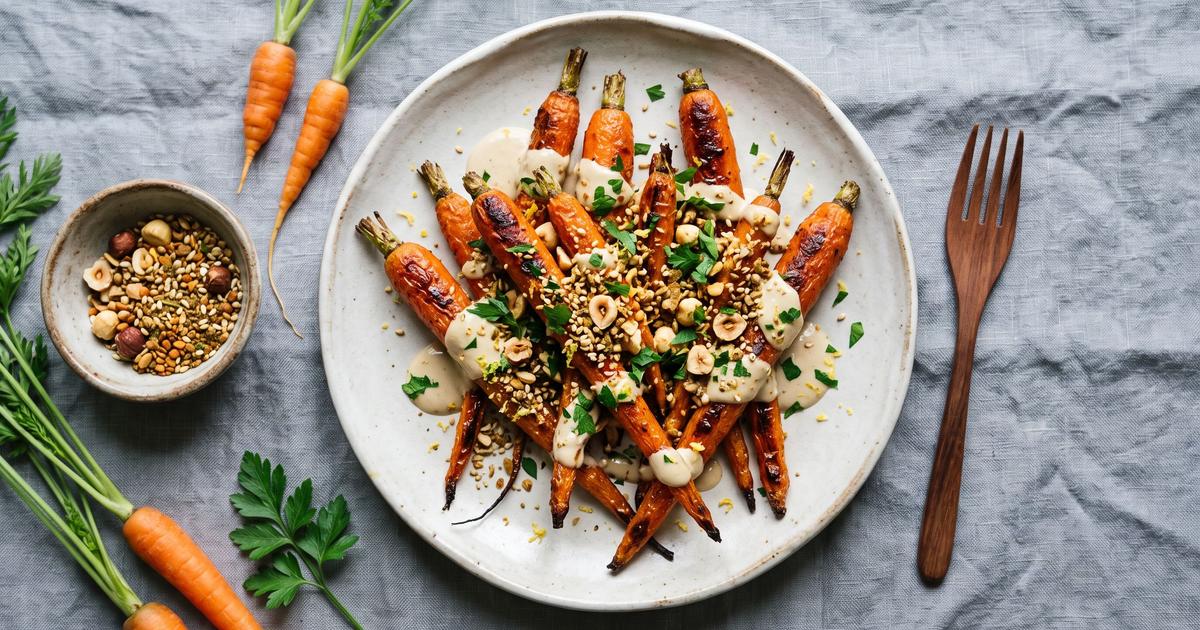
Dukkah is an Egyptian blend of toasted nuts, sesame, and spices, ground coarse so it stays crunchy, and it turns a plain roasted vegetable into something worth serving to guests. Here it goes over carrots, which are one of the great cheap vegetables for roasting: their sugar caramelizes under dry heat until they taste almost candied, no oil required. A loose tahini sauce, cut with lemon and garlic and thinned with water rather than oil, pools underneath, and the dukkah and torn mint go over the top. Buy or make a salt-free dukkah, since it is the main seasoning and most jarred blends are salted. Serve the carrots warm as a side, or pile them onto a grain bowl as the centerpiece.
Ingredients
- 1 1/2 lb Carrots, scrubbed, halved lengthwise
- 1/2 tsp Cumin seed
- 2 tbsp Tahini
- 2 tbsp Lemon juice
- 1 clove Garlic, grated
- 2 tbsp Dukkah, salt-free
- 2 tbsp Mint, torn
- 1/4 tsp Black peppercorns, ground
Method
- Toss the carrots with the cumin seed and roast on a lined tray at 425 F (220 C), turning once, until blistered and tender, about 30 minutes. High, dry heat caramelizes the sugar the carrots already hold, which is exactly why they turn rich and deeply sweet with no oil to help them along.
- Whisk the tahini with the lemon juice, grated garlic, and water added a spoonful at a time. Tahini seizes into a paste the moment the acid hits it, then loosens as you work in the water, and it is water rather than oil that brings it down to a pourable drizzle.
- Lay the carrots on a platter, drizzle the tahini sauce over them, then shower with the dukkah, torn mint, and a crack of black pepper. Dukkah is the crunch and the seasoning at once, a toasted mix of nuts, seeds, and spice, so it does the work salt would while adding texture no salt could.
Nutrition
Estimated per serving: 150 calories, 4 g protein, 6 g fiber, 60 mg sodium. Computed from USDA FoodData Central reference values for the main ingredients. This is an approximation, not a laboratory measurement. How these are computed.
Cost per serving is estimated from US national-average retail prices for cheap staple forms, using BLS dried-bean prices and USDA produce prices. Prices vary by store and season, so treat it as a guide, not a receipt. How this is computed.