Qamar al-Din, Chilled Apricot Pudding
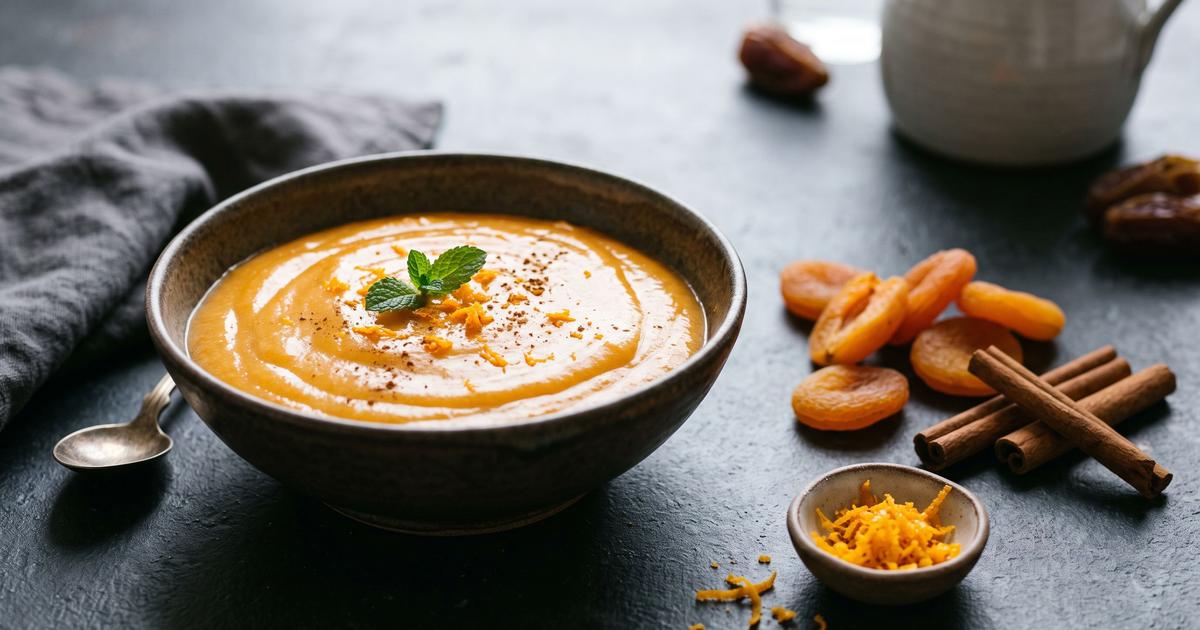
Qamar al-Din, "moon of the faith," is the apricot drink and pudding that breaks the fast across the Levant and Egypt through Ramadan, traditionally made from sheets of pressed, sweetened apricot leather. This version starts from plain dried apricots instead, which are nothing but fruit, and leans on their natural sugar rather than the added sugar the commercial leather carries. Blended smooth and set with a little cornstarch, it firms into a soft pudding; left looser, it is the classic chilled drink. Orange zest stands in for the orange blossom water it is usually perfumed with. Make it ahead, chill it hard, and finish with toasted almonds for crunch.
Ingredients
- 1 1/2 cups Dried apricots
- 2 tbsp Cornstarch
- 1/4 tsp cassia cinnamon, ground
- 1 whole Oranges, zested, plus 2 tbsp juice
- 1 tsp Lemon juice
- 2 tbsp Almonds, slivered and toasted
Method
- Soak the dried apricots in 2 cups (475 ml) hot water for 20 minutes to soften them.
- Blend the apricots with their soaking water until completely smooth. This puree is the entire dessert: the sweetness is the fruit and nothing else, which is the whole point of qamar al-din.
- Slake the cornstarch in 2 tbsp cold water. Bring the puree, orange juice, and cinnamon to a gentle simmer, stir in the slurry, and cook 2 to 3 minutes until it thickens enough to coat the back of a spoon.
- Off the heat, stir in the orange zest and lemon juice. The classic scent is orange blossom water; a strip of fresh orange zest gives the same floral lift without it, so the dish stays built from what is on hand.
- Pour into cups and chill at least 2 hours, until set to a soft, spoonable pudding. Top with the toasted almonds just before serving.
Nutrition
Estimated per serving: 180 calories, 3 g protein, 6 g fiber, 15 mg sodium. Computed from USDA FoodData Central reference values for the main ingredients. This is an approximation, not a laboratory measurement. How these are computed.
Cost per serving is estimated from US national-average retail prices for cheap staple forms, using BLS dried-bean prices and USDA produce prices. Prices vary by store and season, so treat it as a guide, not a receipt. How this is computed.