Date and Walnut Bites
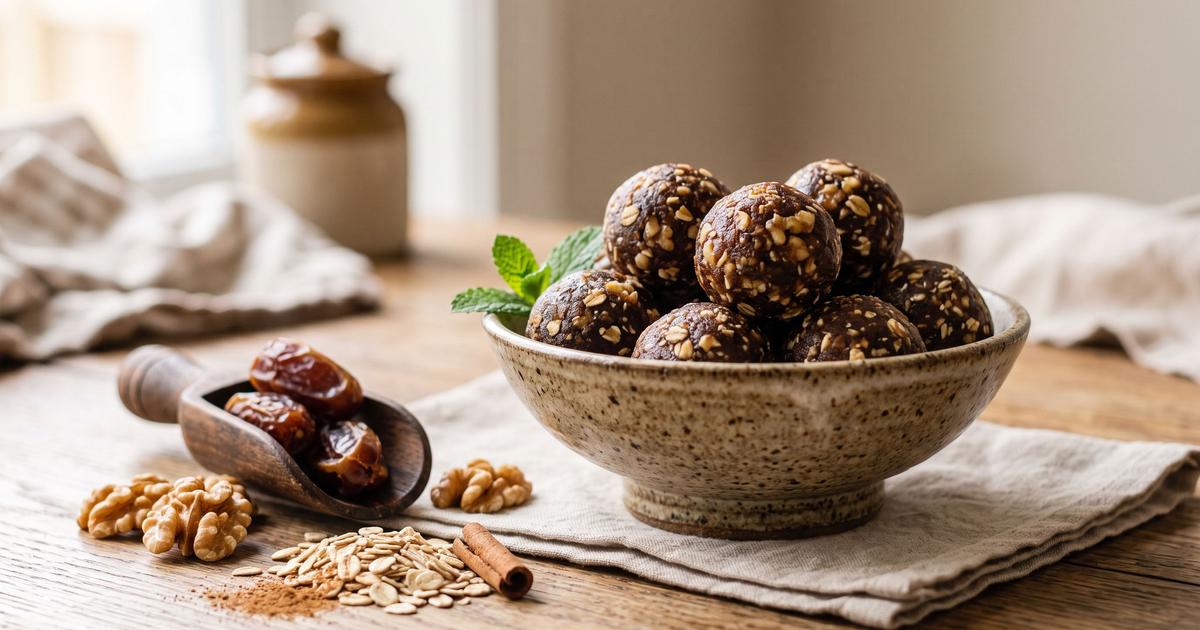
These are built on one fact: a soft Medjool date is nature's caramel, sweet and sticky enough to bind a whole confection with nothing else added. Processed with toasted walnuts and oats, the dates hold everything in a chewy, fudgy bite that tastes indulgent while being nothing but fruit, nuts, and whole grain. The only technique that matters is reading your dates. Fresh, plump Medjools clump on their own; older, drier ones need a splash of water to come together. Roll them in sesame, or in more oats or crushed nuts, whatever gives a coating you like. They are the answer to a sweet craving that leaves you steadier than a cookie would.
Ingredients
- 1 1/2 cups Medjool dates, pitted, about 14 dates
- 1 cup Walnuts, toasted
- 3/4 cup Rolled oats
- 1 tsp cassia cinnamon
- 2 tbsp Ground flaxseed
- 3 tbsp Sesame seeds, for rolling
Method
- Toast the walnuts in a dry pan over medium heat until they smell nutty, about 4 minutes, then let them cool. Toasting deepens their flavor and keeps the bites from tasting raw and pasty.
- Pulse the oats in a food processor to a coarse flour, then add the walnuts and pulse again until they are broken down but still have a little texture.
- Add the pitted dates, cinnamon, and flaxseed and run the processor until the mix climbs the sides and clumps together when you pinch it. If it will not hold, your dates are dry: add one or two more, or a teaspoon of water at a time. The dates are the only binder, so they have to be soft and sticky.
- Roll the mix into tablespoon-sized balls, pressing firmly so they hold. Roll each one through the sesame seeds for a nutty coating and a little crunch.
- Chill for 20 minutes to firm up. They keep in the fridge for two weeks and freeze well, so a single batch is dessert or a snack on hand for a long time.
Nutrition
Estimated per serving: 150 calories, 3 g protein, 3 g fiber, 5 mg sodium. Computed from USDA FoodData Central reference values for the main ingredients. This is an approximation, not a laboratory measurement. How these are computed.
Cost per serving is estimated from US national-average retail prices for cheap staple forms, using BLS dried-bean prices and USDA produce prices. Prices vary by store and season, so treat it as a guide, not a receipt. How this is computed.