Balaleet, Gulf Saffron and Cardamom Vermicelli
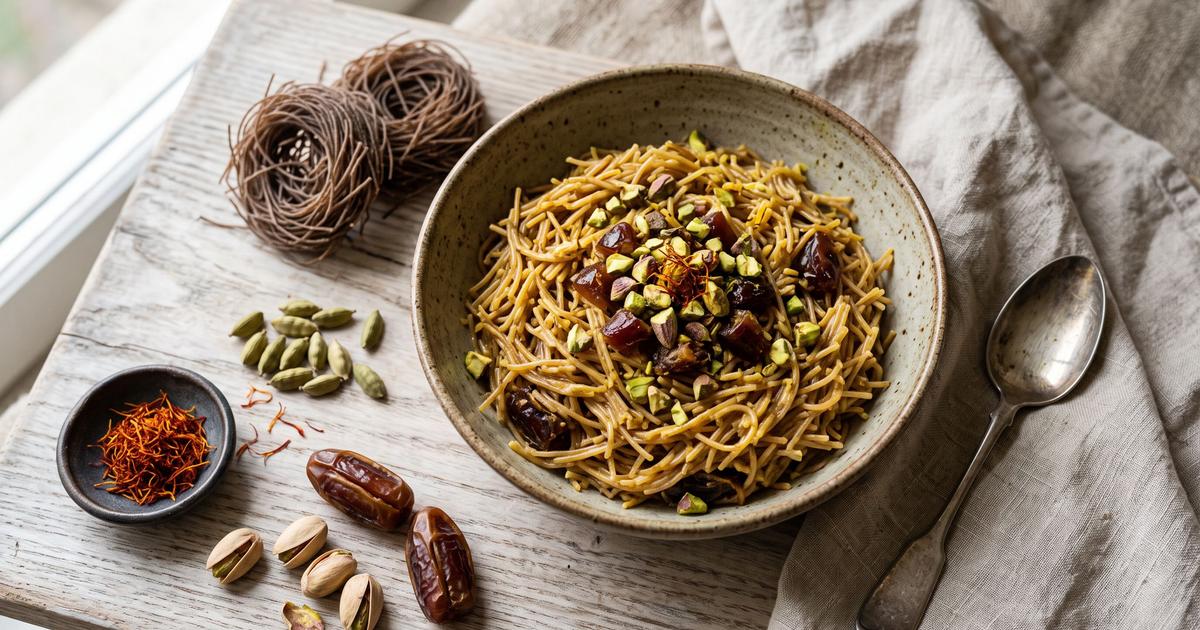
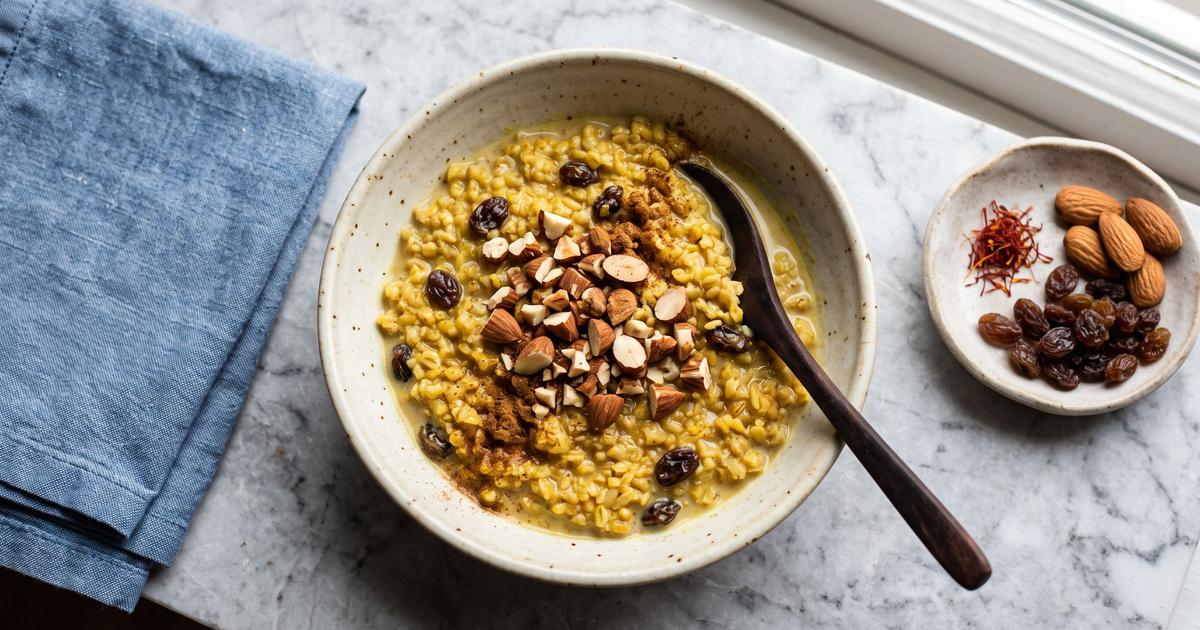
Balaleet is the sweet-and-savory vermicelli breakfast of the Persian Gulf, usually fried in ghee, heaped with sugar, and topped with a thin omelet. Stripped back, the idea survives intact: whole-grain vermicelli toasted dry for the same nutty depth the frying gave, then simmered soft and tossed with saffron, cardamom, and cinnamon. Dates blended to a syrup carry the sweetness. A little orange juice stands in for the orange blossom water a Gulf cook would use, and slivered almonds go on top. It is eaten in the morning but is just as good as a light pudding later in the day.
Ingredients
- 1 1/2 cups Whole wheat short pasta, vermicelli, broken into short lengths
- 1 pinch Saffron, ground and bloomed in 2 tbsp hot water
- 4 pods Green cardamom, seeds crushed
- 1/4 tsp cassia cinnamon, ground
- 5 wholes Medjool dates, pitted and blended with 0.5 cup water into a syrup
- 1 tbsp Oranges, juice
- 3 tbsp Almonds, slivered
Method
- Toast the broken vermicelli in a dry pan, stirring, until it turns an even golden brown, about 4 minutes. Toasting is what gives balaleet its nutty depth in place of the butter or ghee the noodles are usually fried in.
- Boil the toasted vermicelli in water until just tender, about 5 minutes, then drain. Toasted first, it holds its shape instead of going soft.
- Return it to the dry pan with the date syrup, saffron water, crushed cardamom, cinnamon, and orange juice. Toss over low heat until the liquid clings to the strands and the pan is nearly dry, about 3 minutes. Dates blended to a syrup carry the sweetness sugar usually would, and a spoon of orange juice stands in for the orange blossom water a Gulf cook would reach for.
- Pile it up and scatter the slivered almonds over the top. It is eaten warm in the morning but is just as good cooled to room temperature later in the day.
Nutrition
Estimated per serving: 260 calories, 7 g protein, 6 g fiber, 10 mg sodium. Computed from USDA FoodData Central reference values for the main ingredients. This is an approximation, not a laboratory measurement. How these are computed.
Cost per serving is estimated from US national-average retail prices for cheap staple forms, using BLS dried-bean prices and USDA produce prices. Prices vary by store and season, so treat it as a guide, not a receipt. How this is computed.