Pevides, Portuguese Roasted Pumpkin Seeds
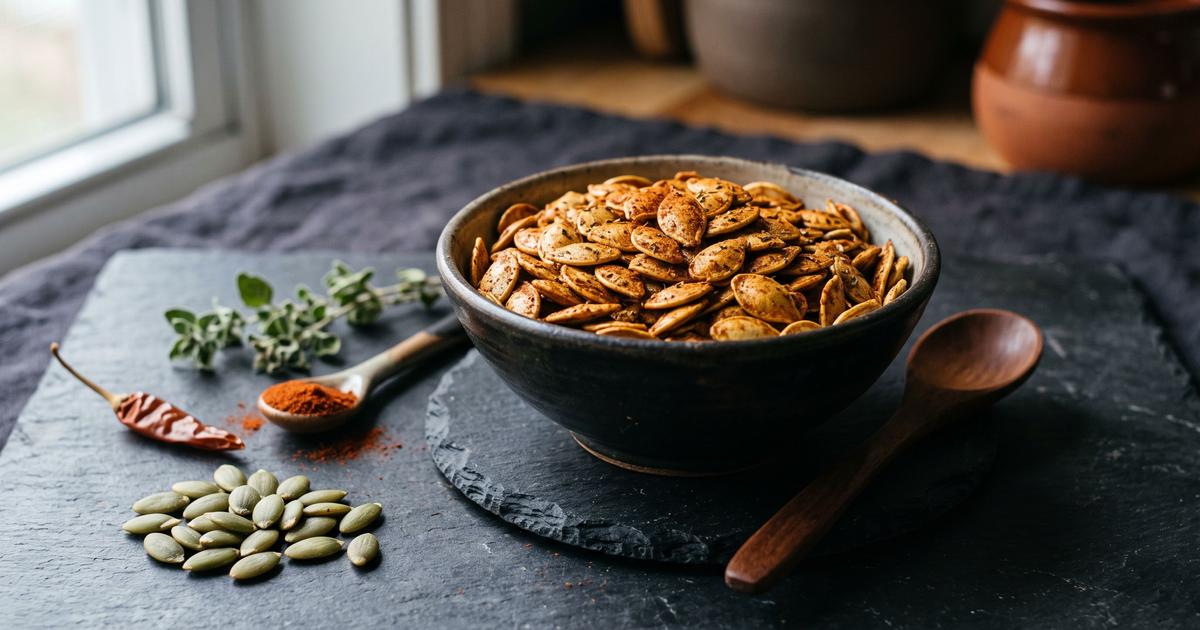
Pevides are the roasted pumpkin seeds sold in paper cones at Portuguese fairs and football matches, usually heavily salted and eaten by the handful. This version keeps the habit and drops the salt, leaning instead on smoked paprika and a piri-piri pinch of cayenne, the chile heat that runs through so much Portuguese cooking. A little lemon juice tossed on before roasting makes the spices cling to the seeds without any oil, and the zest goes on at the end for lift. Pumpkin seeds are a genuine source of protein, magnesium, and zinc, so a small handful is a real snack rather than an empty one. They keep for a couple of weeks in a jar, so roast the whole tray at once.
Ingredients
- 1 1/2 cups Pumpkin seeds, raw, hulled
- 1 Lemon, zested, then 1 tbsp juice
- 1 1/2 tsp Smoked paprika
- 1/2 tsp Dried oregano
- 1/4 tsp Cayenne
Method
- Heat the oven to 325 F (160 C). Toss the raw pumpkin seeds with the lemon juice until they are just damp all over. The thin film of juice is the trick that lets the spices grip the seeds, doing the job the oil would in a stall-roasted batch.
- Sprinkle on the smoked paprika, oregano, and cayenne and toss again until every seed is coated. Add the spice while the seeds are still wet from the juice so it bonds to them instead of sifting to the bottom of the bowl.
- Spread the seeds in a single layer on a lined tray and roast for 10 to 12 minutes, stirring once, until they puff, turn golden, and start to pop. Pumpkin seeds go from toasted to bitter quickly, so pull them the moment the popping picks up.
- Toss the hot seeds with the lemon zest and let them cool completely on the tray. They taste soft and chewy warm and turn crisp only once cool, and the zest, added off the heat, keeps its perfume rather than baking away.
Nutrition
Estimated per serving: 180 calories, 9 g protein, 3 g fiber, 5 mg sodium. Computed from USDA FoodData Central reference values for the main ingredients. This is an approximation, not a laboratory measurement. How these are computed.
Cost per serving is estimated from US national-average retail prices for cheap staple forms, using BLS dried-bean prices and USDA produce prices. Prices vary by store and season, so treat it as a guide, not a receipt. How this is computed.