Almendras al Pimentón, Spanish Smoked Paprika Almonds
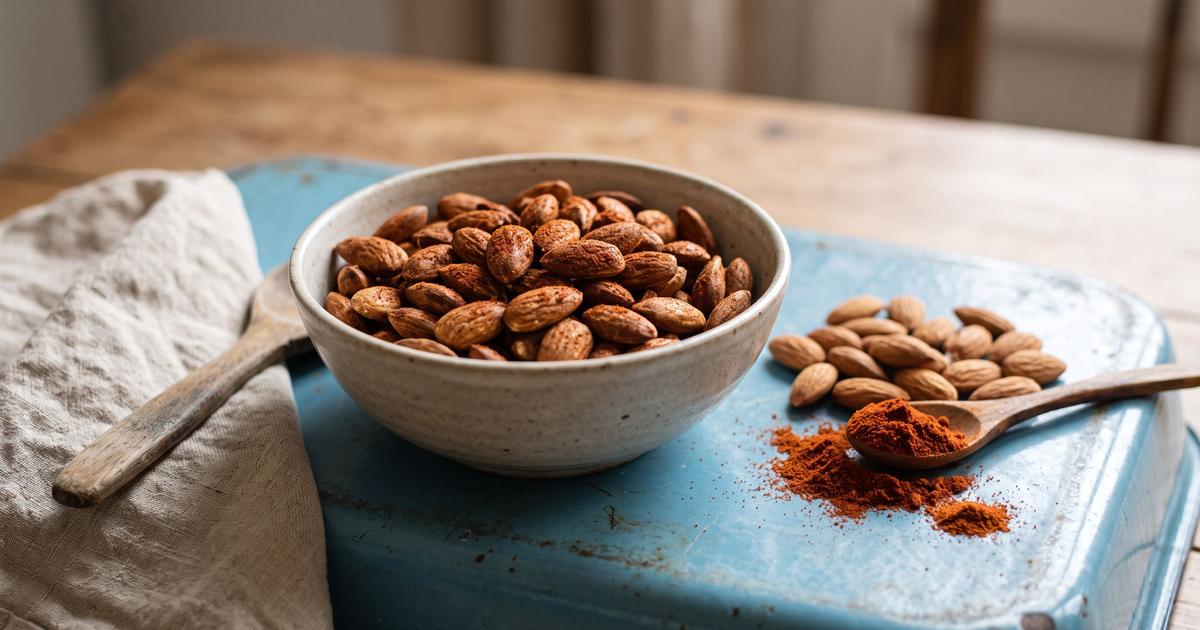
Spanish bars set out a dish of fried, salted almonds with every glass. This is the same idea without the oil or the salt: raw almonds toasted dry until their own fat carries the flavor, then coated in pimentón, the smoked paprika that is Spain's signature spice. The smoke and the gentle heat stand in for the salt, and the almonds stay crisp for weeks. Buy them raw and with the skins on, since the skin holds most of the fiber and takes the paprika well. A quarter cup is a portion: almonds are a whole-food fat, rich and filling, meant as an accent to a meal rather than a bowl to empty.
Ingredients
- 2 cups Almonds, raw, skin on
- 1 tbsp Smoked paprika
- 1 tsp Sweet paprika
- 1/4 tsp Cayenne
Method
- Heat the oven to 325°F (165°C) and spread the almonds on a dry sheet pan in a single layer. Toast 12 to 15 minutes, shaking once, until they smell nutty and a split one is golden through the center. Toasting dry, with no oil, wakes up the almond's own fat and crackles the skins, while high heat would scorch the outside before the middle turns.
- While they toast, stir the smoked paprika, sweet paprika, and cayenne together in a large bowl with a teaspoon of water to a loose paste. The splash of water lets the spice grip the hot nuts, the job the frying fat usually does.
- Tip the hot almonds straight into the bowl and toss hard for a minute so every nut takes on a rust-colored coat. Doing this while they steam sets the paprika onto the surface as the water flashes off.
- Spread them back on the pan and return to the oven for 3 to 4 minutes to dry. This re-crisps the coating so the almonds snap instead of turning tacky.
- Cool them completely before storing. They keep two weeks in a sealed jar and only get crunchier, which is why a double batch is worth the same oven.
Nutrition
Estimated per serving: 205 calories, 7 g protein, 5 g fiber, 5 mg sodium. Computed from USDA FoodData Central reference values for the main ingredients. This is an approximation, not a laboratory measurement. How these are computed.
Cost per serving is estimated from US national-average retail prices for cheap staple forms, using BLS dried-bean prices and USDA produce prices. Prices vary by store and season, so treat it as a guide, not a receipt. How this is computed.