Ras el Hanout Roasted Almonds
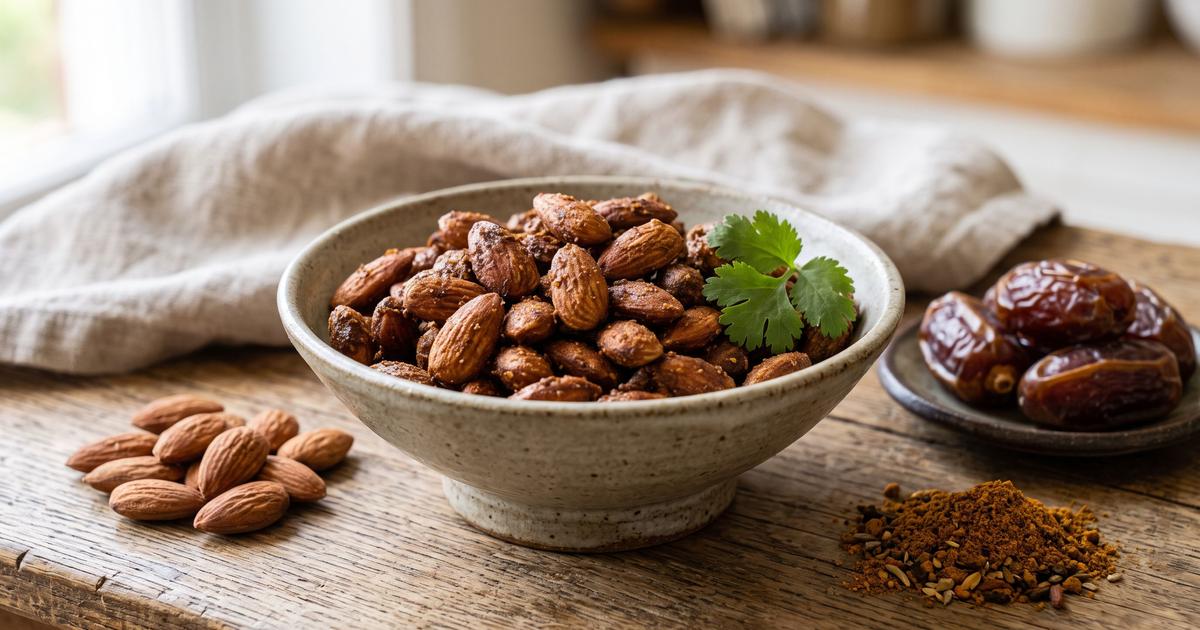
Spiced almonds turn up all over Morocco, at tea tables and in the mix of nuts sold from market stalls. This version gets its warmth from ras el hanout, the house blend every Moroccan spice merchant makes a little differently, rounded out with cumin, cinnamon, and a pinch of cayenne for heat. Instead of the usual oil and sugar, a spoonful of blended dates glazes the nuts just enough for the spices to grip, and orange zest lifts the whole thing. They keep for a couple of weeks in a jar, which makes a single tray worth the ten minutes of work. Almonds are a splurge by the pound, but a small handful is a real portion.
Ingredients
- 1 1/2 cups Almonds, raw, whole
- 3 wholes Deglet noor dates, pitted and blended with 2 tbsp warm water into a thin paste
- 2 tsp Ras el hanout
- 1/2 tsp Cumin seed, ground
- 1/2 tsp cassia cinnamon, ground
- 1/8 tsp Cayenne
- 1 whole Oranges, zested
Method
- Heat the oven to 325 F (160 C). Toss the almonds with the thin date paste until every nut is lightly coated. The date paste is the glue that makes the spices stick, standing in for the oil or egg white a spiced-nut recipe usually relies on.
- Sprinkle on the ras el hanout, cumin, cinnamon, cayenne, and orange zest and toss again until evenly coated. Coating them while wet with date paste means the spices bond to the nut instead of falling to the bottom of the bowl.
- Spread the almonds in a single layer on a lined tray and roast for 12 to 15 minutes, stirring once halfway. Roasting dries the date glaze onto the nuts and deepens the almond flavor; watch the last few minutes, since nuts go from toasted to burnt fast.
- Cool completely on the tray before eating or storing. The coating stays tacky while warm and turns to a dry, crisp shell as the almonds cool, so patience here is what gives them their snap.
Nutrition
Estimated per serving: 200 calories, 7 g protein, 4 g fiber, 5 mg sodium. Computed from USDA FoodData Central reference values for the main ingredients. This is an approximation, not a laboratory measurement. How these are computed.
Cost per serving is estimated from US national-average retail prices for cheap staple forms, using BLS dried-bean prices and USDA produce prices. Prices vary by store and season, so treat it as a guide, not a receipt. How this is computed.