Pate de Cenoura, Brazilian Carrot Spread
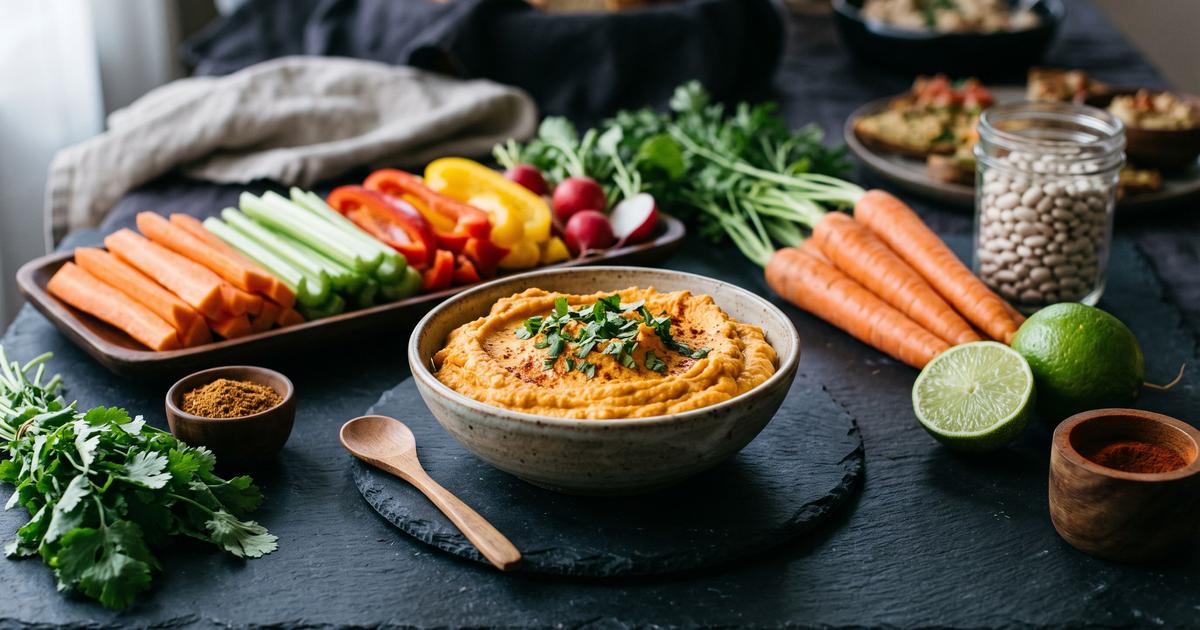
Pate de cenoura is one of those humble Brazilian spreads that turns up at birthday spreads and buffet tables, usually bound with cream cheese or mayonnaise and piled next to bread. This version keeps the sweet, sunny carrot flavor and the smooth texture but builds the body from blended white beans, which add protein and fiber where the dairy used to be. Steaming the carrots until they truly collapse is the difference between silky and gritty, and a quick steam of the garlic tames its raw heat for a spread eaten cold. Smoked paprika gives a faint warmth, lime keeps it bright in place of salt, and the herbs go in by hand at the end. It costs very little, keeps for several days, and is best made ahead so it can chill and set.
Ingredients
- 1 lb Carrots, chopped
- 1 cup Cannellini beans, cooked, drained
- 2 cloves Garlic
- 2 tbsp Lime juice
- 3 tbsp Unsweetened soy milk
- 1/2 tsp Smoked paprika
- 2 wholes Scallions, finely sliced
- 1/4 cup Flat-leaf parsley, chopped
- 1/2 tsp Black peppercorns, freshly ground
Method
- Steam the carrots until very soft, about 12 minutes. Cook them past tender, all the way to falling-apart, because any firmness left in the carrot shows up as grit in the finished spread instead of a smooth puree.
- Drop the whole raw garlic cloves in with the carrots for the last 2 minutes of steaming. A brief steam takes the harsh, hot edge off raw garlic while keeping its punch, which suits a spread eaten cold better than a sharp raw clove would.
- Blend the hot carrots and garlic with the cannellini beans, lime juice, soy milk, and smoked paprika until completely smooth. The white beans are the trick here: they give the pate its creamy body and a little protein in place of the cream cheese or mayonnaise a Brazilian recipe usually calls for, with no oil at all.
- Scrape into a bowl and fold in the scallions, parsley, and black pepper by hand. Stirring the herbs in whole, rather than blending them, keeps flecks of green and fresh bite against the smooth base.
- Chill at least an hour before serving. The spread firms up cold and the flavors settle, so it tastes brighter and holds its shape better on a cracker after resting. Serve with whole-grain toast or raw vegetables.
Nutrition
Estimated per serving: 70 calories, 3 g protein, 3 g fiber, 40 mg sodium. Computed from USDA FoodData Central reference values for the main ingredients. This is an approximation, not a laboratory measurement. How these are computed.
Cost per serving is estimated from US national-average retail prices for cheap staple forms, using BLS dried-bean prices and USDA produce prices. Prices vary by store and season, so treat it as a guide, not a receipt. How this is computed.