Ocopa, Peruvian Peanut and Aji Sauce
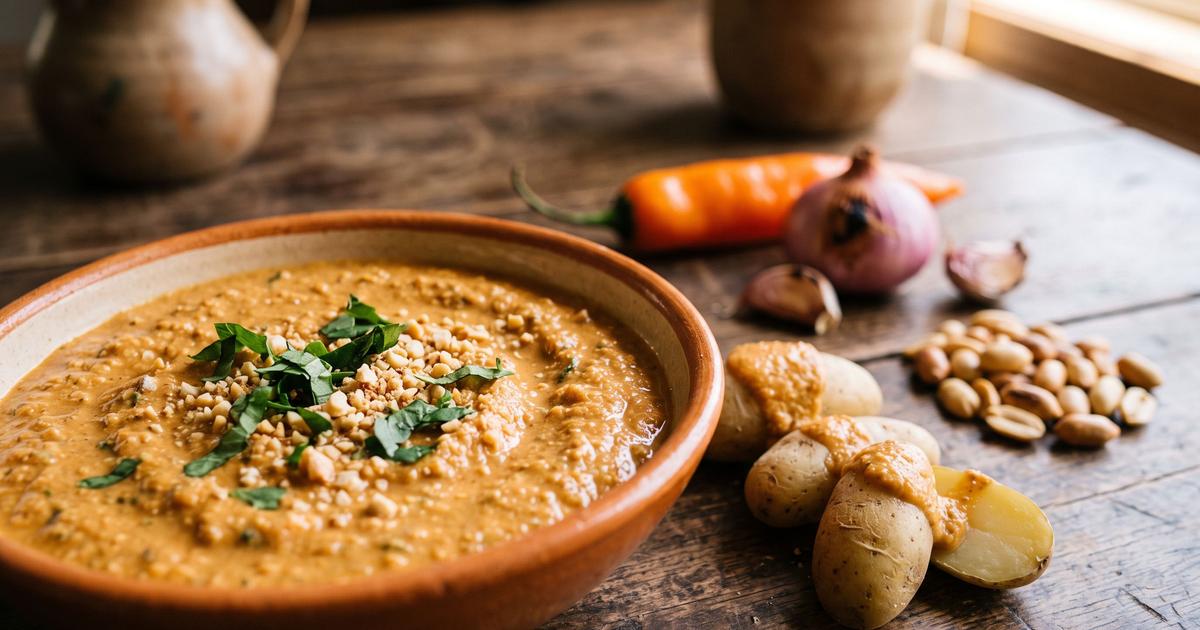
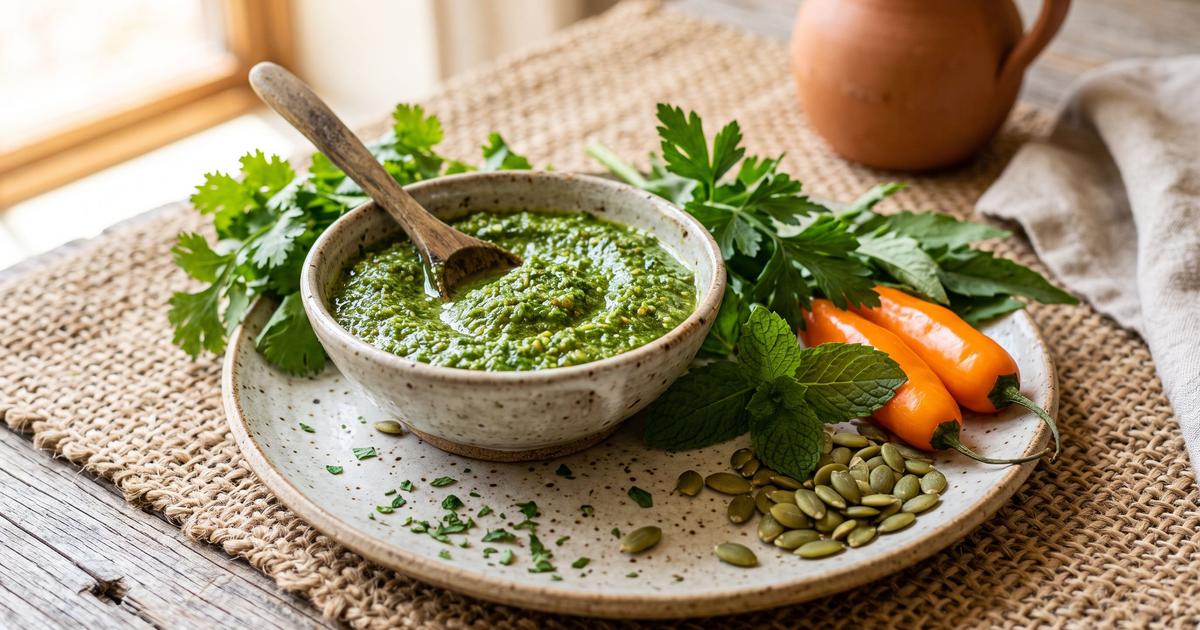
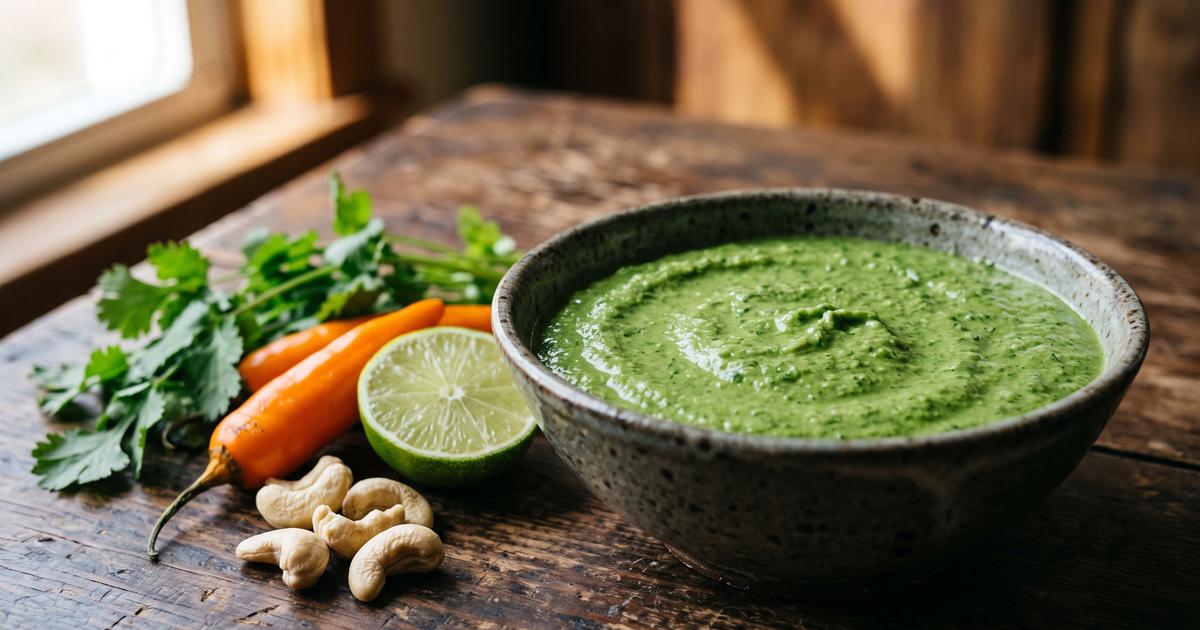
Ocopa is the Arequipa cousin of papa a la huancaina, a golden sauce poured over boiled potatoes, and it is built on toasted peanuts instead of cheese. Everything that goes in the blender is cooked first, which is the rule that makes Peruvian sauces taste round rather than raw: the peanuts are toasted, the onion and garlic charred black in a dry pan. Aji amarillo brings the fruity heat and the color. Where a cook would blend in soaked crackers and evaporated milk for body, this version uses a boiled potato and soy milk, keeping it whole-food and pourable. The herb huacatay is traditional and worth seeking out; basil and cilantro approximate its minty edge here. Lime and chile mean it needs no salt.
Ingredients
- 1/2 cup Peanuts, raw
- 2 tbsp Aji amarillo paste
- 1/2 Yellow onions, cut in thick wedges
- 3 cloves Garlic
- 1 Potatoe, peeled and boiled soft
- 1/2 cup Unsweetened soy milk
- 1/4 cup Basil
- 1/4 cup Cilantro
- 1 tbsp Lime juice
Method
- Toast the peanuts in a dry skillet over medium heat, shaking, until they smell nutty and take on color, about 5 minutes. Toasting is what gives ocopa its roasted backbone.
- In the same dry pan, char the onion wedges and whole garlic cloves until blackened in spots and softened, about 8 minutes. Peruvian cooks never blend raw onion or garlic into a sauce; charring first removes the bitterness and rounds the flavor.
- Peel the garlic. Blend the peanuts, charred onion and garlic, aji amarillo, boiled potato, basil, and cilantro with the soy milk until completely smooth and pourable. Add a little more milk if the blender stalls.
- Blend in the lime juice. Traditional ocopa leans on the herb huacatay, hard to find fresh here, so basil and cilantro stand in for its minty, anise note. The boiled potato gives the body a soaked cracker usually would, with no refined flour.
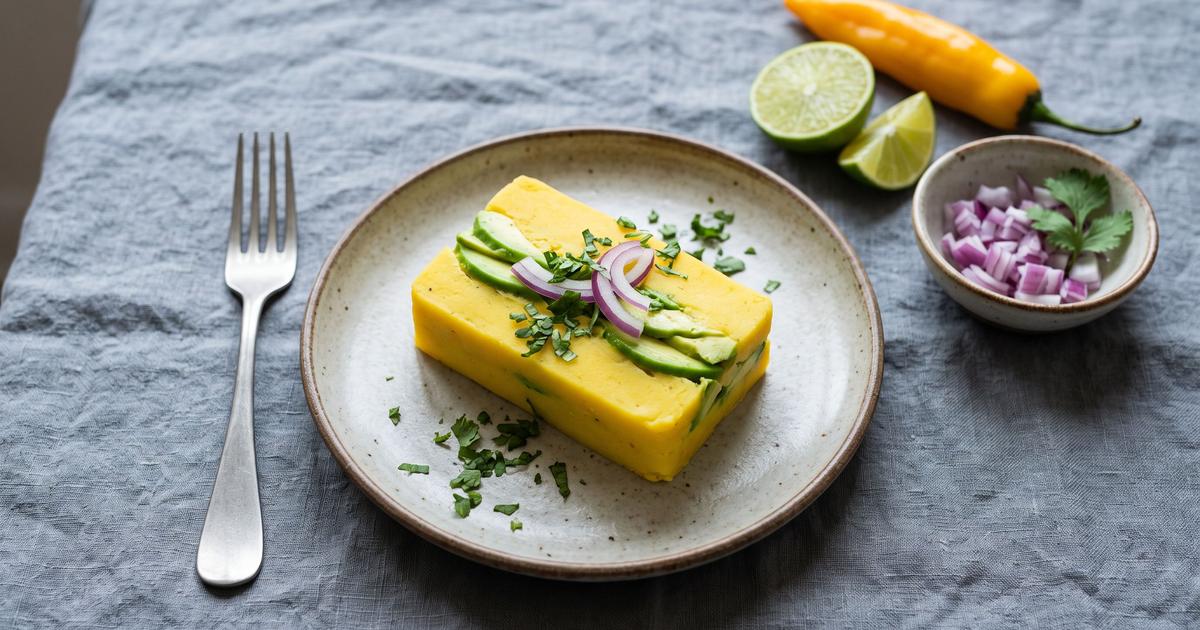
- Serve at room temperature over sliced boiled potatoes, or as a dip for raw vegetables. The aji, the toast, and the acid carry it without any salt.
Nutrition
Estimated per serving: 120 calories, 5 g protein, 2 g fiber, 25 mg sodium. Computed from USDA FoodData Central reference values for the main ingredients. This is an approximation, not a laboratory measurement. How these are computed.
Cost per serving is estimated from US national-average retail prices for cheap staple forms, using BLS dried-bean prices and USDA produce prices. Prices vary by store and season, so treat it as a guide, not a receipt. How this is computed.