Ají de Habas, Andean Fava Beans in Aji Amarillo
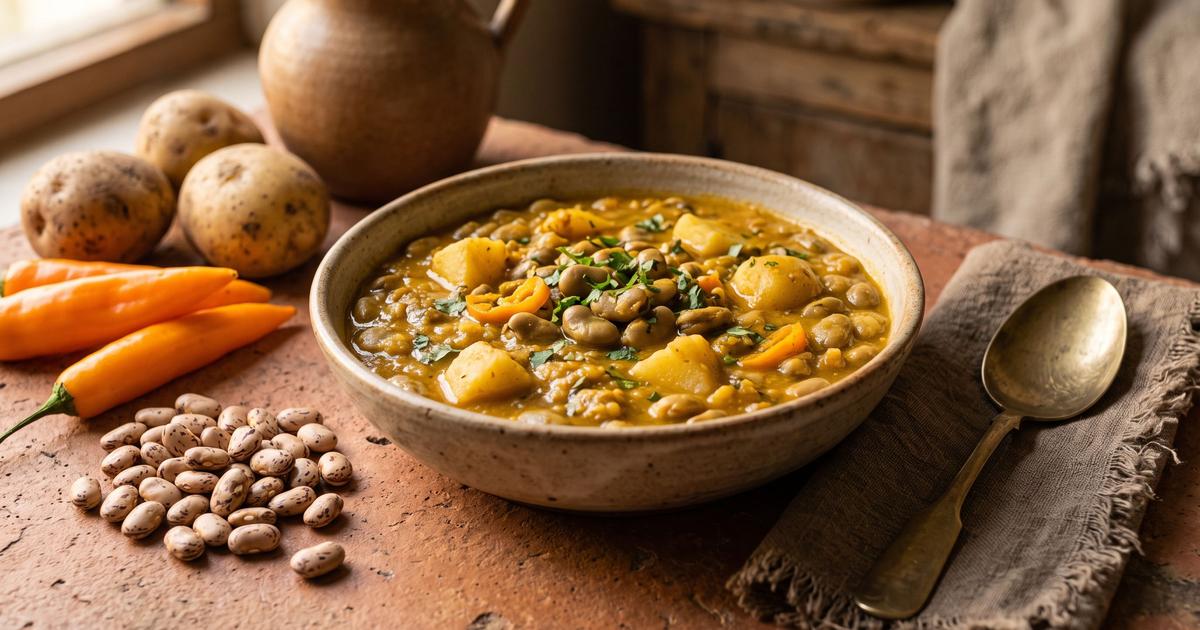
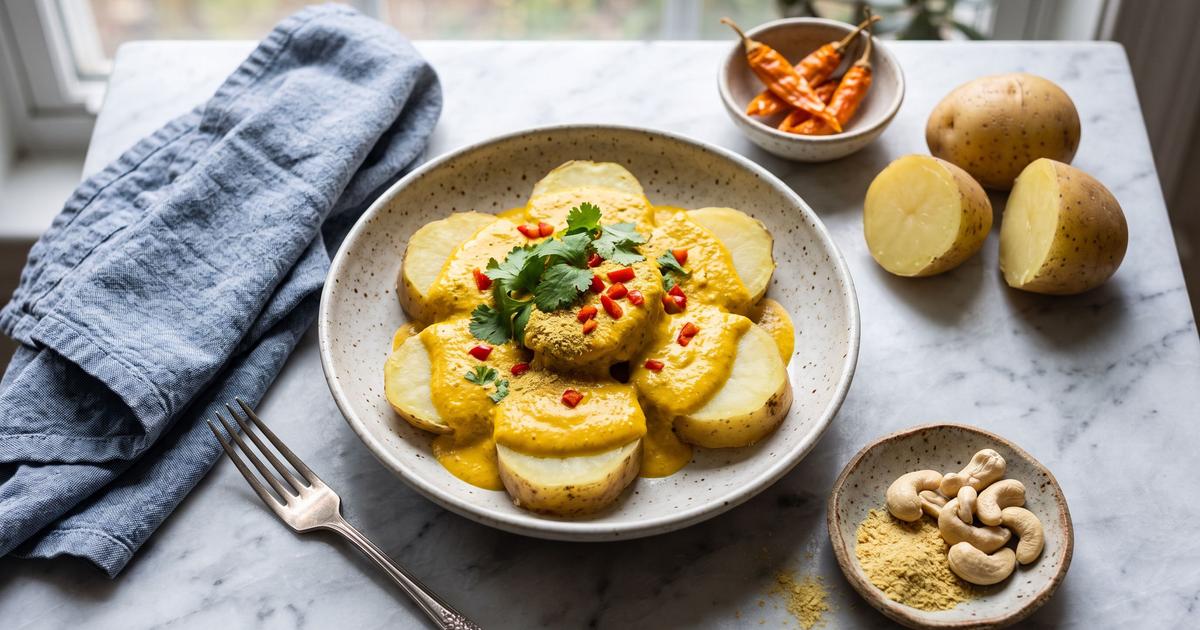
Ají de habas is Andean home cooking: fava beans, one of the oldest crops of the high sierra, stewed in a sauce built on aji amarillo, garlic, and cumin. It belongs to the family of Peruvian ajis, dishes named for the creamy chile sauce that binds them, of which ají de gallina is the most famous. The traditional cream comes from cheese and evaporated milk; soaked cashews blended smooth do the same work here, giving the sauce its body without dairy or oil. Fresh or frozen favas both work, and slipping off their skins is worth the few minutes for a sweeter bean. There is no salt in the pot: the aji, the cumin, and a finishing squeeze of lime carry it. Serve it as a side over rice or with boiled potatoes.
Ingredients
- 3 cups Fava beans, shelled, thawed if frozen
- 2 tbsp Aji amarillo paste
- 1 Yellow onion, finely diced
- 3 cloves Garlic, minced
- 1 tsp Cumin seed, ground
- 2 Potatoes, diced
- 1/4 cup Raw cashews, soaked 15 minutes
- 1/2 tsp Dried oregano
- 2 tbsp Cilantro, chopped
- 1 tbsp Lime juice
Method
- Boil the diced potato until just tender, about 10 minutes, and set it aside. The potato gives the dish body and soaks up the aji sauce.
- Sweat the onion and garlic in 3 tablespoons (45 ml) water until soft, then add the aji amarillo, cumin, and oregano and cook 2 minutes. Blooming the paste in the pan is what draws out its floral heat.
- Blend the soaked cashews with 0.75 cup (180 ml) water until completely silky, then stir into the pan. This cashew cream stands in for the queso fresco or evaporated milk that thickens the classic, with no dairy.
- Add the favas and potato and simmer 8 minutes, until the sauce clings and the favas are tender. If their skins are thick and grey, slip them off first for a sweeter, brighter bean.
- Finish with cilantro and lime. The acid sharpens the aji and does the seasoning that salt would. Serve over brown rice.
Nutrition
Estimated per serving: 190 calories, 10 g protein, 8 g fiber, 40 mg sodium. Computed from USDA FoodData Central reference values for the main ingredients. This is an approximation, not a laboratory measurement. How these are computed.
Cost per serving is estimated from US national-average retail prices for cheap staple forms, using BLS dried-bean prices and USDA produce prices. Prices vary by store and season, so treat it as a guide, not a receipt. How this is computed.