Uchucuta, Andean Herb Sauce
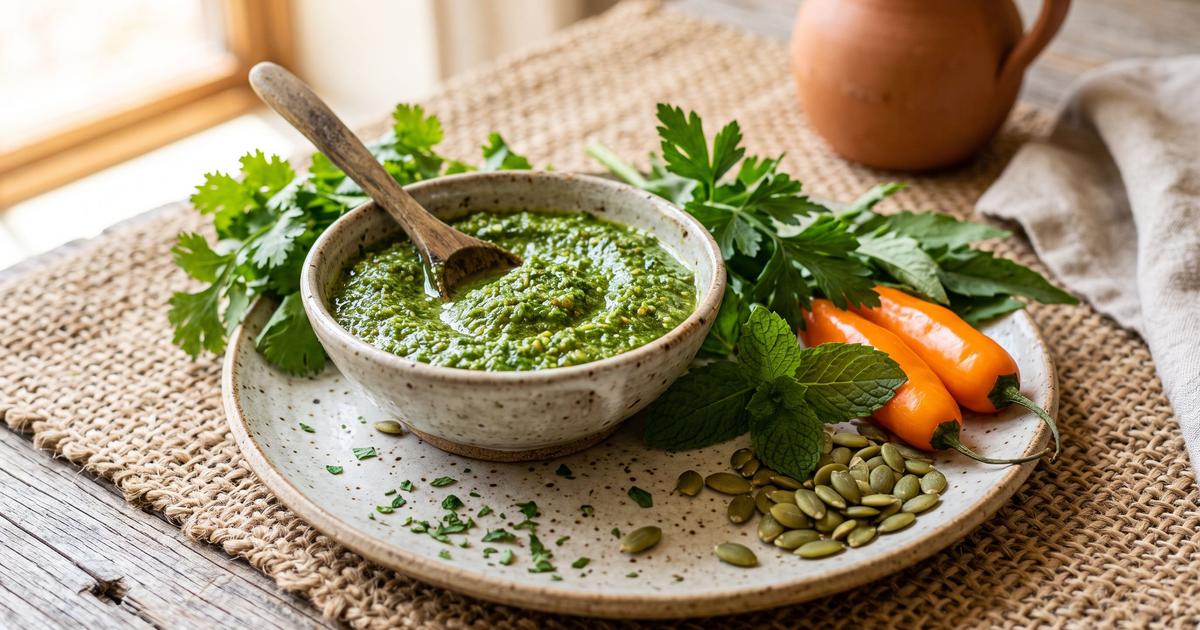
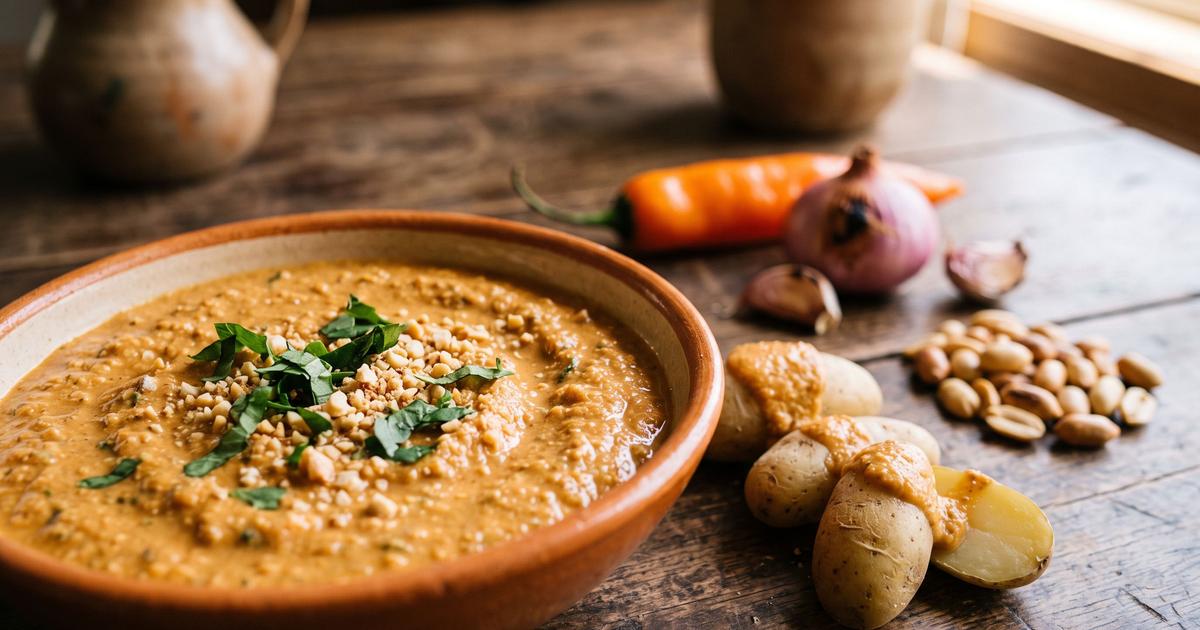
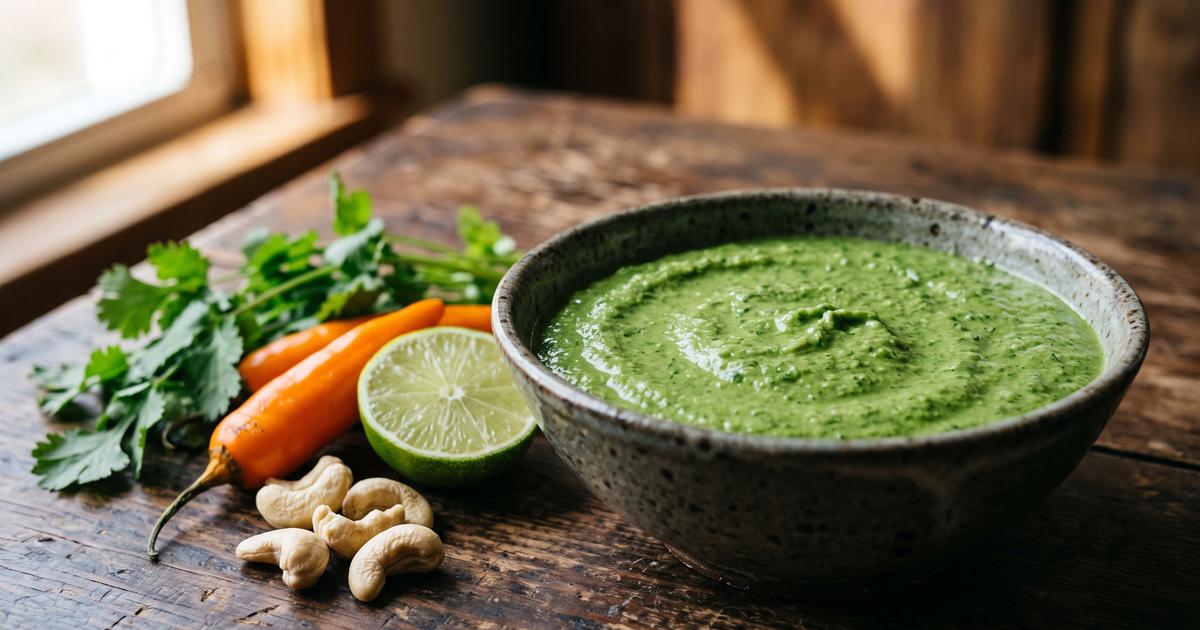
Uchucuta is a rough green table sauce from the Cusco highlands, the everyday relish spooned over boiled potatoes, corn, fava beans, and grilled things. Its true signature is huacatay, the pungent Andean black mint, often with paico alongside; here a blend of mint and epazote carries that note, and it is fair to call it an approximation rather than the original. Toasted pumpkin seeds stand in for the fresh cheese or toasted tarwi that thicken traditional versions, giving the sauce a nutty body with only whole-food fat. Aji amarillo brings its fruity warmth and a serrano pushes the heat as far as you want it. Keep it coarse; this is a spoon sauce, not a smooth drizzle.
Ingredients
- 1/4 cup Pumpkin seeds
- 1 cup Cilantro, packed
- 1/2 cup Flat-leaf parsley
- 3 tbsp Mint
- 2 tbsp Epazote, chopped
- 2 wholes Scallions, chopped
- 1 clove Garlic
- 1 tbsp Aji amarillo paste
- 1 whole Serrano, seeded
- 2 tbsp Lime juice
- 1/4 tsp Black peppercorns, freshly ground
Method
- Toast the pumpkin seeds in a dry pan over medium heat, shaking often, until they puff and start to pop, about 3 minutes. Toasting is what turns them from raw and flat to nutty, and their ground weight is what gives this sauce body without cheese or oil.
- Put the toasted seeds, herbs, scallions, garlic, aji amarillo, serrano, lime juice, and black pepper in a blender or food processor. Loading everything at once lets you judge the texture in a single pass rather than chasing it.
- Blend to a coarse green paste, adding water a tablespoon at a time until it moves but still has texture, usually about 0.25 cup (60 ml) total. Uchucuta is meant to be rustic, not silky, so stop while you can still see flecks of herb and seed.
- Taste and adjust with more lime for brightness or more serrano for heat. The salt job here belongs to the acid and the chile, so lean on lime rather than reaching for anything salty, and let it sit ten minutes for the flavors to marry.
Nutrition
Estimated per serving: 70 calories, 3 g protein, 2 g fiber, 15 mg sodium. Computed from USDA FoodData Central reference values for the main ingredients. This is an approximation, not a laboratory measurement. How these are computed.
Cost per serving is estimated from US national-average retail prices for cheap staple forms, using BLS dried-bean prices and USDA produce prices. Prices vary by store and season, so treat it as a guide, not a receipt. How this is computed.