Nigerian Okra Soup
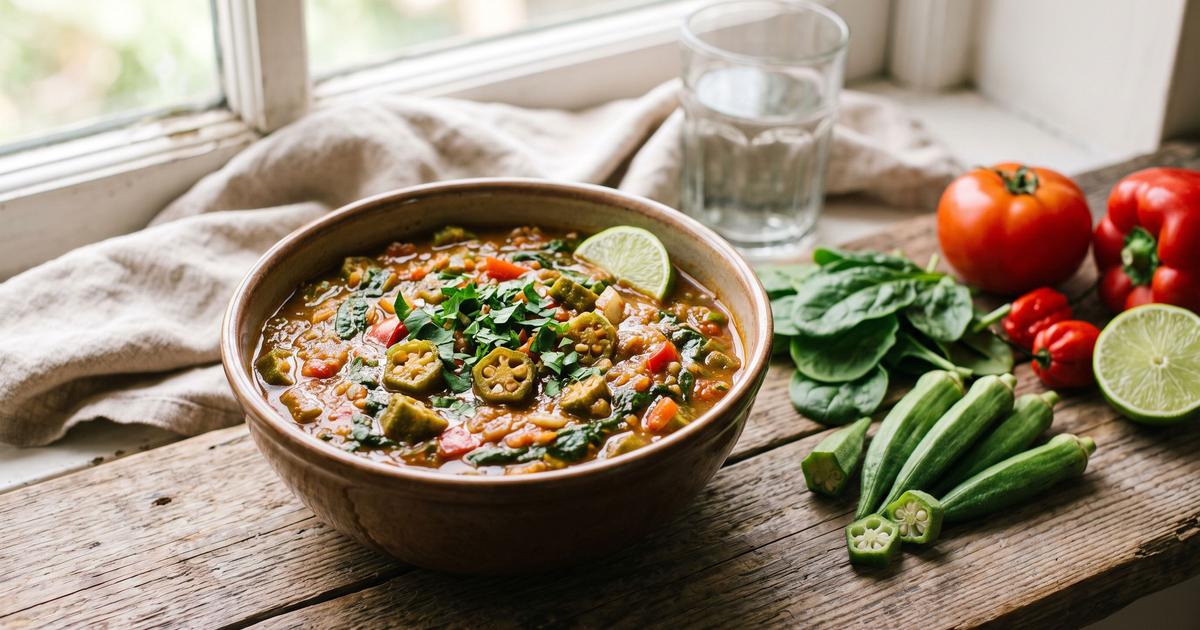
Okra soup runs across southern Nigeria in many forms, almost all thickened by the okra itself and usually built on palm oil with meat or fish. The vegetable does the structural work here on its own: sliced thin and simmered hot in a tomato and pepper base, it gives the soup body without any starch. Smoked paprika stands in for the color and smoke of red palm oil, the habanero brings the heat the dish is known for, and lime at the end keeps the whole thing from going heavy. Cook the okra fast and hot, and the acid in the tomatoes keeps it from turning ropey.
Ingredients
- 1 lb Okra, stemmed and sliced into thin rounds
- 1 Red onion, diced
- 1 Bell pepper, red, seeded and chopped
- 3 cloves Garlic, minced
- 1/2 Habanero, minced
- 1 cup Canned crushed tomatoes
- 1 tsp Smoked paprika
- 1 tsp no-salt vegetable bouillon
- 4 cups Spinach, chopped
- 1 Lime, juiced
Method
- Sweat the onion in 3 tablespoons (45 ml) water in a pot over medium heat until soft, about 6 minutes. Add the red pepper, garlic, and habanero and cook 2 minutes more.
- Stir in the crushed tomatoes and smoked paprika and cook until the tomato darkens and thickens, about 5 minutes. Reducing the tomato now concentrates it, and the smoked paprika lends the deep, faintly smoky note that palm oil gives the traditional pot.
- Add the okra, the no-salt bouillon, and 2 cups (480 ml) water. Bring to a brisk simmer and cook, uncovered, for 8 to 10 minutes. Okra turns ropey when it stews slowly in a lot of liquid, so a hot, short cook in the acidic tomato base keeps it thick rather than slimy.
- Stir in the chopped spinach and cook just until it wilts, 2 to 3 minutes.
- Off the heat, stir in the lime juice. Taste and add more lime or habanero to sharpen the richness. Serve on its own or over an intact grain like brown rice.
Nutrition
Estimated per serving: 110 calories, 4 g protein, 7 g fiber, 55 mg sodium. Computed from USDA FoodData Central reference values for the main ingredients. This is an approximation, not a laboratory measurement. How these are computed.
Cost per serving is estimated from US national-average retail prices for cheap staple forms, using BLS dried-bean prices and USDA produce prices. Prices vary by store and season, so treat it as a guide, not a receipt. How this is computed.