Moroccan Squash and Chickpea Soup
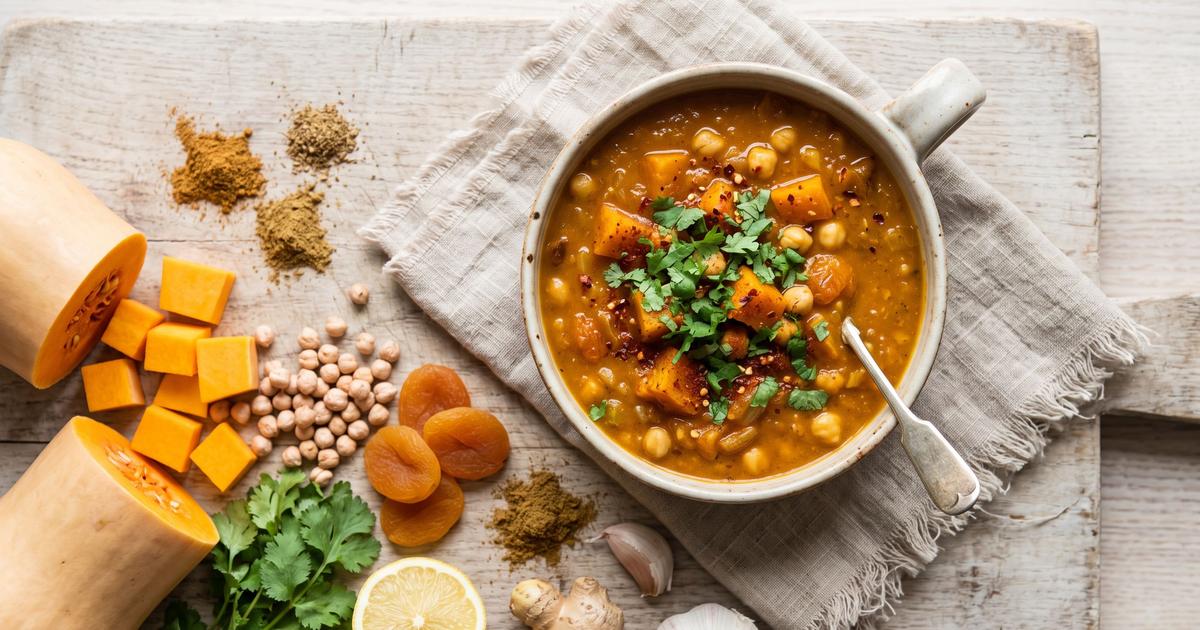
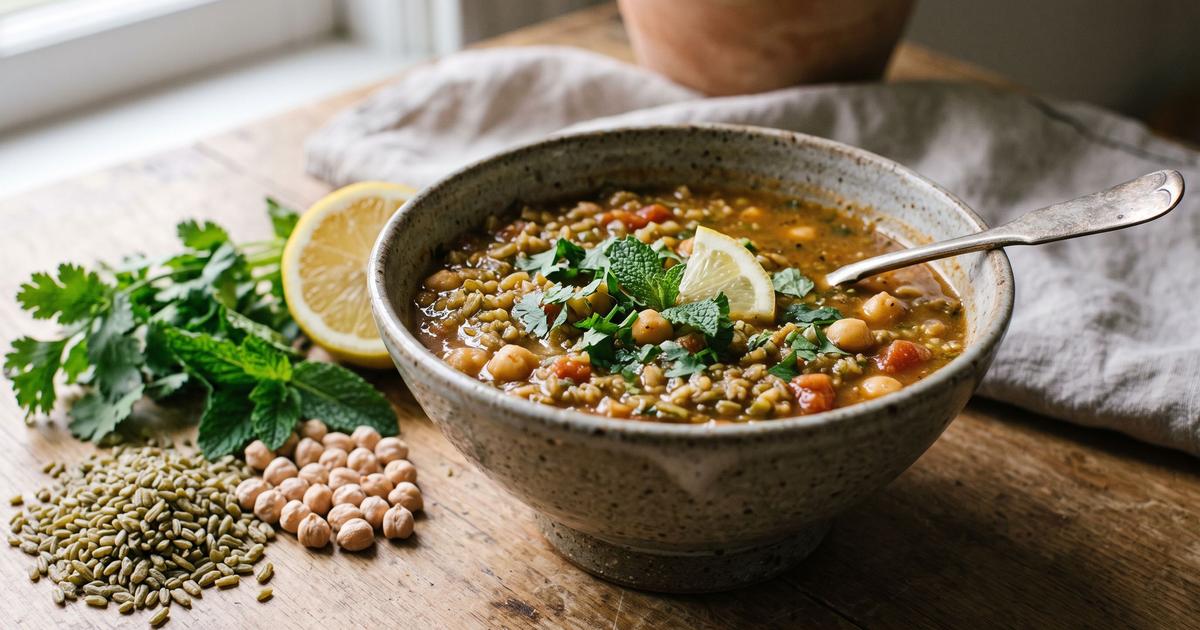
This is a Moroccan-spiced soup built for cold weather, leaning on the cheapest sweet starch in the store and a can of chickpeas. Ras el hanout, the North African blend that can run to thirty spices, does most of the heavy lifting, with fresh ginger and toasted cumin behind it. A few dried apricots melt into the pot and give the kind of soft sweetness that makes you stop reaching for the salt. Blend half of it for body and leave the rest whole, then finish with plenty of cilantro and lemon. It keeps and reheats well, which makes it worth cooking the full pot.
Ingredients
- 6 cups Butternut squash, peeled and cubed, fresh or frozen
- 1 1/2 cups Chickpeas, cooked, or one 15 oz can, no-salt-added, drained
- 1 whole Yellow onions, diced
- 3 cloves Garlic, minced
- 1 tbsp Ginger, grated
- 2 tsp Ras el hanout
- 1 tsp Cumin seed, toasted and ground
- 1 cup Canned crushed tomatoes, no-salt-added
- 4 wholes Dried apricots, chopped
- 1/2 cup Cilantro, chopped, to finish
- 2 tbsp Lemon juice, fresh, to finish
Method
- Sweat the onion in a pot with a few tablespoons of water until soft, about 8 minutes, then add the garlic and ginger and cook 1 minute. This aromatic base is what a salt-free soup is built on, so give it the full time.
- Add the ras el hanout and cumin and stir for 30 seconds, until fragrant. Toasting the spices in the dry pot before any liquid blooms their oils and keeps them from tasting raw.
- Add the squash, chickpeas, tomatoes, apricots, and 5 cups (1.2 liters) water. Simmer, partly covered, for 25 minutes, until the squash is completely soft. The apricots dissolve as it cooks, lending a background sweetness that balances the spice with no added sugar.
- Blend about half the soup smooth and stir it back in, leaving the rest chunky. This half-blend gives you a creamy body around whole chickpeas and pieces of squash, no cream needed.
- Finish off the heat with the lemon juice and cilantro. The acid lifts the sweet squash and warm spice and stands in for salt at the bowl.
Nutrition
Estimated per serving: 190 calories, 7 g protein, 8 g fiber, 50 mg sodium. Computed from USDA FoodData Central reference values for the main ingredients. This is an approximation, not a laboratory measurement. How these are computed.
Cost per serving is estimated from US national-average retail prices for cheap staple forms, using BLS dried-bean prices and USDA produce prices. Prices vary by store and season, so treat it as a guide, not a receipt. How this is computed.