Berkoukes, Amazigh Vegetable and Pasta Soup
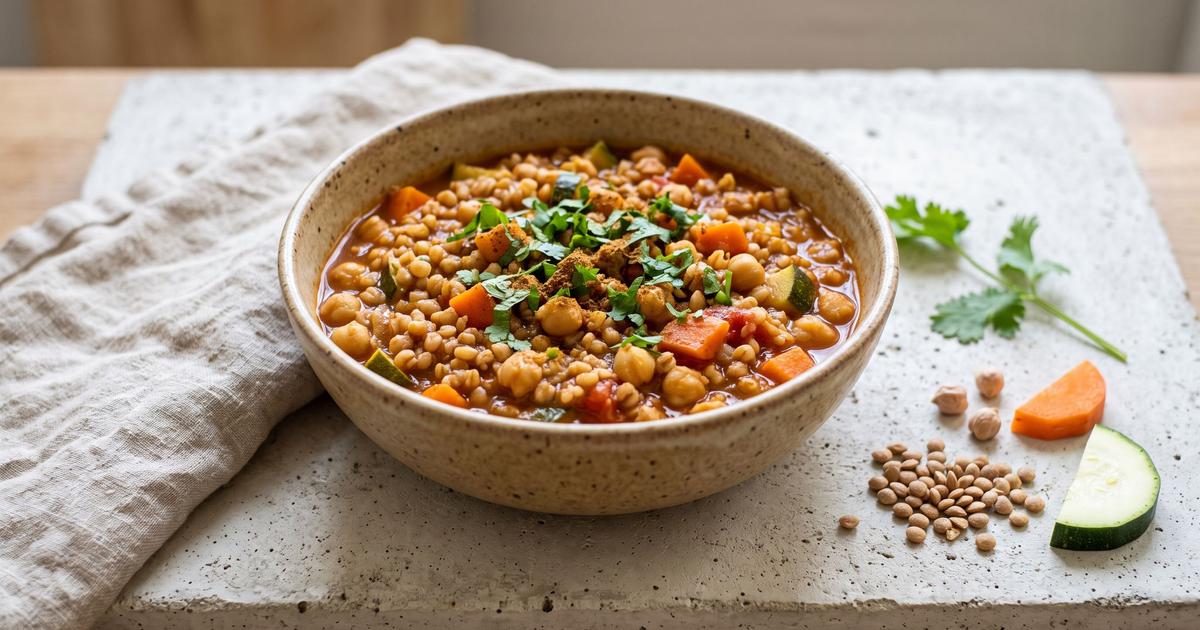
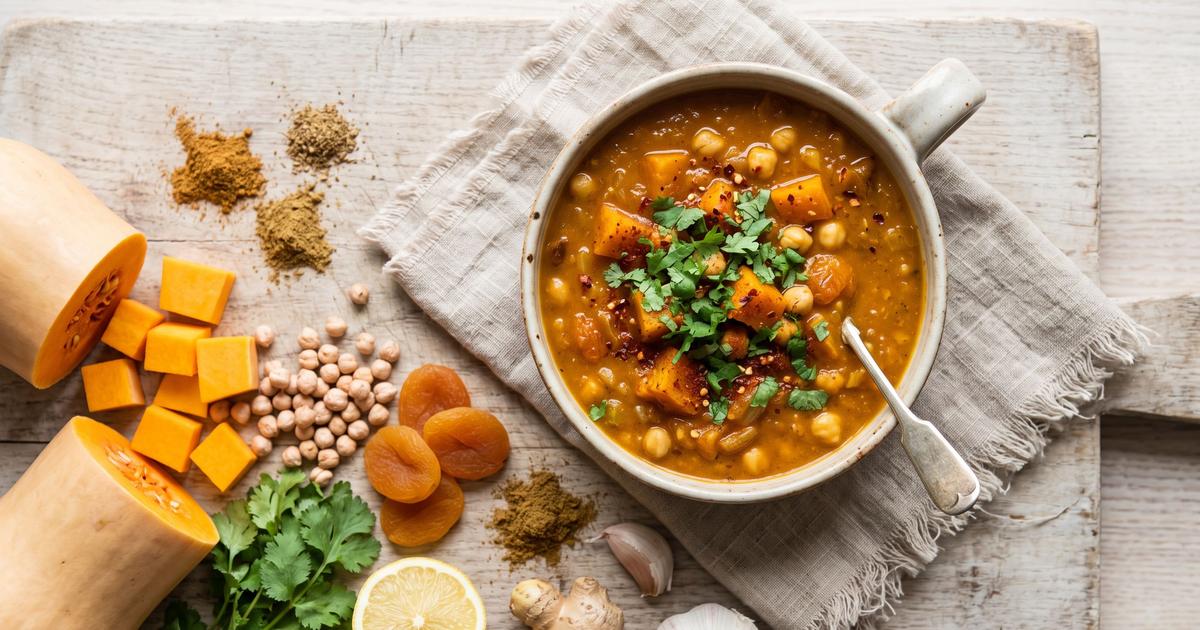
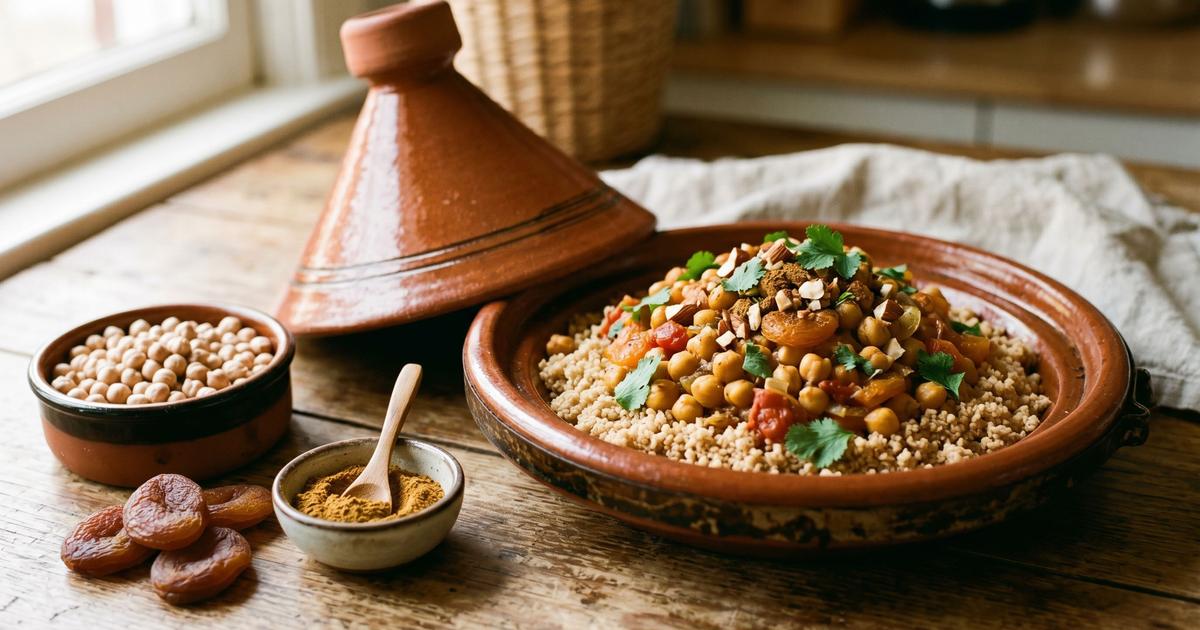
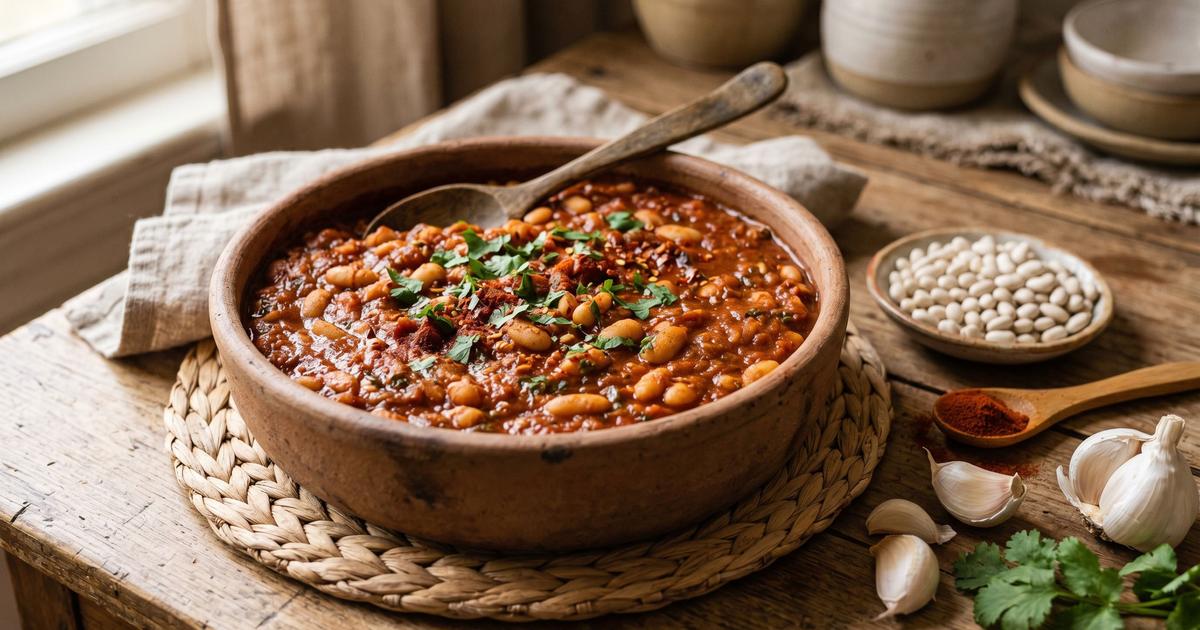
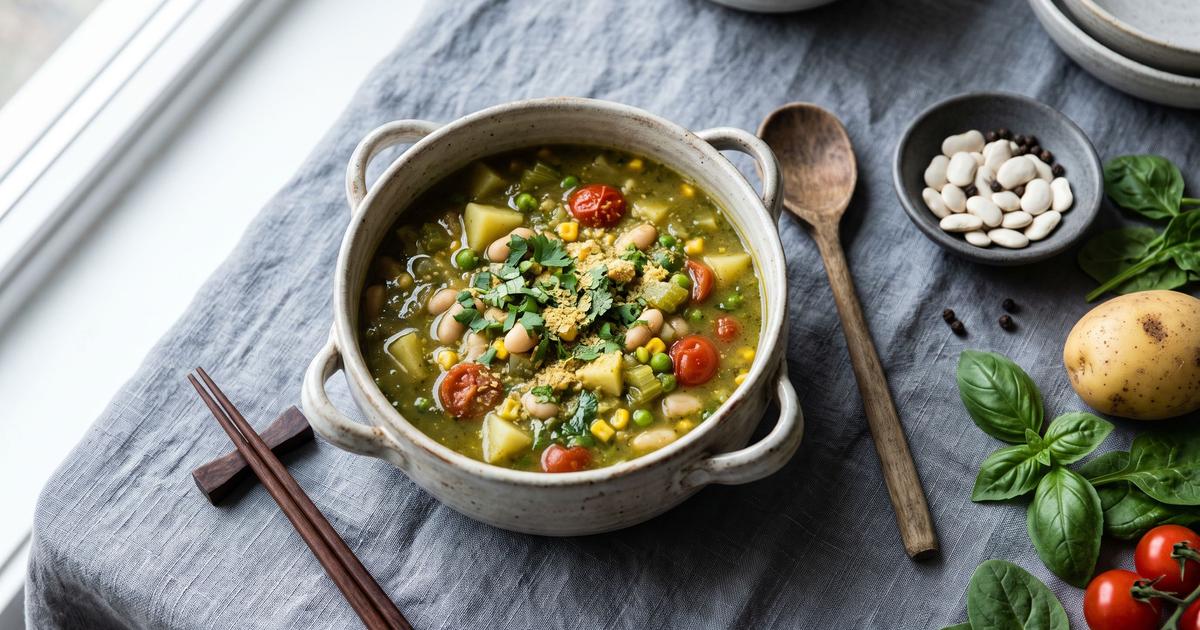
Berkoukes is the hand-rolled pasta of the Amazigh kitchen across North Africa, little pellets of semolina larger than couscous, simmered in a spiced tomato broth until the bowl turns thick and warming. Where the pellets are hard to find, small whole-grain pasta stands in and keeps the same idea. Toasting the pasta dry before it goes in the pot deepens its flavor and keeps it from going soft too fast. Ras el hanout, the house blend that changes from shop to shop, does most of the seasoning, with chickpeas and whatever vegetables the season offers folded in. It is a one-pot supper built for a cold night, finished with a fistful of cilantro and parsley.
Ingredients
- 3/4 cup Whole wheat short pasta, small shapes, standing in for hand-rolled pellets
- 1 1/2 cups Chickpeas, cooked, no-salt-added
- 1 whole Yellow onions, diced
- 3 cloves Garlic, minced
- 2 wholes Carrots (cooking), diced
- 1 whole Turnips, diced
- 1 whole Zucchini, diced
- 1 cup Canned crushed tomatoes, no-salt-added
- 2 tbsp Tomato paste, no-salt-added
- 1 1/2 tsp Ras el hanout
- 1 tsp Sweet paprika
- 1 tsp no-salt vegetable bouillon
- 1/4 cup Cilantro, chopped
- 1/4 cup Flat-leaf parsley, chopped
Method
- Sweat the onion and garlic in 3 tbsp water in a large pot until soft, then stir in the tomato paste, ras el hanout, and paprika and cook a minute. Blooming the spices and darkening the paste in the pan pulls out flavor that no amount of long simmering recovers later.
- Add the crushed tomatoes, carrot, turnip, chickpeas, the no-salt bouillon, and 6 cups water. Simmer 15 minutes, until the root vegetables begin to soften.
- Meanwhile, toast the dry pasta in a separate dry pan until golden, about 3 minutes. Toasting deepens its flavor and slows how fast it softens, so the soup does not turn to mush.
- Add the toasted pasta and the zucchini and simmer 8 to 10 minutes more, until the pasta is tender and the broth has thickened. Zucchini goes in late so it holds its shape.
- Stir in the cilantro and parsley off the heat. The fresh herbs lift the ras el hanout and, with the natural sweetness of the roots, carry the bowl without salt.
Nutrition
Estimated per serving: 240 calories, 9 g protein, 8 g fiber, 60 mg sodium. Computed from USDA FoodData Central reference values for the main ingredients. This is an approximation, not a laboratory measurement. How these are computed.
Cost per serving is estimated from US national-average retail prices for cheap staple forms, using BLS dried-bean prices and USDA produce prices. Prices vary by store and season, so treat it as a guide, not a receipt. How this is computed.