Lunu Miris
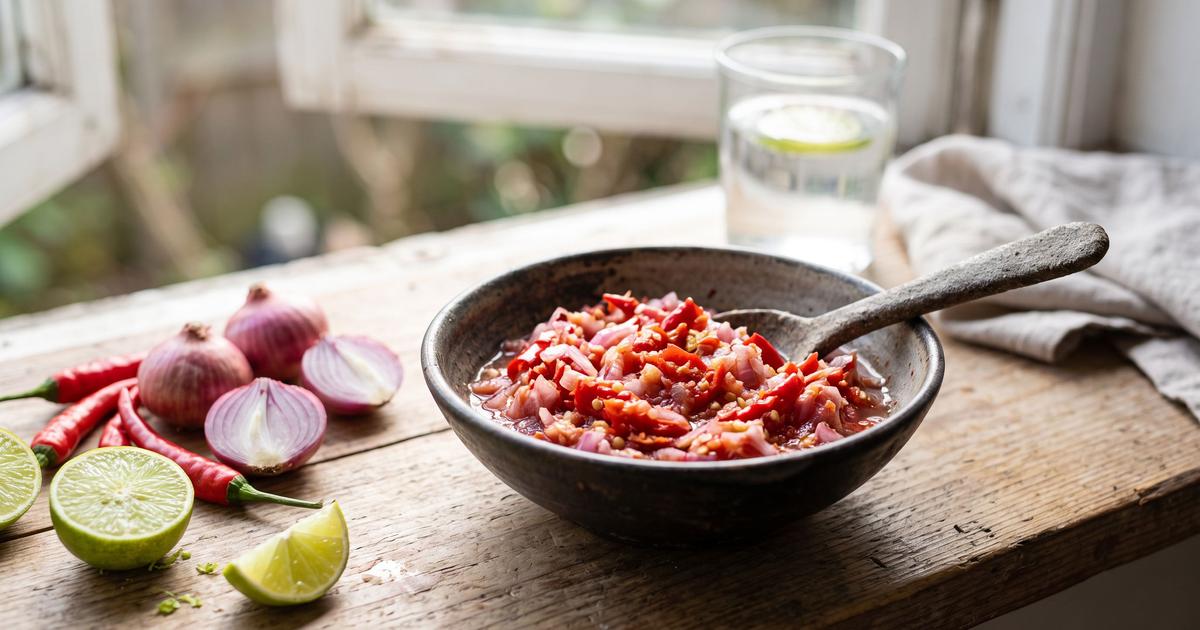
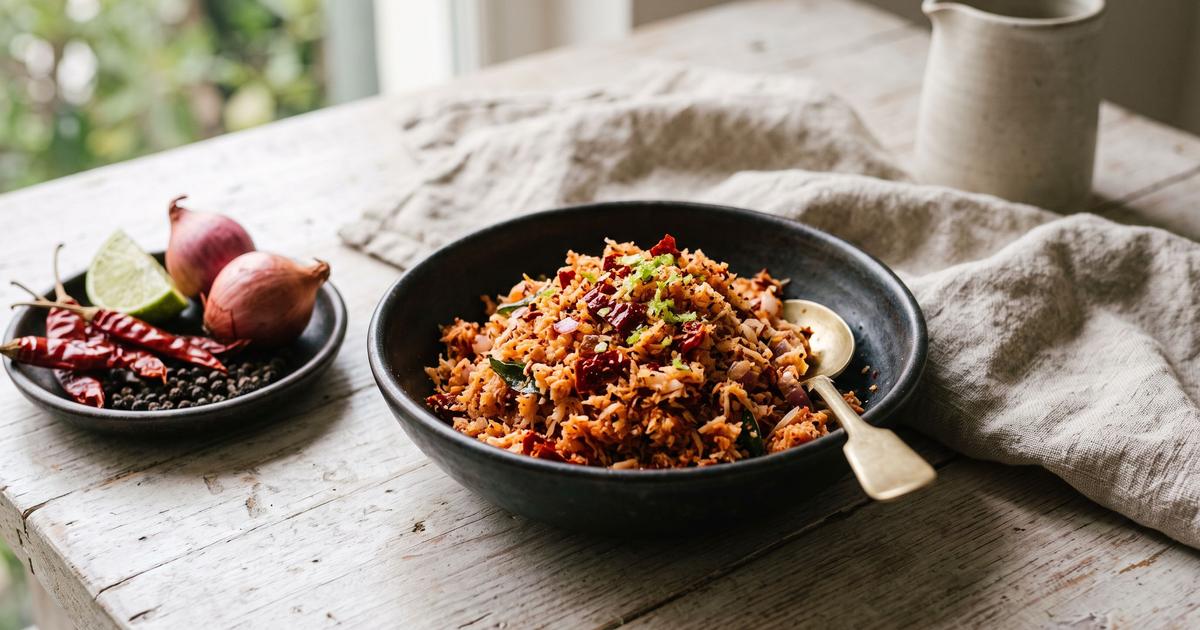
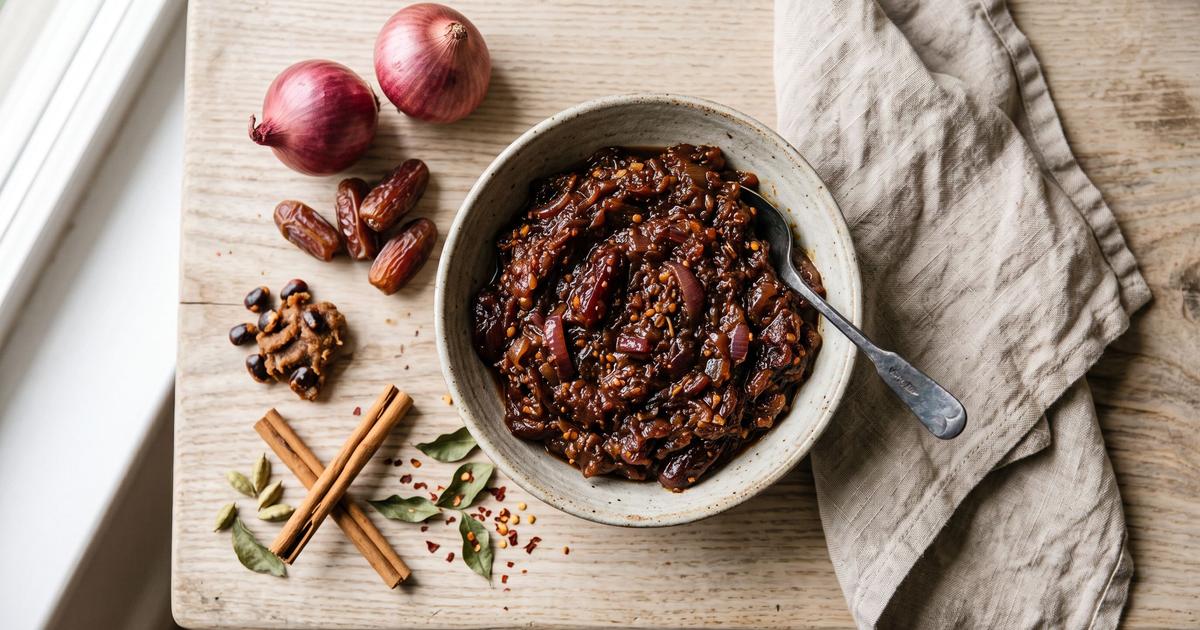
Lunu miris is the everyday chile-and-onion sambol of Sri Lanka, the pounded red relish that sharpens a plate of rice and curry. The classic is built on salt and dried fish, and most versions lean on coconut somewhere nearby. This one skips all three: Kashmiri chile carries the color, cayenne carries the heat, and tamarind with lime supplies the sour, savory backbone that salt would usually give. Pound it by hand if you can, since the friction pulls the onion and chile into one another in a way that chopping never does. Use it as a condiment, not a dip, because it is meant to be fierce.
Ingredients
- 1 cup Red onions, very finely chopped
- 2 tbsp Kashmiri chile, ground
- 1/2 tsp Cayenne
- 1/4 tsp Black peppercorns, freshly ground
- 1 tsp Tamarind paste
- 2 tbsp Lime juice
Method
- Chop the red onion as finely as you can manage, almost to a mince. Lunu miris is meant to be a coarse paste, and large pieces of raw onion will read as harsh rather than mellow.
- Put the onion, ground Kashmiri chile, cayenne, and black pepper in a mortar. Kashmiri chile brings the deep red color with little heat, while the cayenne supplies the actual burn, so you control color and fire separately.
- Pound with the pestle until the onion breaks down and bleeds into the chile, forming a rough, wet paste. If you have no mortar, pulse everything in a small food processor, but stop before it turns to liquid.
- Work in the tamarind paste and lime juice. Traditional lunu miris relies on salt and dried Maldive fish for its savory depth; here the tamarind adds a fruity, sour weight that fills that gap without either.
- Let it sit for 10 minutes before serving so the onion softens and the flavors marry. Taste and add more lime if it needs lift. Serve a small spoonful alongside rice, lentils, or flatbread, as a little goes a long way.
Nutrition
Estimated per serving: 22 calories, 1 g protein, 1 g fiber, 6 mg sodium. Computed from USDA FoodData Central reference values for the main ingredients. This is an approximation, not a laboratory measurement. How these are computed.
Cost per serving is estimated from US national-average retail prices for cheap staple forms, using BLS dried-bean prices and USDA produce prices. Prices vary by store and season, so treat it as a guide, not a receipt. How this is computed.