Katta Sambol, Sri Lankan Roasted Chili Sambol
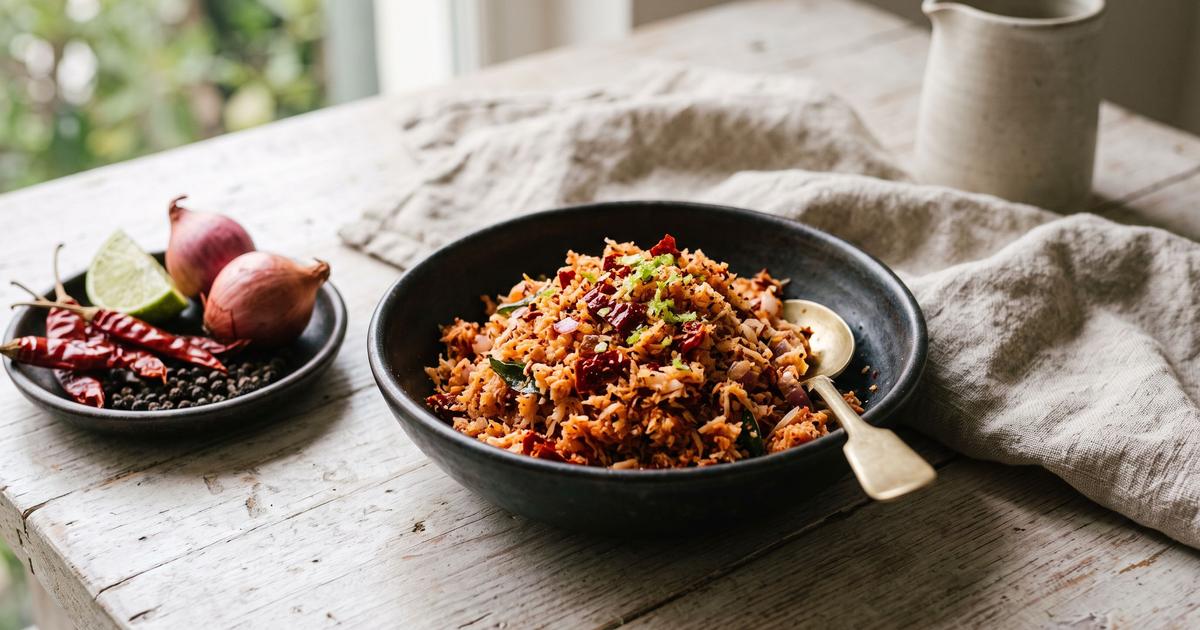
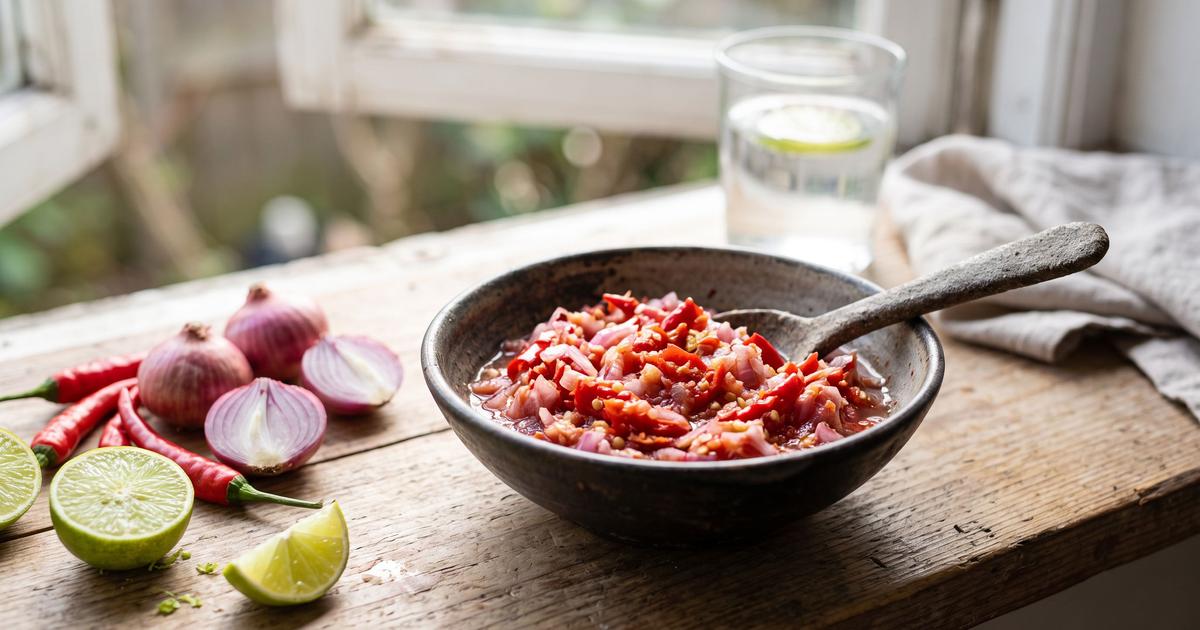
Katta sambol is the hottest thing on a Sri Lankan plate, a dark red paste of onion and roasted chile meant to be dabbed, not scooped. It is a cousin of lunu miris but distinct: where lunu miris stays fresh and oniony, katta sambol is toasted and pounded to a thicker, deeper paste, traditionally darkened with Maldive fish. This version leaves the fish out and leans on toasted curry leaf and pepper for savor, with lime standing in for the salt. A little goes a long way.
Ingredients
- 1 Red onion, quartered
- 2 tbsp Kashmiri chile, ground
- 1/2 tsp Cayenne
- 1/2 tsp Black peppercorns
- 12 Curry leaves
- 2 tbsp Lime juice
- 1 clove Garlic
Method
- Warm a dry pan over medium heat and toast the curry leaves and black peppercorns for about 1 minute, until the leaves are crisp and the pepper smells sharp. Toasting is what puts the roasted note in the name katta, so let them darken a shade.
- Grind the toasted pepper and curry leaves with the garlic in a mortar or spice grinder. Add the ground Kashmiri chile and cayenne. The Kashmiri gives deep red color and body while the cayenne brings the heat, so adjust the cayenne to your tolerance.
- Add the red onion and pound or pulse it into the chile mix until it breaks down into a coarse, wet paste. Pounding, rather than chopping, bruises the onion so it bleeds its juice into the chile and binds everything.
- Work in the lime juice a spoonful at a time until the sambol is thick and spreadable. The acid is doing the seasoning that salt and dried fish would in the traditional version, so keep tasting and add lime until it tastes complete.
- Rest 10 minutes before serving so the flavors settle. Serve tiny amounts alongside rice, or on the side of milk rice. It keeps a week in the fridge and only deepens.
Nutrition
Estimated per serving: 30 calories, 1 g protein, 2 g fiber, 10 mg sodium. Computed from USDA FoodData Central reference values for the main ingredients. This is an approximation, not a laboratory measurement. How these are computed.
Cost per serving is estimated from US national-average retail prices for cheap staple forms, using BLS dried-bean prices and USDA produce prices. Prices vary by store and season, so treat it as a guide, not a receipt. How this is computed.