Kuli-Kuli, Nigerian Roasted Peanut Snack
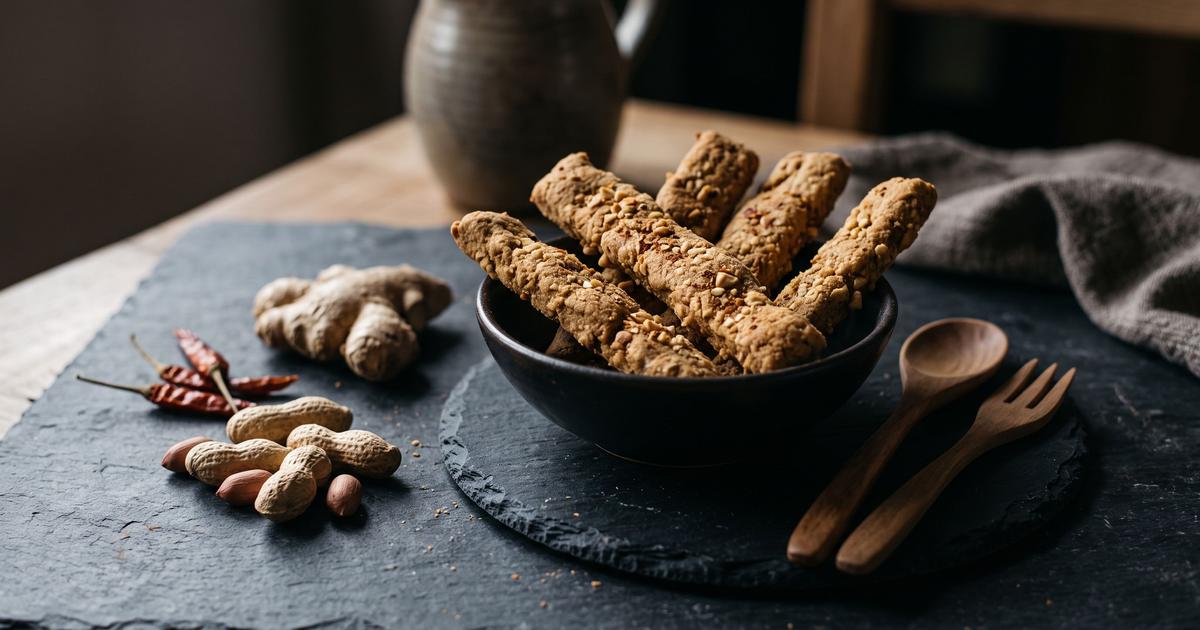
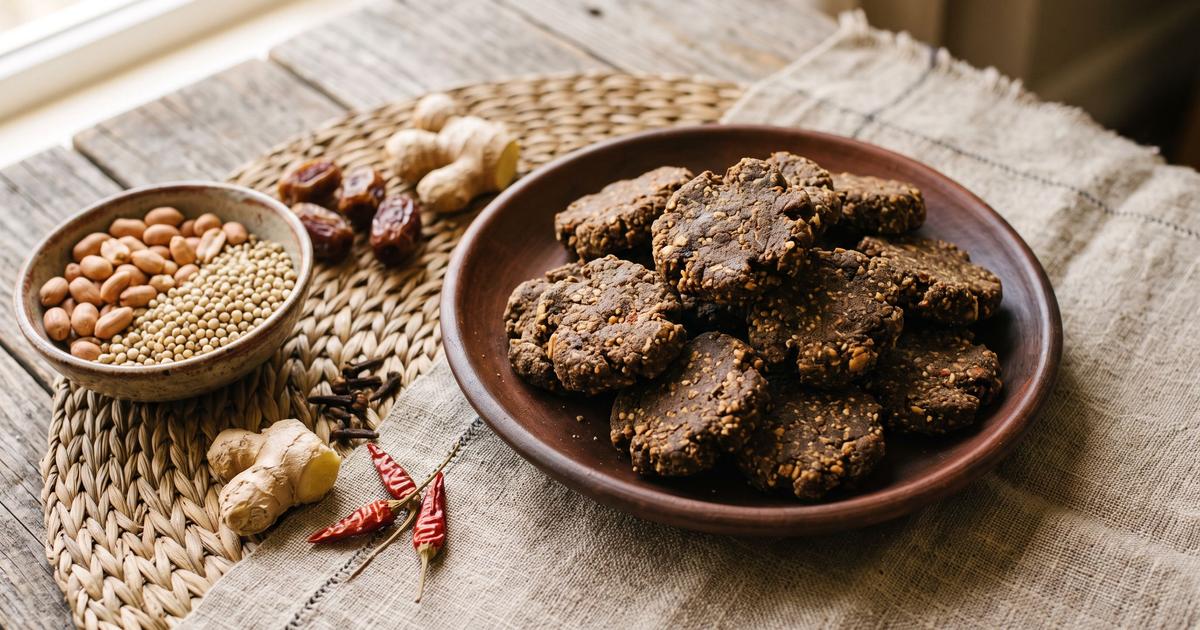
Kuli-kuli is a Hausa snack from northern Nigeria, sold in twists, rings, and sticks by roadside vendors and eaten on its own or crumbled over bean cakes and salads. Roasted groundnuts are pounded to a paste, the oil is pressed out, and the spiced dough is shaped and deep-fried in that same oil. This version keeps the roasted peanuts, ginger, and chile but bakes the sticks low and slow instead, using a little ground flax to bind what the pressed oil would. It comes out crisp and deeply peanutty, a snack that is nearly all whole-food protein and fat. Ginger and cayenne do the seasoning, so no salt goes near it.
Ingredients
- 2 cups Peanuts, roasted
- 1 tsp ground ginger
- 1/2 tsp Cayenne
- 1 clove Garlic, grated
- 1/2 tsp Smoked paprika
- 1 tbsp Ground flaxseed
Method
- Heat the oven to 300 F (150 C) and line a baking sheet with parchment. A low oven is the whole trick here: it dries and crisps the peanuts slowly rather than searing them, so they set hard without the frying that gives the traditional snack its crunch.
- Pulse the roasted peanuts in a food processor to a coarse, crumbly paste, stopping well before it turns to smooth butter. You want it to just hold together when pressed, since a wetter grind will bake dense instead of crisp.
- Add the ginger, cayenne, garlic, smoked paprika, and ground flaxseed, then pulse in 1 to 2 tablespoons (15 to 30 ml) water until a stiff dough forms. The flax binds the crumbs the way the pressed-out oil binds them in the original, and the spices carry all the seasoning this needs.
- Roll the dough into thin sticks about the width of a pencil and lay them on the sheet with space between. Thin pieces bake through evenly and crisp all the way to the center.
- Bake 25 to 30 minutes, turning once, until firm and deep gold. Cool completely on the sheet, where they harden as they sit, then store airtight for up to two weeks.
Nutrition
Estimated per serving: 210 calories, 9 g protein, 3 g fiber, 5 mg sodium. Computed from USDA FoodData Central reference values for the main ingredients. This is an approximation, not a laboratory measurement. How these are computed.
Cost per serving is estimated from US national-average retail prices for cheap staple forms, using BLS dried-bean prices and USDA produce prices. Prices vary by store and season, so treat it as a guide, not a receipt. How this is computed.