Kiri Bath, Sri Lankan Milk Rice
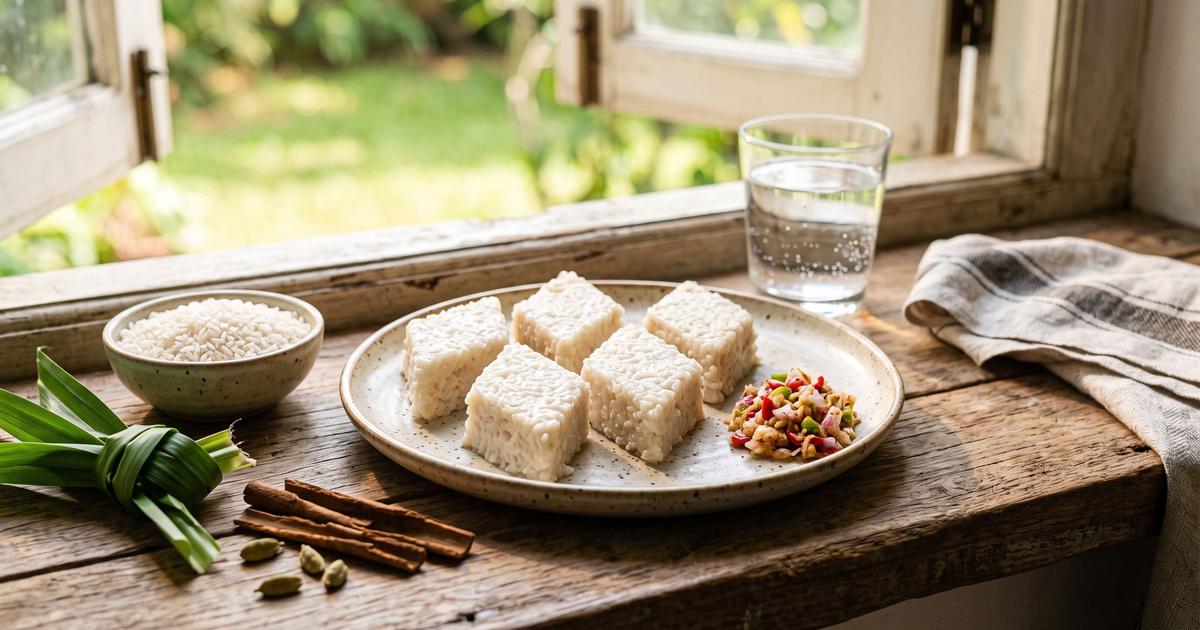
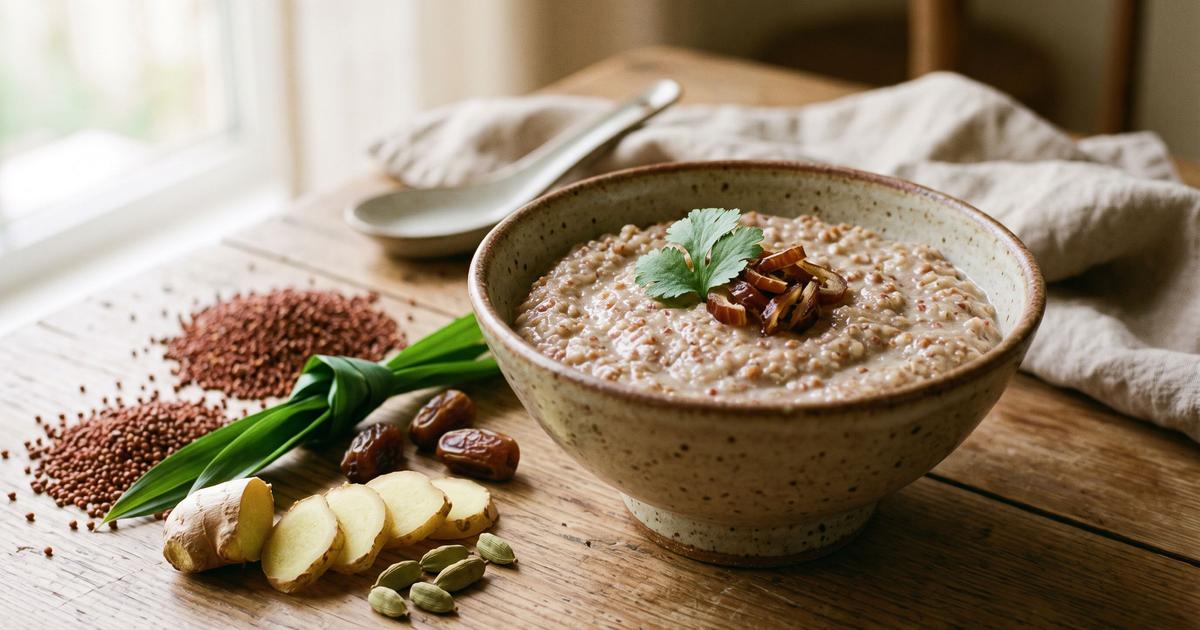
Kiri bath, milk rice, is what Sri Lankan tables turn to for first mornings: the start of the month, a new year, any fresh beginning. It is normally cooked in the thick first press of coconut milk until it sets into a block firm enough to cut into diamonds. Unsweetened soy milk stands in without coconut, thick enough to bind the short-grain rice and richer in protein besides. It is barely seasoned on purpose, just pandan and cracked pepper, because it exists to be a calm base for something fierce alongside it: a spoon of chile-bright lunu miris, or dark and sweet seeni sambol.
Ingredients
- 1 cup short grain brown rice
- 1 1/2 cups Unsweetened soy milk
- 1 whole Pandan leaf, knotted
- 1/4 tsp Black peppercorns, cracked
Method
- Rinse the rice and simmer it with 2 cups (480 ml) water and the knotted pandan leaf, covered, until the water is absorbed and the grains are soft, about 30 minutes. Short-grain brown rice is starchy enough to bind into the cohesive block kiri bath needs once the milk goes in.
- Pour in the soy milk and cook uncovered over low heat, stirring almost constantly, until the rice drinks it up and turns thick and porridge-like, about 10 minutes. Kiri bath is normally made with the first, thickest press of coconut milk; unsweetened soy milk is the plant milk with enough body and protein to set the same way, and steady stirring keeps it from catching on the base.
- Fish out the pandan knot. Cracked black pepper is the only seasoning that goes in, a quiet warmth under the richness.
- Scrape the hot rice into a shallow dish and press it flat to about 1 inch (2.5 cm) thick with the back of a wet spoon. Pressing it while it is hot is what lets it hold a clean edge once cooled.
- Let it cool and firm for 10 minutes, then cut into the traditional diamonds by slicing parallel lines one way and diagonally across. Serve warm or at room temperature with lunu miris or seeni sambol, the sharp condiments it is always eaten with.
Nutrition
Estimated per serving: 250 calories, 8 g protein, 4 g fiber, 60 mg sodium. Computed from USDA FoodData Central reference values for the main ingredients. This is an approximation, not a laboratory measurement. How these are computed.
Cost per serving is estimated from US national-average retail prices for cheap staple forms, using BLS dried-bean prices and USDA produce prices. Prices vary by store and season, so treat it as a guide, not a receipt. How this is computed.