Kola Kanda
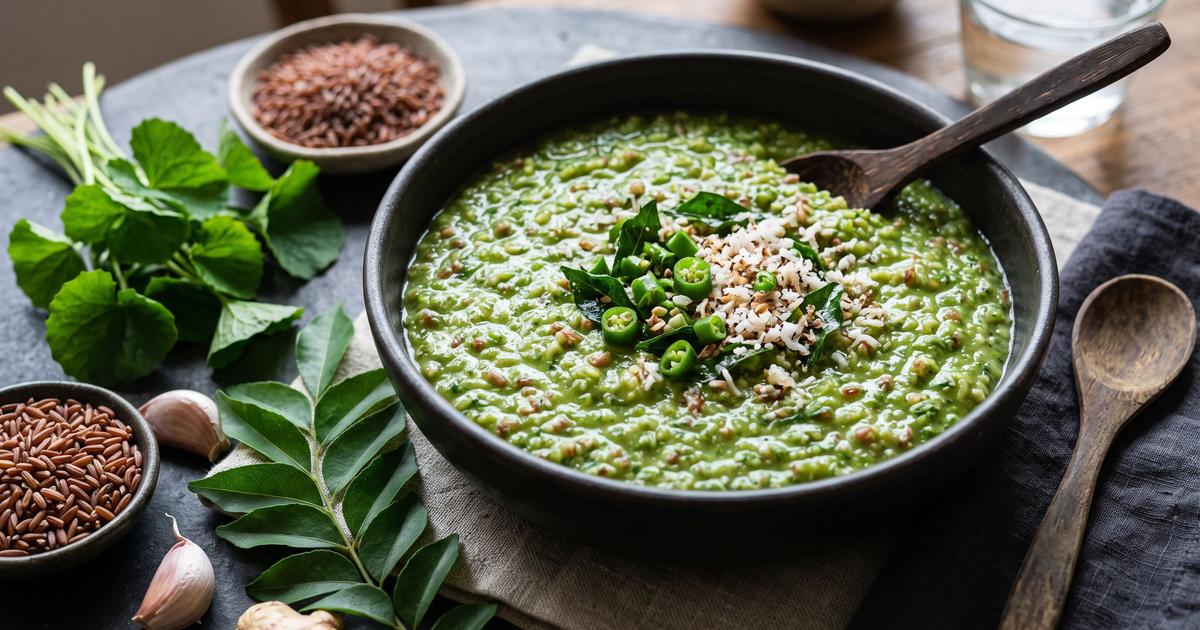
Kola kanda, literally leaf porridge, is a Sri Lankan breakfast built to start the day on something green. A little rice is cooked down to a thin gruel, then a puree of raw greens is stirred in off the heat so the color survives. The version most families make finishes with coconut milk; unsweetened soy milk gives the same softness and adds protein, while keeping the dish coconut-free. There is no salt and no sugar in the pot: garlic and cumin season the rice, and lime lifts it at the end.
Ingredients
- 1/2 cup long grain brown rice, rinsed
- 3 cups Spinach, packed
- 2 cloves Garlic
- 1 tsp Cumin seed
- 1 cup Unsweetened soy milk
- 1/4 tsp Black peppercorns, ground
- 1 tbsp Lime juice
Method
- Cook the rice with the garlic, cumin, and 4 cups (950 ml) water at a low simmer until the grains are very soft and the porridge is loose and soupy, about 30 minutes. It should pour, not mound, so add hot water if it tightens. Brown rice keeps the whole grain that a polished white rice would have stripped away.
- Blend the raw spinach with 0.5 cup (120 ml) water into a smooth bright-green puree. Blending the greens raw and adding them at the end is what keeps kola kanda green and grassy, since long boiling would turn both the color and the flavor dull. Traditionally the green is gotukola or another wild leaf, and spinach is the easiest year-round stand-in.
- Once the rice is soft, take the pot off direct high heat and stir in the soy milk and the green puree. Warm it through gently without letting it boil hard, which would dull the color and split the milk. The soy milk stands in for the coconut milk that usually enriches this porridge, and it brings protein the coconut never did.
- Finish with the ground pepper and lime. Serve it warm in a mug or bowl, loose enough to sip. If you want it sweeter, the traditional pairing is a bite of date on the side rather than sugar stirred in.
Nutrition
Estimated per serving: 135 calories, 6 g protein, 3 g fiber, 45 mg sodium. Computed from USDA FoodData Central reference values for the main ingredients. This is an approximation, not a laboratory measurement. How these are computed.
Cost per serving is estimated from US national-average retail prices for cheap staple forms, using BLS dried-bean prices and USDA produce prices. Prices vary by store and season, so treat it as a guide, not a receipt. How this is computed.