Sri Lankan Millet Porridge, Kurakkan-Style Kenda
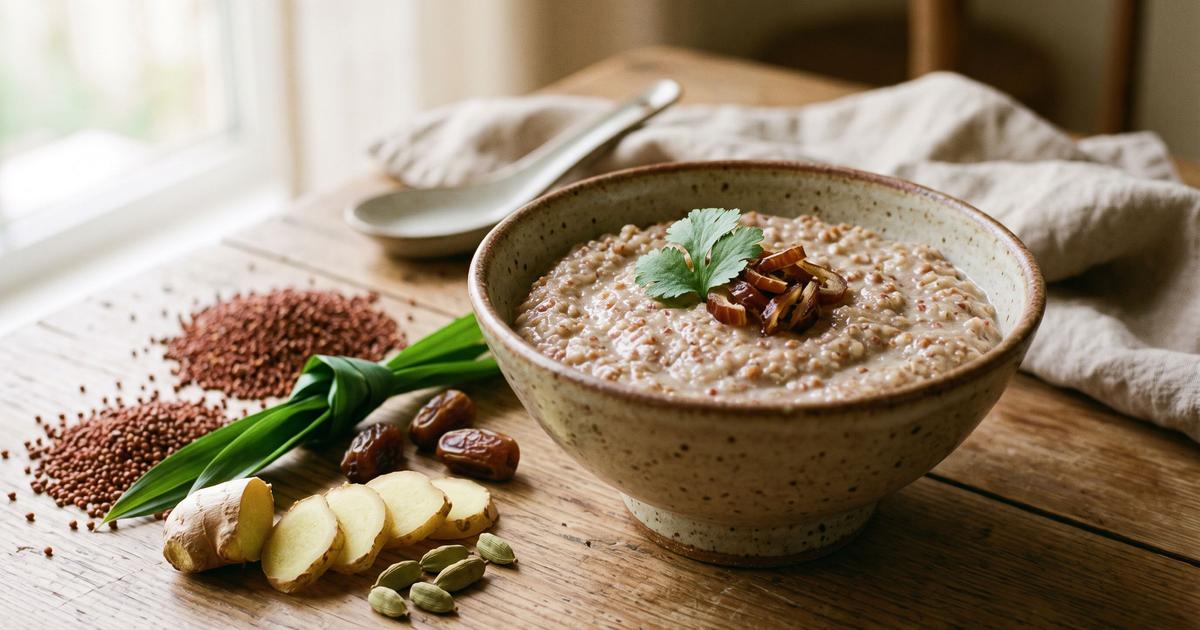
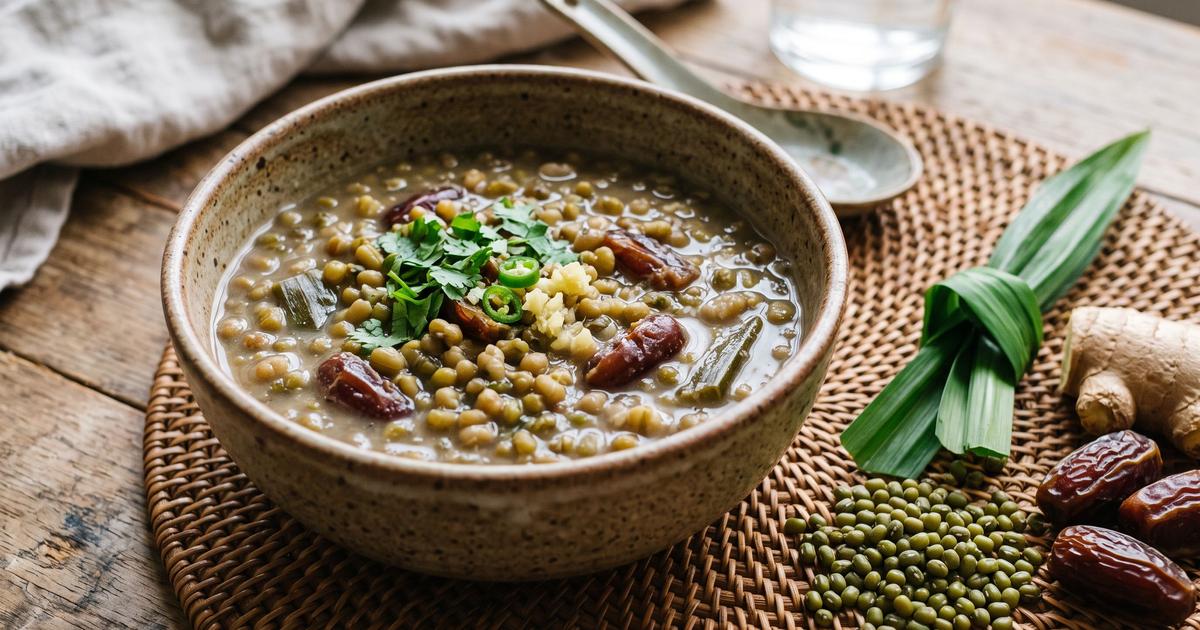
Kenda is the Sri Lankan grain porridge eaten first thing in the morning, most famously kola kanda with its pounded greens, but just as often a plain sweet version poured into a cup and drunk. The classic is made with kurakkan, the local finger millet, and coconut milk; this coconut-free take uses ordinary millet, which behaves the same way, and unsweetened soy milk, which brings both creaminess and protein. Dates do the sweetening in place of kithul treacle. Toast the grain first, cook it soft, and keep it loose. It is a warm, high-fiber start that reheats well through the week.
Ingredients
- 1 cup Millet
- 1 piece Pandan leaf, knotted, 2-inch
- 1 stick Ceylon cinnamon, 2-inch
- 3 pods Green cardamom, cracked
- 1 tbsp Ginger, grated
- 4 wholes Medjool dates, pitted
- 1 1/2 cups Unsweetened soy milk
Method
- Warm a pot over medium heat and toast the dry millet, stirring, until it smells nutty and a few grains start to pop, about 3 minutes. Toasting the grain before it simmers gives the finished porridge a deeper, rounder flavor.
- Add 3 cups (720 ml) water, the knotted pandan, cinnamon stick, cracked cardamom, and grated ginger. Simmer, stirring now and then, until the millet is very soft and the porridge is spoonable, about 20 minutes. A kenda is cooked well past a fluffy pilaf, to the point where the grain has given up its structure.
- Mash the pitted dates with a ladle of the hot porridge into a smooth paste, then stir it back in. The dates replace the kithul treacle a kenda is traditionally sweetened with, so no sugar goes in.
- Stir in the soy milk and warm through without boiling hard. The soy milk stands in for the coconut milk of the original and adds the protein that carries it as a breakfast.
- Remove the pandan and cinnamon and serve hot in cups or bowls. It thickens as it sits, so loosen leftovers with a splash more soy milk when you reheat.
Nutrition
Estimated per serving: 200 calories, 7 g protein, 6 g fiber, 40 mg sodium. Computed from USDA FoodData Central reference values for the main ingredients. This is an approximation, not a laboratory measurement. How these are computed.
Cost per serving is estimated from US national-average retail prices for cheap staple forms, using BLS dried-bean prices and USDA produce prices. Prices vary by store and season, so treat it as a guide, not a receipt. How this is computed.