Keysir Selata, Ethiopian Beetroot and Potato Salad
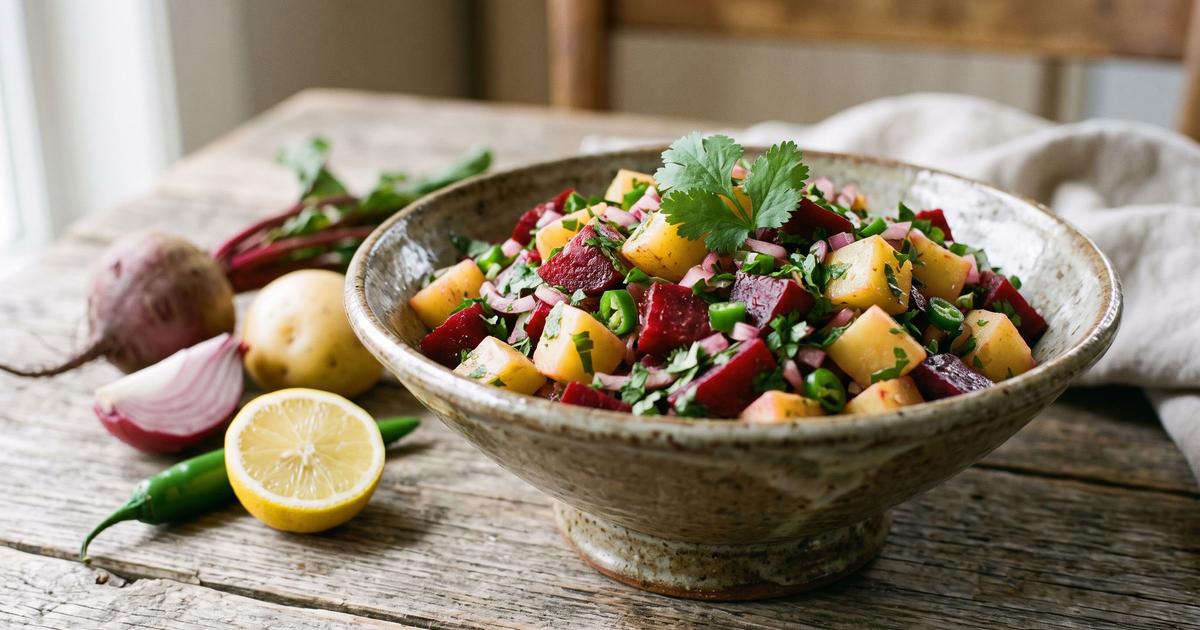
Keysir selata is the beetroot salad that shows up on Ethiopian and Eritrean fasting tables, where oil and animal foods are set aside and the cook leans on acid and raw aromatics instead. Beets and potatoes are boiled, diced small, and dressed cold with red onion, green chile, and a hard squeeze of lemon. The beets bring a deep sweetness, the potato softens the edge, and the lemon and chile keep it from ever tasting flat, which is why it needs no salt. Boil the two vegetables in separate pots so the potato stays its own color until you toss everything at the end. It travels well and improves after a night in the fridge.
Ingredients
- 1 lb Beets
- 3/4 lb Potatoes, peeled
- 1/2 whole Red onions, finely diced
- 1 whole Jalapeño, seeded and minced
- 1 clove Garlic, grated
- 1 whole Lemons, juiced
- 3 tbsp Cilantro, chopped
- 1/4 tsp Black peppercorns, ground
Method
- Boil the beets whole and unpeeled in plenty of unsalted water until a knife slides through, 30 to 40 minutes, then cool and slip off the skins. Cooking them in their jackets keeps the color and the earthy sugars inside the beet instead of bleeding into the pot.
- Boil the potatoes separately until just tender, about 15 minutes, and dice them. Kept apart until the last minute, they stay pale and firm rather than turning pink and soft the moment they meet the beets.
- Dice the cooled beets to match the potatoes and combine them in a bowl with the red onion, chile, and garlic. Cutting everything to one size means each forkful carries sweet, sharp, and hot together.
- Dress with the lemon juice and a grind of black pepper, then fold gently. The acid is doing the seasoning here, waking up the beet's sweetness the way a pinch of salt would, so add it to taste and let it sit.
- Rest the salad in the fridge for at least 20 minutes, then scatter the cilantro over the top. Serving it cold lets the flavors settle and the raw onion mellow, and it keeps for three days.
Nutrition
Estimated per serving: 110 calories, 3 g protein, 4 g fiber, 75 mg sodium. Computed from USDA FoodData Central reference values for the main ingredients. This is an approximation, not a laboratory measurement. How these are computed.
Cost per serving is estimated from US national-average retail prices for cheap staple forms, using BLS dried-bean prices and USDA produce prices. Prices vary by store and season, so treat it as a guide, not a receipt. How this is computed.