Buticha, Ethiopian Chickpea Dip
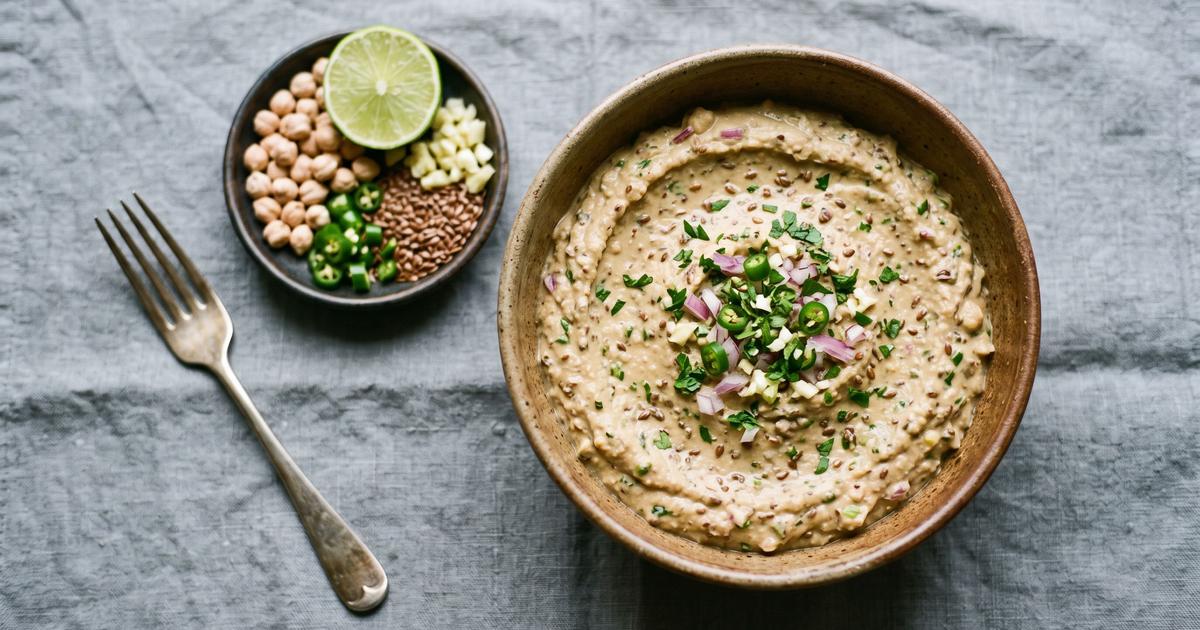
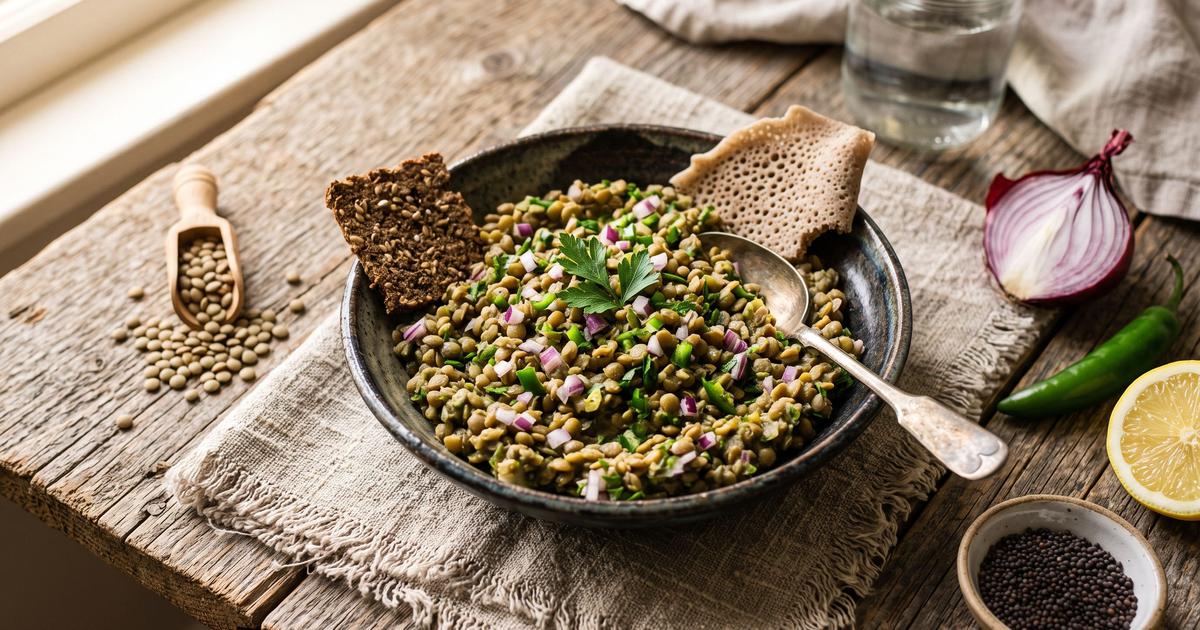
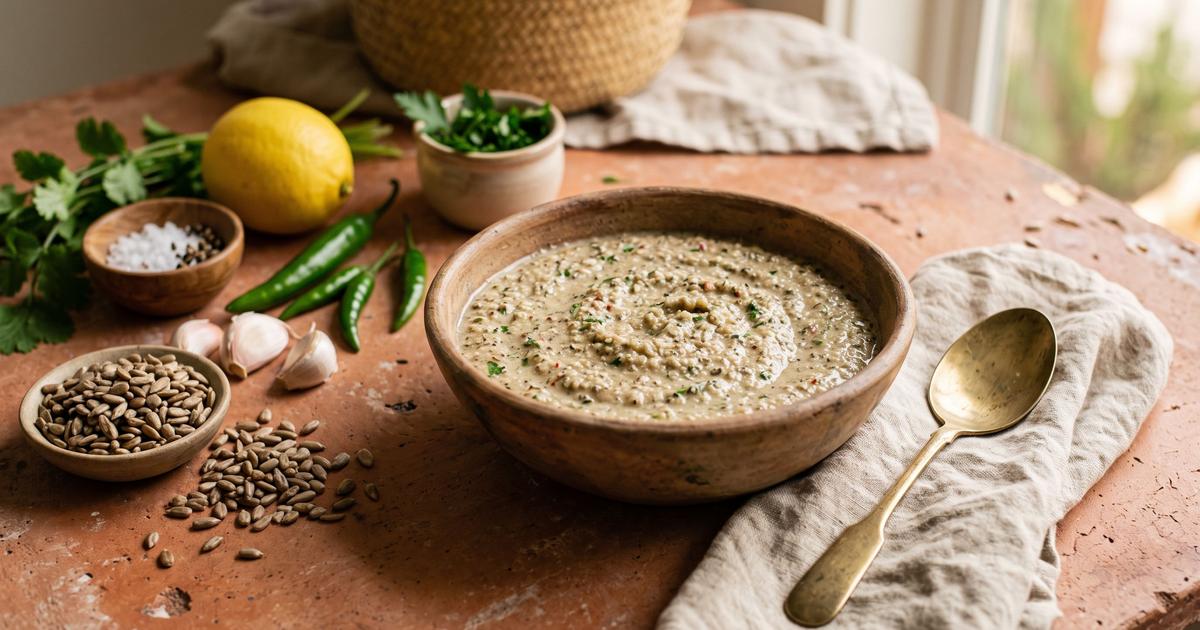
Buticha is an Ethiopian and Eritrean fasting dip, traditionally made from roasted chickpea flour cooked with water into a loose paste, then cooled and dressed with lemon, green chile, and onion. This version reaches the same place from whole cooked chickpeas blended smooth, which keeps the fiber intact and skips the tahini and oil that a hummus would carry. What sets it apart is the raw finish: minced onion and chile folded in at the end, plus a spoon of ground flax for body. It reads as lighter and sharper than hummus, closer to a savory spread than a rich one. Keep it loose, keep it lemony, and let the chile do the talking.
Ingredients
- 1 1/2 cups Chickpeas, cooked and drained
- 3 tbsp Lemon juice
- 1 clove Garlic, grated
- 1 whole Jalapeño, seeded and minced
- 1/4 whole Red onions, finely diced
- 1 tbsp Ground flaxseed
- 2 tbsp Flat-leaf parsley, chopped
Method
- Blend the chickpeas with the lemon juice, grated garlic, and 3 to 4 tablespoons (45 to 60 ml) water until you have a soft, spoonable paste. Adding the water a little at a time lets you land on the loose, almost pourable texture buticha is known for rather than a stiff hummus.
- Scrape the paste into a bowl and stir in the ground flaxseed. The flax is traditional here as telba, and it thickens the dip slightly while carrying its own nutty richness so you never miss tahini or oil.
- Fold in the red onion and green chile by hand, keeping them raw and distinct. Their bite and crunch are what a salted, oiled dip would use fat to smooth over, and here they do the seasoning instead.
- Taste and add more lemon until it tastes lively and a touch sharp. On a fasting dip with no salt, you are chasing brightness, and lemon is the dial that gets it there.
- Rest 15 minutes so the flavors settle, then top with parsley. Serve cool, scooped with injera, whole-grain bread, or raw vegetables.
Nutrition
Estimated per serving: 150 calories, 7 g protein, 6 g fiber, 20 mg sodium. Computed from USDA FoodData Central reference values for the main ingredients. This is an approximation, not a laboratory measurement. How these are computed.
Cost per serving is estimated from US national-average retail prices for cheap staple forms, using BLS dried-bean prices and USDA produce prices. Prices vary by store and season, so treat it as a guide, not a receipt. How this is computed.