Azifa, Ethiopian Lentil Spread
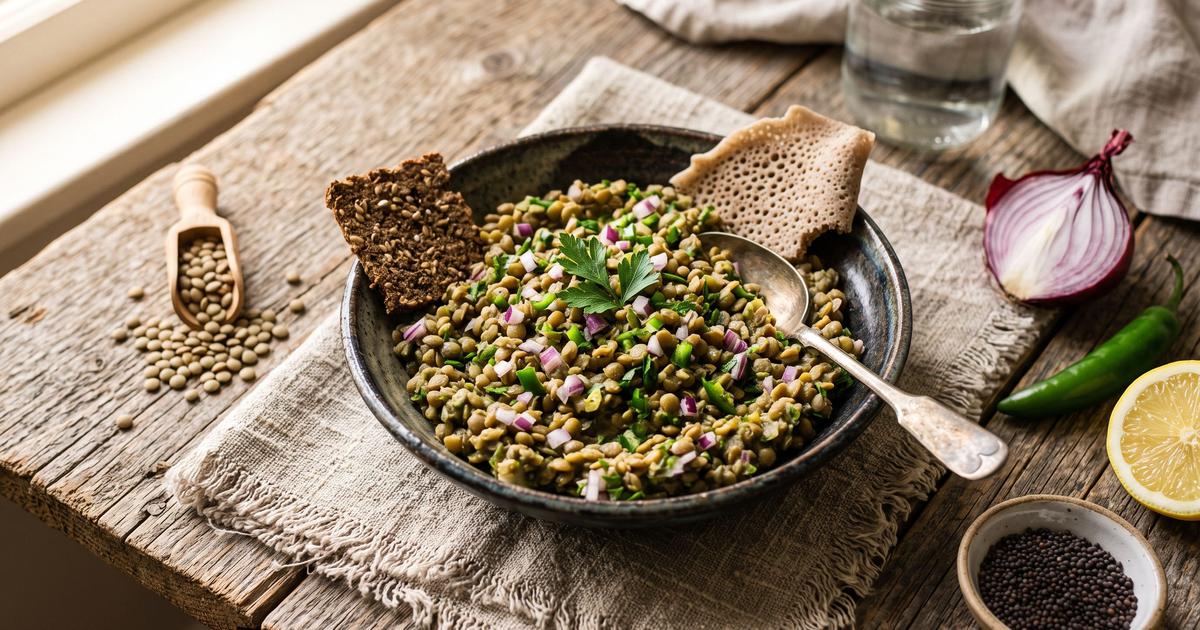
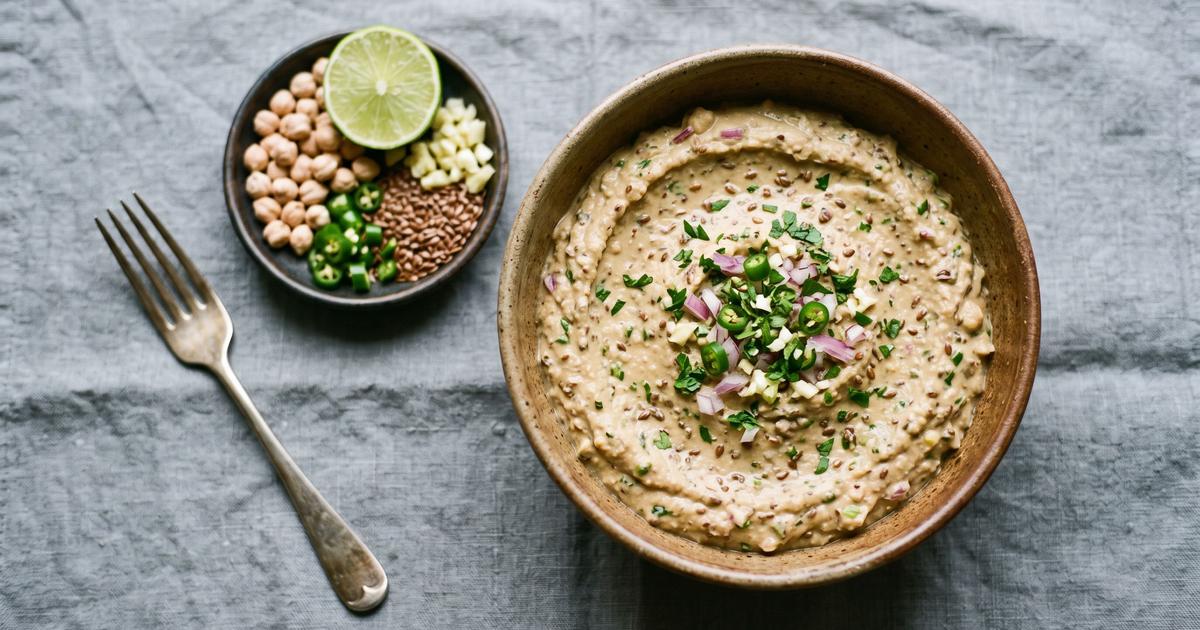
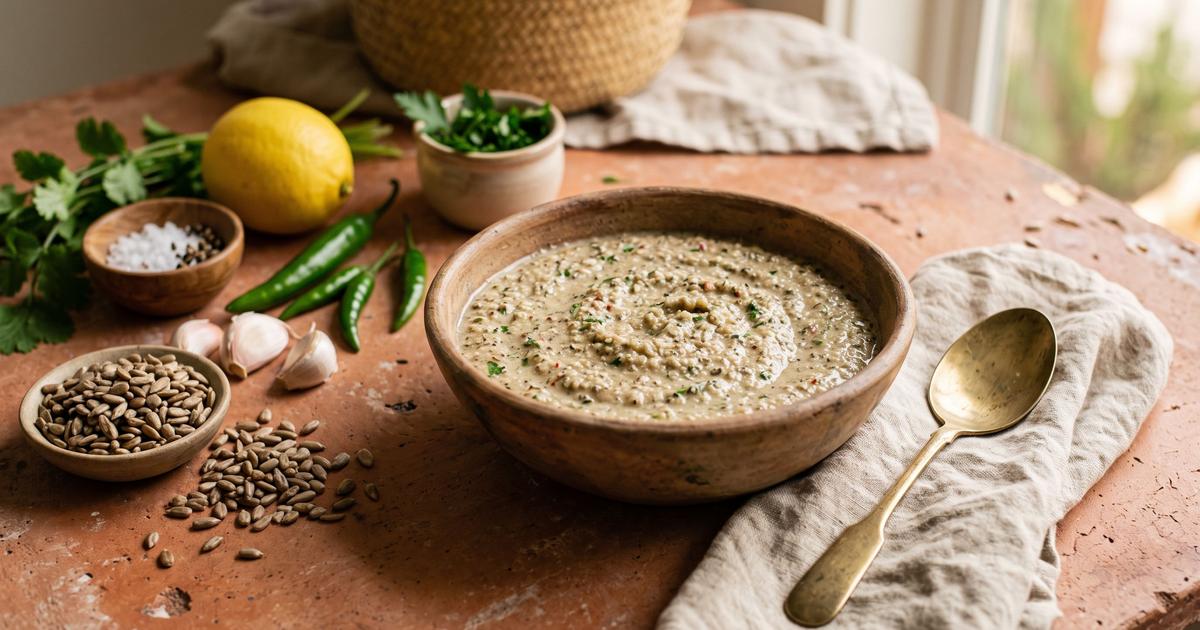
Azifa is an Ethiopian and Eritrean lentil dish eaten cold, a staple of fasting tables where animal foods are set aside. Small green lentils are dressed with senafich, the pungent local mustard, along with lemon, onion, and green chile, then piled onto injera and torn off by the handful. That scooping habit makes it read as a dip as much as a salad, so this version mashes some of the lentils to give it enough body to sit on a cracker or fill a wrap. The heat comes from mustard and raw chile, the brightness from lemon, and neither one asks for salt.
Ingredients
- 1 cup Green lentils, rinsed
- 2 tsp Yellow mustard seed, toasted and ground
- 3 tbsp Lemon juice
- 1/2 whole Red onions, finely diced
- 1 whole Jalapeño, seeded and minced
- 1 clove Garlic, grated
- 3 tbsp Flat-leaf parsley, chopped
Method
- Simmer the lentils in plenty of unsalted water for 18 to 20 minutes, until tender but still whole, then drain and cool. Salting the water or overcooking them turns them to mush, and you want distinct lentils you can mash by choice, not by accident.
- Toast the mustard seeds in a dry pan until fragrant, then grind them. Freshly ground mustard is the backbone of azifa, providing the sharp bite that salt would in another dish.
- Whisk the ground mustard with the lemon juice and 1 tablespoon water into a loose paste and let it stand 5 minutes. Resting lets the mustard's heat develop, the same reason prepared mustard is left to sit.
- Fold the mustard-lemon mixture into the lentils along with the onion, chile, and garlic, then mash about a third of the lentils against the side of the bowl. Mashing part of them makes a spread that holds together, while the rest keep their shape and texture.
- Rest for 15 to 20 minutes before serving so the flavors meld and the raw onion mellows, no cooking required. Serve cool with parsley on top, scooped with injera, whole-grain bread, or raw vegetables.
Nutrition
Estimated per serving: 150 calories, 9 g protein, 8 g fiber, 15 mg sodium. Computed from USDA FoodData Central reference values for the main ingredients. This is an approximation, not a laboratory measurement. How these are computed.
Cost per serving is estimated from US national-average retail prices for cheap staple forms, using BLS dried-bean prices and USDA produce prices. Prices vary by store and season, so treat it as a guide, not a receipt. How this is computed.